


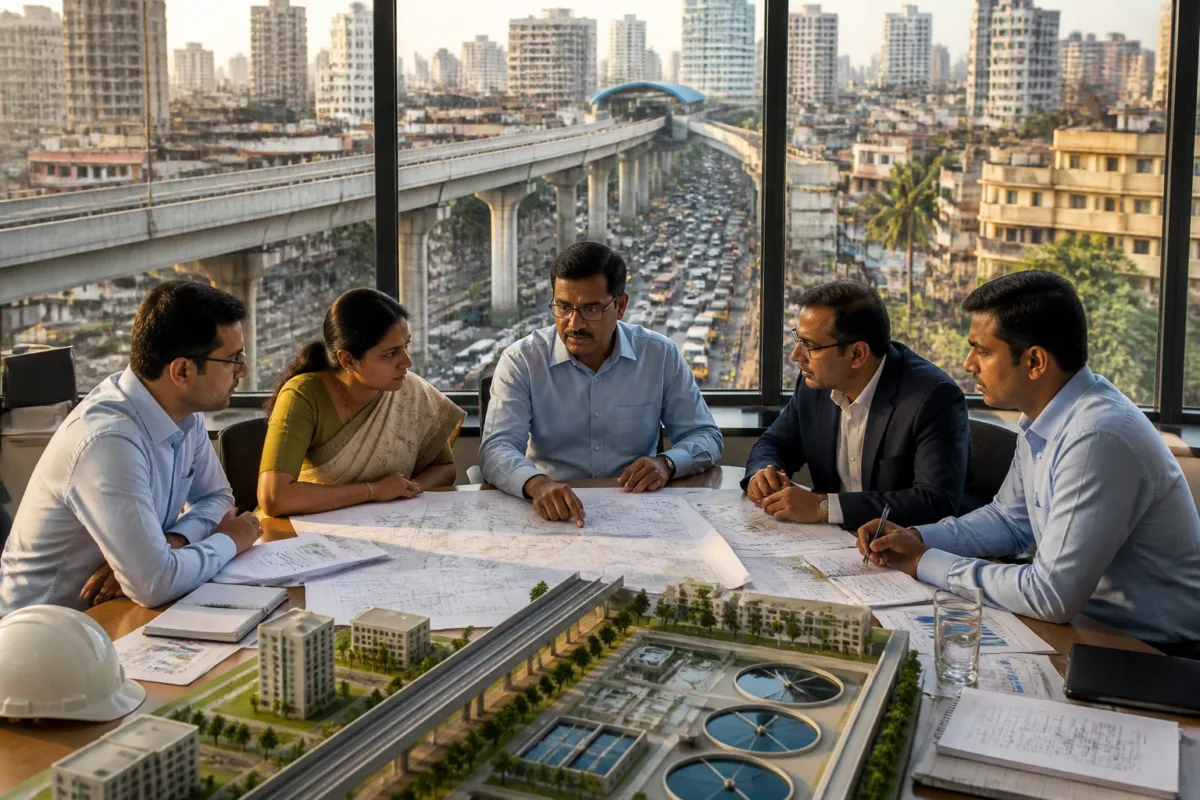
India’s capital-market regulator is seeking to expand the financing options available for long-gestation infrastructure projects, including urban infrastructure, by deepening municipal bonds, Infrastructure Investment Trusts (InvITs), Real Estate Investment Trusts (REITs) and corporate bonds.
KVR Murty, whole-time member of the Securities and Exchange Board of India (Sebi), said the regulator’s roadmap was focused on reducing friction across the capital-raising process. He was speaking at the CII Financing Summit 2026 in Mumbai, according to PTI.
The roadmap includes faster processes for initial public offerings and rights issues, rationalised listing norms and simpler market access for foreign portfolio investors. It also envisages easier access for enterprises seeking to reverse flip their operations to India, alongside measures to develop alternative sources of long-term capital.
For urban infrastructure, Sebi has undertaken reforms intended to support municipal bond issuance. These include allowing multiple municipalities to raise funds through pooled arrangements using special purpose vehicles. The regulator has also permitted the proceeds to be used to refinance existing loans and debt, according to Murty’s remarks reported by PTI.
Pooled fundraising could give municipalities a route to approach the market collectively rather than relying only on individual issuances. However, the report does not identify any specific municipal pool, project or issuance resulting from the reforms.
Sebi is also seeking to strengthen the role of market-based infrastructure vehicles. It has enhanced borrowing flexibility for REITs and InvITs, broadened the scope of strategic investors and allowed privately listed InvITs to invest in greenfield projects, Murty said.
These measures are intended to widen the investor base and support infrastructure financing. InvITs can be used to hold and raise capital against infrastructure assets, while REITs are designed to channel investment into income-generating real estate. The report does not specify how the measures will affect particular roads, transit systems, water networks or other urban projects.
The regulator is separately building a market-making framework for corporate bonds. The framework is expected to include mandatory continuous quoting and repo liquidity support, with the objective of making corporate bonds a more liquid alternative to bank credit. Sebi has also reported measures including increased ISIN headroom, simplified private-placement norms and a Credit Risk-o-Meter for risk assessment.
Murty said India needed to move beyond a conventional equity-and-debt framework towards a diversified, multi-asset ecosystem capable of mobilising patient risk capital for infrastructure and innovation. He also called for stronger oversight as market access expands, including greater intermediary accountability, AI-led supervision and action against unregulated digital risks.
The scale of India’s capital markets has increased sharply in recent years, according to figures cited by Murty. The number of unique investors reached 15.4 crore as of October 31, 2026, compared with 7.1 crore on March 31, 2022. Market capitalisation stood at Rs 507 lakh crore in October 2026, while public equity fundraising reached Rs 2.3 lakh crore in FY26.
For municipalities and infrastructure sponsors, the proposed direction points to a wider financing ecosystem beyond conventional bank borrowing and government support. Its practical impact will depend on the ability of issuers to prepare credible projects, manage repayment obligations and attract investors under the evolving regulatory framework. The PTI report does not provide implementation dates for the roadmap or quantify the additional funding expected to reach urban infrastructure.

