


Bajaj Integrated Health Systems is beginning its Pune healthcare rollout with neighbourhood medical centres and home care before opening ambulatory surgery facilities and a planned 500-bed multispecialty hospital, presenting a care model that places more services outside large hospitals.
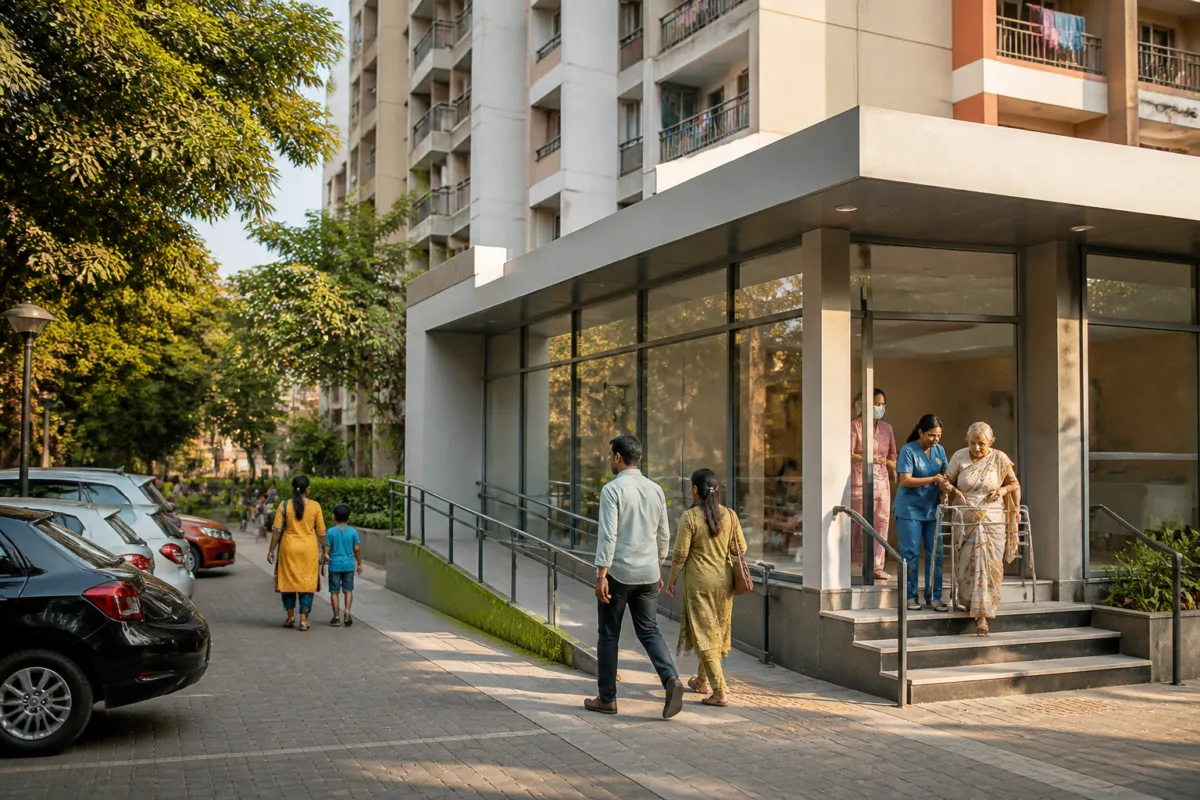
The first medical centre under the group’s Nivara network is scheduled to open in Amanora next week, according to Nirav Bajaj, managing director and chief executive officer of Bajaj Integrated Health Systems. Amanora is described by the company as a township with about 30,000 households. A second centre is expected to follow in a couple of months.
The company expects to spend Rs 2,000-2,500 crore on its Pune network, Bajaj told the Economic Times. The planned network is intended to cover different micro-markets in the city and combine medical centres, home care, ambulatory or day-surgery centres and a hospital.
Bajaj said the company’s approach is based on its assessment that nearly 70% of healthcare cases can be treated outside hospitals. The proposed medical centres will offer primary care, diagnostics, phlebotomy, specialist consultations, nutrition support, emotional well-being services and rehabilitation. The company also plans to provide access to homeopathy and Ayurveda alongside conventional medical care, with these services described as part of a broader care team.
The plan shifts the first point of contact away from a large hospital campus and towards facilities located closer to residential communities. In practical terms, that could mean routine consultations, diagnostics, rehabilitation and some follow-up care are delivered nearer to where patients live, while hospital capacity is reserved for more complex interventions. The company has not provided a citywide facilities map or details of the proposed locations beyond the first centre in Amanora.
Ambulatory centres are expected to follow in 2027. Bajaj said these facilities would focus initially on elective procedures in orthopaedics, gastroenterology, ear, nose and throat care, and ophthalmology. They are planned to include advanced diagnostics and, eventually, treatments such as chemotherapy and dialysis.
Each ambulatory centre is expected to have about 20-30 beds and cover approximately 50,000-60,000 sq ft. The company’s stated objective is to reduce the need for extended hospital stays in selected procedures by combining day surgery with rehabilitation and post-operative care closer to patients or in their homes. Bajaj cited knee replacement as an example, saying the average hospital stay in India is about three to four days and that a shorter stay would require stronger rehabilitation and post-operative support.
The hospital component is at an earlier stage. Bajaj said the company had acquired land and was awaiting permissions before beginning construction. The proposed multispecialty hospital will have 500 beds, with the first phase expected to open within three years after construction begins, according to the interview. The source report also describes the hospital as opening in three to four years, making approvals and the start of construction key dependencies for the timeline.
The company’s stated rationale is that tertiary and quaternary care should remain concentrated in a hospital, while primary, outpatient, rehabilitation and selected surgical services can be distributed across smaller facilities. Bajaj said 500 beds was considered an appropriate size for Pune, while the number could vary in larger or smaller cities.
The proposed network is also being designed as a digitally connected system. Bajaj said the company aims to maintain one patient record across its facilities and create a seamless flow of data between medical centres, home care, ambulatory centres and hospitals. The organisation has partnered with Philips and is implementing the company’s IntelliBridge Enterprise 3.0 middleware platform, which Bajaj said will make data from monitors and other systems available to physicians and patients in real time, subject to data privacy, cybersecurity and patient-consent requirements.
The technology plan could support continuity between neighbourhood clinics and higher-acuity facilities, but its effectiveness will depend on how records are integrated in practice and how consent and security are managed. The company has not disclosed implementation details such as the number of facilities that will initially be connected, operating standards for data exchange or the specific safeguards it will use.
Bajaj also said doctors would be employed full-time and would not be given revenue or patient-conversion targets. Instead, the company plans to assess them through quality of care, outcomes, patient experience and, once surgery centres and hospitals are operating, readmission rates. These are organisational commitments described by the company and will only be testable after the network begins delivering care at scale.
The group is considering a managed-care model that could initially use outpatient subscriptions before expanding to secondary and tertiary interventions. Bajaj said Bajaj General and Bajaj Health operate at arm’s length from the healthcare entity, while also stating that the company is open to working with all payers and insurers.
Pune is being positioned as the first test of the model rather than as the final extent of the rollout. Bajaj said the company would assess other Indian locations over the next few years based on healthcare need, but that a second city had not yet been selected. The immediate test for the plan will therefore be whether the first centre, subsequent ambulatory facilities and the proposed hospital can be delivered as a connected network, with adequate permissions, staffing, rehabilitation capacity and post-operative support.

