


Saudi Arabia’s oil exports have partly recovered after attacks shut its East-West pipeline and disrupted loadings from the Red Sea port of Yanbu, but the recovery has increased the Kingdom’s dependence on the already constrained Strait of Hormuz. The shift exposes the operational limits of alternative export routes when regional shipping corridors are simultaneously under pressure.
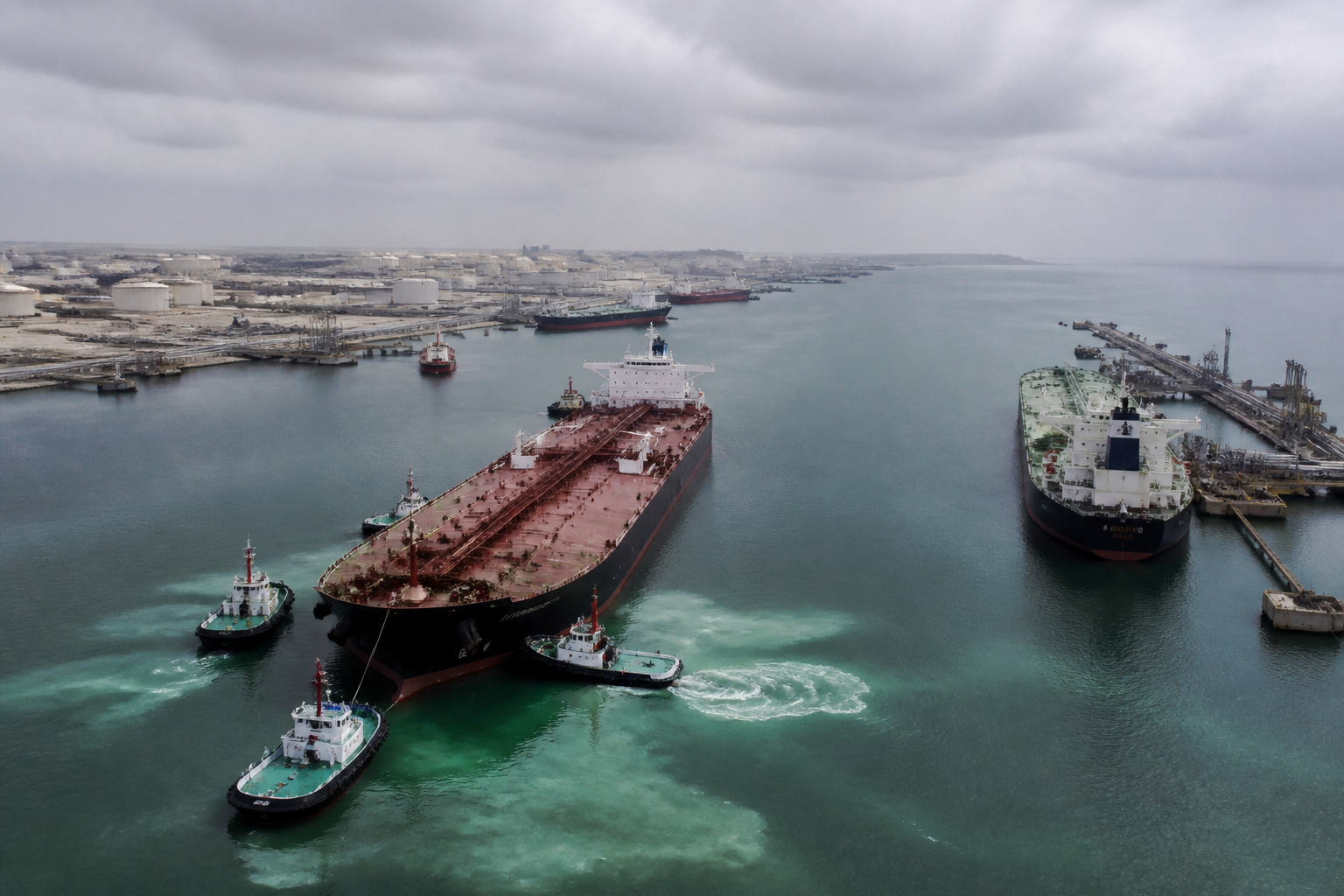
According to Tanker Trackers.com data cited in the supplied report, Saudi Aramco loaded about 14 million barrels of crude on seven very large crude carriers inside the Mideast Gulf on Sunday. Satellite images reviewed by Reuters also appeared to show seven tankers near Saudi Arabia’s Ras Tanura port on the same day. The higher Gulf loadings suggest that Saudi Arabia has been able to keep significant volumes moving, but through a route facing a much sharper fall in overall maritime traffic.
The immediate trigger was the disruption of Saudi Arabia’s East-West oil pipeline after attacks on the facility. The pipeline was shut on September 13, halting crude loadings at Yanbu on the Red Sea. No visible oil loadings from Yanbu had been recorded since September 16, according to the report. That removed a key route that allowed Saudi crude to reach the Red Sea without passing through the Strait of Hormuz.
Saudi Aramco responded by cancelling some crude cargo sales to European clients while increasing sales to Asian buyers from eastern ports located inside the Strait of Hormuz. This is more than a change in destination. It is a shift in the physical logistics of exports: cargoes that might otherwise have moved towards the Red Sea are being concentrated at Gulf terminals whose access depends on a narrow and increasingly disrupted maritime passage.
The numbers indicate a partial recovery rather than a return to normal conditions. A note by JP Morgan analysts, cited by Reuters, estimated that Saudi oil moving through the Strait of Hormuz averaged 2.9 million barrels per day over the previous six days. That was substantially higher than the 700,000 barrels per day recorded in August, indicating that Saudi shipments had accelerated after the pipeline disruption.
Kpler data provided another measure of the change. Twenty-two tankers, mostly very large crude carriers, carrying 42 million barrels of crude exited the Strait of Hormuz during the week of September 13. Saudi Arabia and Iraq each accounted for 43% of that volume. The data shows that the waterway is still functioning for major exporters, but it also suggests that a comparatively small number of large cargo movements now account for a significant share of visible traffic.
Saudi Arabia has also used ship-to-ship transfers as part of its response. Trade sources cited by Reuters said the Kingdom had sold about 60 million barrels of crude from Ras Tanura for loading through ship-to-ship transfers at Oman’s Sohar port during the current and following month. Such transfers can provide an additional handling point outside the original terminal system, but they also make the export chain more dependent on coordinated maritime operations in waters already affected by security concerns.
The contrast between Saudi Arabia’s shipment recovery and the wider decline in Gulf traffic is central to understanding the situation. Shipping data showed that 17 commodity vessels transited the Strait of Hormuz over the weekend, compared with 37 a week earlier. Before the conflict, the strait handled a fifth of the world’s oil and liquefied natural gas, according to the supplied report. Visible traffic has since fallen sharply, with only a small number of trackable vessels recorded.
Provisional Kpler data showed five vessels exiting the strait on Sunday and two smaller oil tankers entering the Gulf. The vessels leaving included the very large crude carrier Pinios, two tankers carrying refined oil products and two empty carriers intended for bulk goods and gas. The data is provisional and does not capture every movement, because some Middle Eastern producers continue to export oil on tankers travelling with their transponders switched off.
That limitation matters for interpreting the apparent recovery. A lower number of visible vessels does not necessarily mean that all physical trade has stopped, just as a rise in recorded loadings does not establish that the wider supply system has stabilised. Tracking systems provide an important picture of maritime activity, but the report itself notes that some exports are taking place without active transponders. The available data therefore describes a constrained and partially obscured logistics network.
The southern alternative is also under pressure. At the Bab el-Mandeb Strait, at the southern end of the Red Sea, 51 vessels made the crossing over the weekend, including 33 vessels exiting the passage. That was down from 57 vessels during the previous weekend. One of the vessels was an Aframax-sized tanker carrying about 700,000 barrels of Saudi crude, according to Kpler data. The decline indicates that Saudi Arabia’s Red Sea route is not operating in an environment free from disruption, even where individual cargoes continue to move.
The episode highlights the difference between nominal export capacity and usable export capacity. Saudi Arabia may retain multiple ports, pipelines and tanker options, but each route depends on a combination of infrastructure availability, terminal access, vessel movements and maritime security. When the East-West pipeline was shut, the Kingdom could redirect cargoes through Ras Tanura and other eastern ports. That preserved part of the export flow, but it placed more pressure on a route whose overall traffic had already fallen sharply.
The institutional structure behind the response is also significant. Saudi Aramco controls the loading decisions described in the report, while tanker movements are tracked by commercial data providers including Tanker Trackers.com and Kpler. JP Morgan’s analysts have interpreted the shipment data, and Reuters satellite imagery has provided an additional view of activity near Ras Tanura. No single source offers a complete account: port loadings, satellite images, vessel tracking and market analysis each illuminate a different part of the chain.
The commercial effect appeared in oil markets. Expectations of higher Saudi supplies weighed on prices on Monday, pushing the Brent benchmark below $100 a barrel for the first time since September 9. That movement reflects the market value of additional Saudi cargoes, but it does not remove the underlying physical constraints. A fall in prices can coexist with lower traffic if traders expect more supply to become available or assess that available routes are sufficient for near-term demand.
For Asian buyers, the shift in Saudi sales is especially relevant because the Kingdom is increasing crude deliveries from ports inside the Gulf towards customers in Asia. For European buyers, the cancellation of some cargoes signals that the disruption is not being absorbed evenly across markets. The report does not establish the scale or duration of those cancellations, but the change shows how a route failure can redistribute supply geographically even when total exports begin to recover.
The broader evidence points to a system operating through adaptation rather than resolution. Saudi Arabia has increased Gulf loadings, used ship-to-ship transfers and redirected sales, while some vessels continue to cross both Hormuz and Bab el-Mandeb. At the same time, the East-West pipeline remains disrupted in the supplied account, visible traffic through Hormuz is sharply lower, and the Red Sea route is also recording fewer crossings.
What remains uncertain is whether these adjustments can be sustained if disruptions continue. The supplied material does not provide a confirmed restoration date for the East-West pipeline, a full account of Saudi production levels or a definitive explanation of how long the maritime restrictions will last. It also does not establish whether transponder-off vessels compensate fully for the fall in visible traffic.
The immediate developments to monitor are the return of loadings from Yanbu, the volume of crude leaving Ras Tanura, continued tanker movements through the Strait of Hormuz and Bab el-Mandeb, and any further changes in Saudi cargo allocations between European and Asian buyers. Together, those indicators will show whether Saudi Arabia’s export system is recovering broadly or merely keeping selected routes open under exceptional pressure.
