


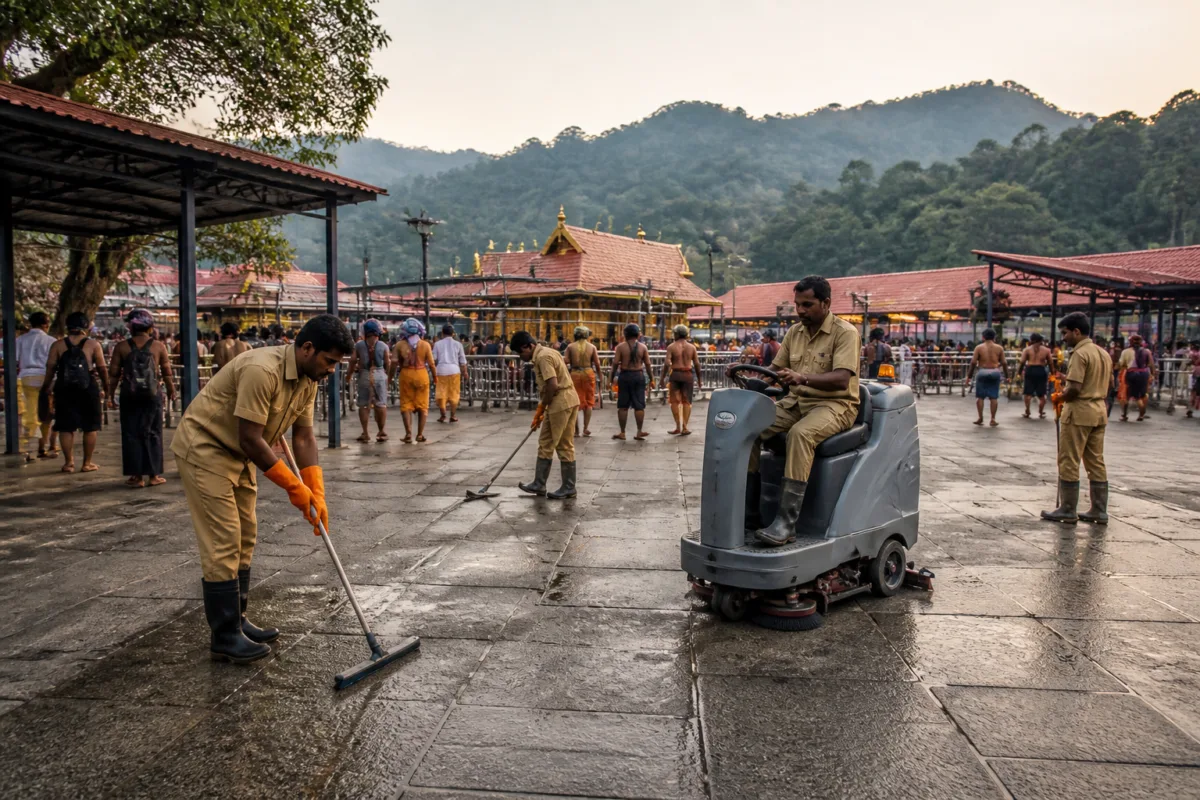
Sanitation arrangements at Sabarimala have improved during the ongoing pilgrimage season after a pre-season cleaning drive and the deployment of additional workers and supervisors, according to the Travancore Devaswom Board.
P S Santhakumar, executive officer of the Devaswom Board, said 25 sanitation supervisors had been appointed under the Devaswom Works Department to ensure that cleaning activities were carried out without delay. The arrangements cover Sannidhanam, Pampa and Nilakkal, the three main locations identified in the report.
A sanitation drive held about a month before the start of the Mandalam season involved around 200 workers and removed approximately 1.25 tonnes of waste, according to an official statement cited by PTI. Another 150 workers were specifically deployed to clean toilets.
The report said toilet cleaning had been entrusted to a private agency. Workers are operating in uniforms and following a more systematic schedule, while a ride-on floor scrubber buggy has been introduced on a trial basis to clean the shrine’s lower courtyard.
Pilgrims interviewed by PTI said they had noticed less visible waste, more regular toilet cleaning and fewer foul smells compared with earlier visits. Their observations were presented as individual accounts rather than as the findings of an independent assessment.
The over two-month annual pilgrimage season began on November 17. The next phase of the cleaning programme is planned during the shrine’s two-day closure next month after the Mandala Pooja. The report did not provide details of the sanitation programme’s budget, contractor arrangements, daily waste volumes or performance standards.
The Sabarimala operation illustrates the logistical demands of maintaining hygiene at a large seasonal religious site spread across multiple locations. Its reported approach combines advance cleaning, dedicated toilet staff, supervisory personnel, private agency involvement and trial use of mechanised equipment. The longer-term effectiveness of the measures will depend on whether staffing, waste handling and maintenance can be sustained through peak visitor periods, but the available report provides no independent data to assess that outcome.

