


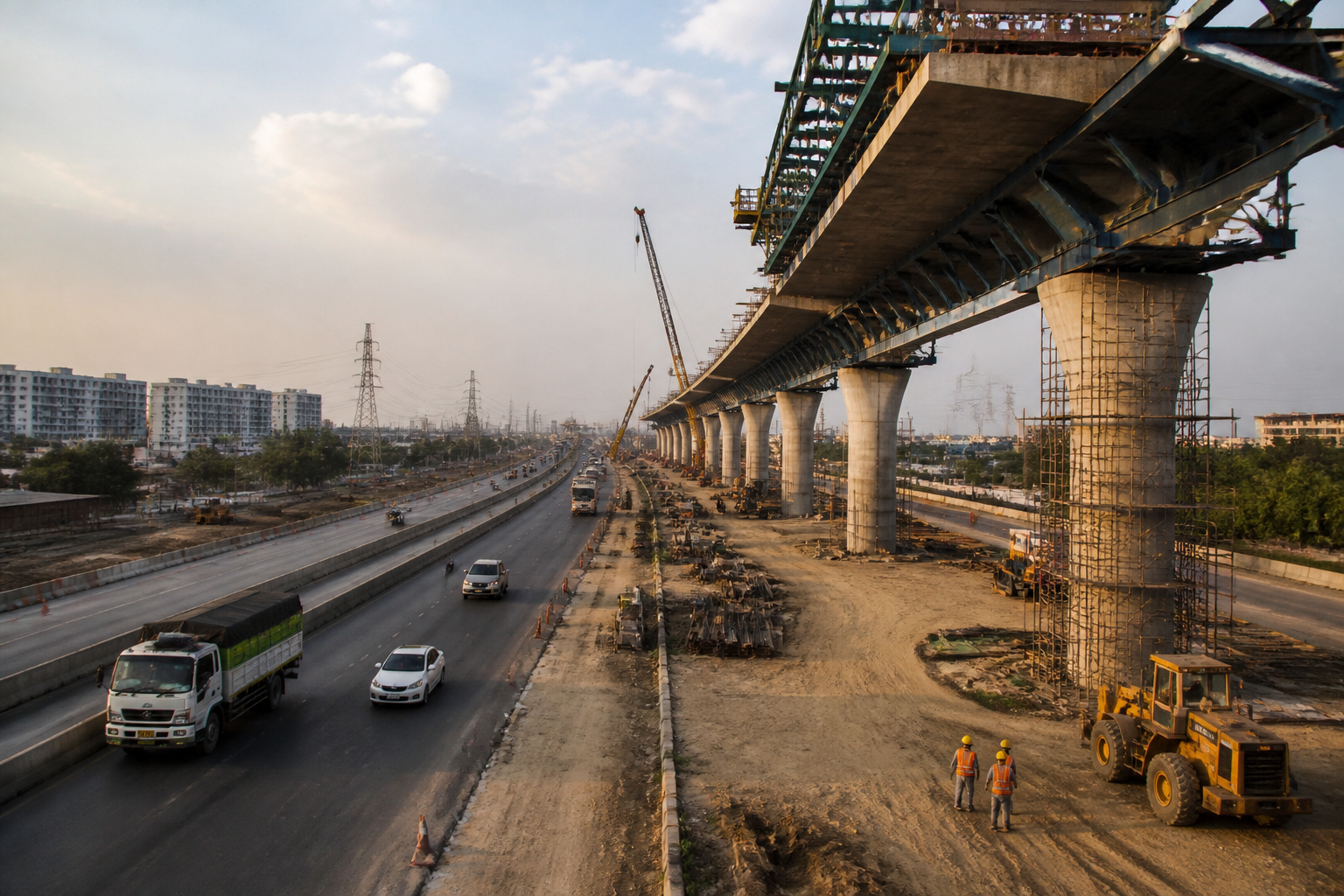
A dispute over road project stamp duty is emerging as a potential source of contractual uncertainty and delays for national highway projects, with the road transport and highways ministry asking states to waive the levy while several states seek to retain or restructure it.
The ministry has argued that stamp duty on highway contracts creates compliance burdens and contractual ambiguity, undermining the stability and attractiveness of national highway projects. States including Uttar Pradesh, Madhya Pradesh, Karnataka and Odisha are seeking arrangements under which the duty would be linked to contract value and project type, according to people familiar with the development.
Stamp duty rates currently vary across states, ranging from 0.25% to 3%, according to the report. Uttar Pradesh is seeking a levy of up to 12% for toll-operate-transfer projects, arguing that such arrangements should be treated as leases and therefore attract stamp duty. The state-level demands could increase the financial burden on concessionaires and create differences in the treatment of similar national highway contracts.
Under current practice, the National Highways Authority of India, which operates under the road transport and highways ministry, enters into concession agreements with highway developers and operators across the country using stamp paper worth Rs 100. The ministry’s position is that a state-level levy on contracts whose revenues flow entirely to the Centre amounts to a circular fiscal transfer without substantive value addition.
An official cited in the report said the levy instead added complexity to concession agreements. The ministry has also said that regulatory predictability is essential for investor confidence in the highway sector, and that state-wise stamp duty liabilities conflict with the principle of a uniform national highway policy.
The dispute is particularly significant for projects that cross state boundaries or rely on long-term public-private partnership structures. Different stamp duty rates and interpretations could require project sponsors to account for varying liabilities during financial modelling and contract negotiations. The ministry has warned that the issue could create room for disputes, renegotiations and delays in financial closure, potentially affecting the execution and monetisation of national highways.
States, however, have argued that linking stamp duty to the type and value of a contract is necessary to protect their revenues. Those familiar with the discussions said states were reluctant to surrender what they view as a substantial source of income, while demands on concessionaires could lead to disputes and project delays.
The treatment of toll projects as leases is a central point of contention. The government has said that applying this interpretation across states could create significant financial and contractual challenges for the national highways sector. The issue also exposes the administrative tension between a nationally managed highway programme and state-level revenue powers over instruments used to formalise contracts.
An industry expert cited in the report said varying stamp duty rates on highway projects spanning multiple states could disrupt the financial models of long-gestation projects. The expert said the uncertainty could affect long-term public-private partnership projects in the national highway sector. The ministry’s recommendation to waive the levy is intended to establish greater uniformity, but the states’ revenue concerns remain unresolved.

