


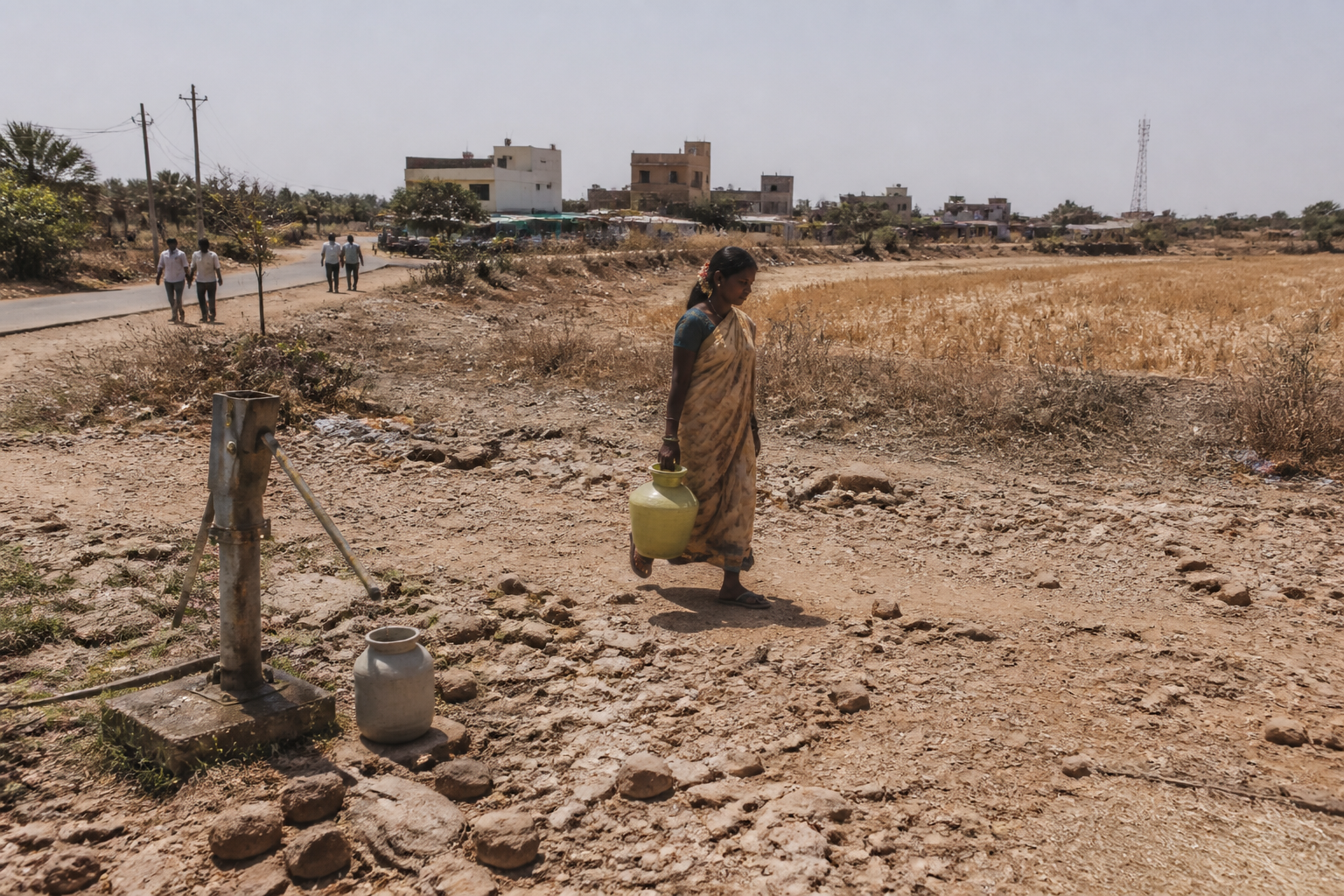
Rayalaseema recorded summer-like heat on Tuesday, with temperatures nearing 40°C across parts of Andhra Pradesh and raising concerns over agriculture, livestock and water resources in the drought-prone region.
Kalyandurg in Anantapur district recorded the highest maximum temperature at 39.9°C. Pagidyala in Nandyal district recorded 39.4°C, while Yellanur and Sanjamala recorded 39.1°C each. Several mandals across Anantapur, Sri Sathya Sai, Kurnool and Nandyal districts recorded maximum temperatures above 38°C.
In Anantapur district, Tadipatri recorded 38.9°C and Anantapur Urban 38.8°C. Putlur and Singanamala recorded 38.2°C and 38.1°C respectively. Atmakur, Bukkarayasamudram, Vidapanakal and Gummagummatta recorded temperatures of 37.4°C, 37.2°C, 36.7°C and 36.5°C respectively.
Sri Sathya Sai district also experienced high temperatures, with Talupula recording 38.8°C and Bukkapatnam 38.7°C. Kadiri reached 38.4°C, while Tanakal and Tadimarri recorded 38.3°C and 37.8°C. Kothacheruvu and Dharmavaram recorded 37.7°C and 37.3°C respectively.
In Kurnool district, Kallur recorded 38.6°C and Kurnool Rural 38.5°C. Mantralayam reached 38.3°C, while Veldurthy and Kurnool Urban recorded 37.8°C each. Kodumur and Gudur recorded 37.5°C.
Nandyal district recorded several temperatures close to 39°C. Uyyalawada and Sanjamala reached 39.1°C, while Owk recorded 39°C. Banaganapalli and Ruddavaram recorded 38.9°C and 38.8°C respectively.
The high temperatures have added to concerns over deficient rainfall and dry conditions in Rayalaseema. The conditions are increasing stress on agriculture, livestock and water resources, according to the report. The region’s drought-prone geography makes the availability of water and the ability of farming systems to withstand prolonged heat particularly important for local communities.
Dr Narayana Swamy, a scientist at the Rekulakunta weather station, said the adverse impact of El Nino was causing concern. The station is closely monitoring weather conditions, he said, while warning that any further rise in temperatures could have an adverse impact.
The reported readings show that the heat is not confined to one urban centre. It has spread across mandals in four districts, including Kurnool Urban and Anantapur Urban, placing both rural settlements and towns within the affected belt. The next stage of monitoring will focus on whether temperatures rise further and how the dry conditions affect farming, livestock and local water availability.
