


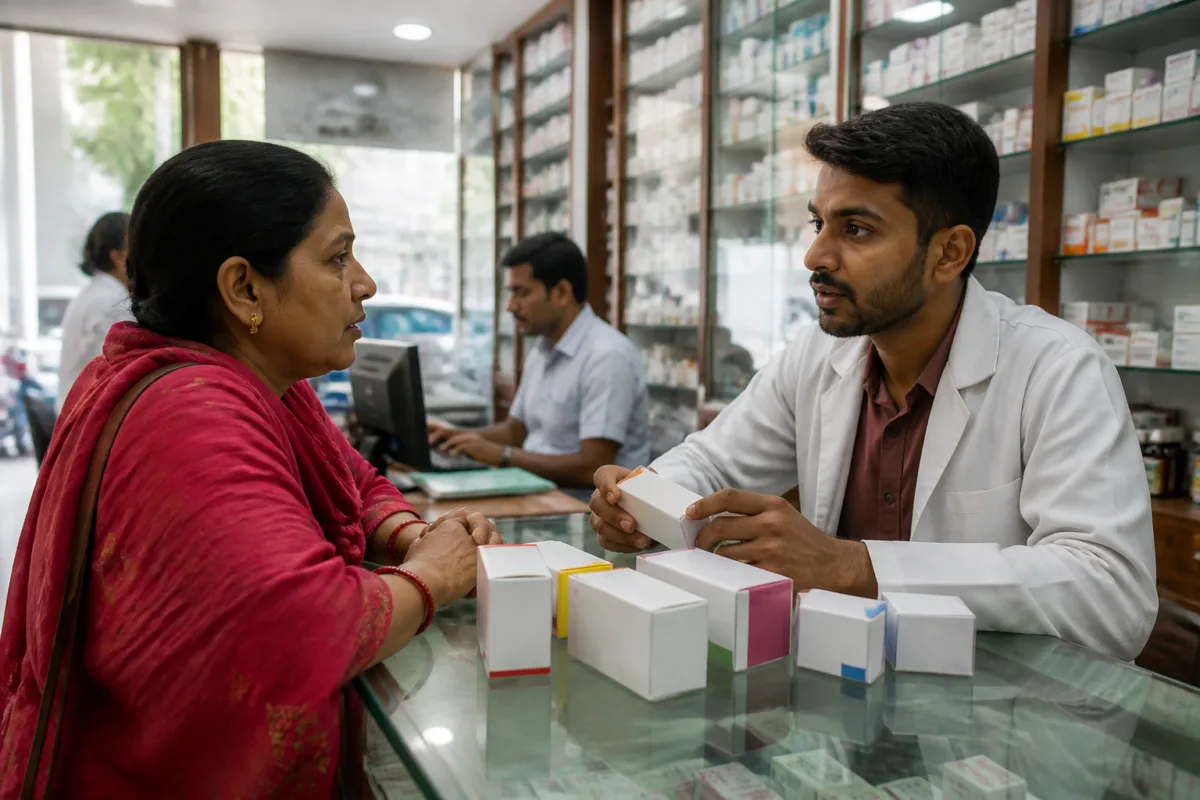
Cancer patients in Ranchi are still paying earlier maximum retail prices for some medicines despite the Centre’s decision to reduce prices for a range of anti-cancer drugs, as pharmacies sell existing stocks before switching to revised rates.
The National Pharmaceutical Pricing Authority has capped the trade margin at 30% of the maximum retail price for 137 identified non-scheduled anti-cancer drugs under the Trade Margin Rationalisation scheme. The revised prices came into effect on Monday, but patients have not yet received the full benefit because some retailers continue to hold medicines purchased at earlier prices.
Ranjit Mahto, a medicine retailer on Ratu Road, told the Times of India that his shop was selling some anti-cancer medicines at their old maximum retail prices because the stock had been purchased before the revisions. He said the existing stock was expected to be exhausted within a day or two, after which the medicines would be sold at the revised rates.
The drug control department has permitted retailers to sell existing stocks at their earlier prices until those stocks are exhausted, according to joint director Sumant Kumar Tiwary. However, wholesalers have been directed to return old stocks to distributors and have been barred from selling those stocks to retailers after November 9.
“Legal action will be initiated against violators under the relevant provisions of the law,” Tiwary told the newspaper. He also said hospitals holding old stocks had been directed to return them to distributors rather than sell them to patients.
The department has warned wholesalers against changing the maximum retail prices on existing packages by pasting revised labels over the old ones. It plans to conduct surprise inspections across Jharkhand to check compliance with the revised pricing norms and prevent overcharging.
The price changes are part of a wider reduction affecting more than 1,000 formulations, according to the department. Some of the revised prices have fallen by more than 50%, although the reductions vary between medicines. For patients undergoing prolonged cancer treatment, the delay in the retail-level transition means that the timing of stock replacement will determine when the lower prices become available.
Jharkhand health minister Irfan Ansari welcomed the price reduction and said the state government was working to strengthen cancer-care facilities. He also said the government was working towards ensuring CT-scan and PET-scan facilities at all district hospitals.
The immediate compliance issue now rests with wholesalers, hospitals, retailers and drug-control officials. Surprise inspections are the next stated enforcement step, while retailers are expected to begin selling revised-price medicines after their old stocks are exhausted.

