


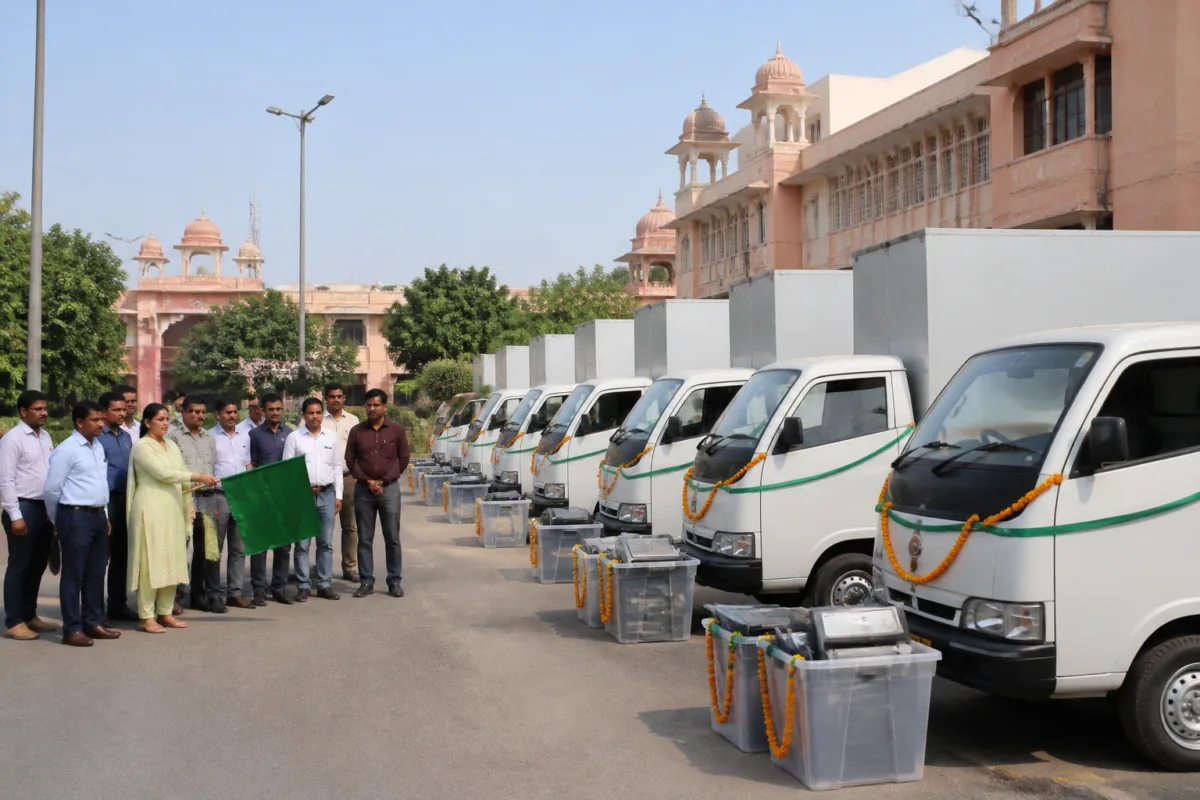
Rajasthan has flagged off eight e-waste collection vehicles to strengthen the collection and scientific disposal of discarded electronic equipment, as the state seeks to move residents away from mixing obsolete devices with regular household waste.
Chief secretary V Srinivas flagged off the vehicles on Friday as part of BRICS Sustainable Lifestyle Week 2026. Rajasthan State Pollution Control Board chairperson Aparna Arora, environment secretary Shailja Deval and RSPCB member secretary Kapil Chandrawal were present at the event.
The initiative is intended to create greater public participation in the disposal of electronic waste by encouraging residents to hand over discarded appliances through formal collection channels. The collected material is to be directed towards scientific recycling rather than being disposed of along with ordinary household garbage.
The state’s move comes as electronic devices become a growing part of household consumption and disposal. E-waste can include obsolete appliances and electronic equipment that require specialised handling, segregation, transportation and processing. The technical session held during the event focused on these parts of the formal collection and recycling chain.
Srinivas said modern recycling technologies could recover valuable metals, including gold and silver, from discarded electronic equipment. He linked the recovery of these materials to the conservation of natural resources and called for stronger awareness about proper e-waste disposal and wider public participation.
The event also included an inspection of recycling processes and technologies showcased by e-waste recyclers. The demonstrations were intended to highlight how discarded electronic products can be processed through organised recycling systems instead of entering regular waste streams.
Arora said the RSPCB had involved about 27 departments in the Sustainable Lifestyle Week campaign, which began on November 1. By November 5, the campaign had recorded 58,976 activities, with more than 7.58 lakh people participating across Rajasthan.
The scale of the campaign places the vehicle launch within a broader effort to build awareness around sustainable consumption and waste disposal. However, the effectiveness of the collection system will depend on whether residents can access authorised collection points, understand what materials can be handed over and use formal channels consistently.
Experts at the technical session urged residents to give obsolete electronic devices to authorised collection centres and recyclers rather than dumping them with regular garbage. Their appeal underlined the importance of linking public awareness with a reliable collection, segregation and transportation network.
The vehicle launch therefore addresses more than the movement of discarded appliances. It is also an attempt to strengthen the institutional chain required for e-waste management, from household-level handover to authorised recycling. The state’s next steps will determine how the vehicles are deployed and how residents are connected to the formal recycling network.

