


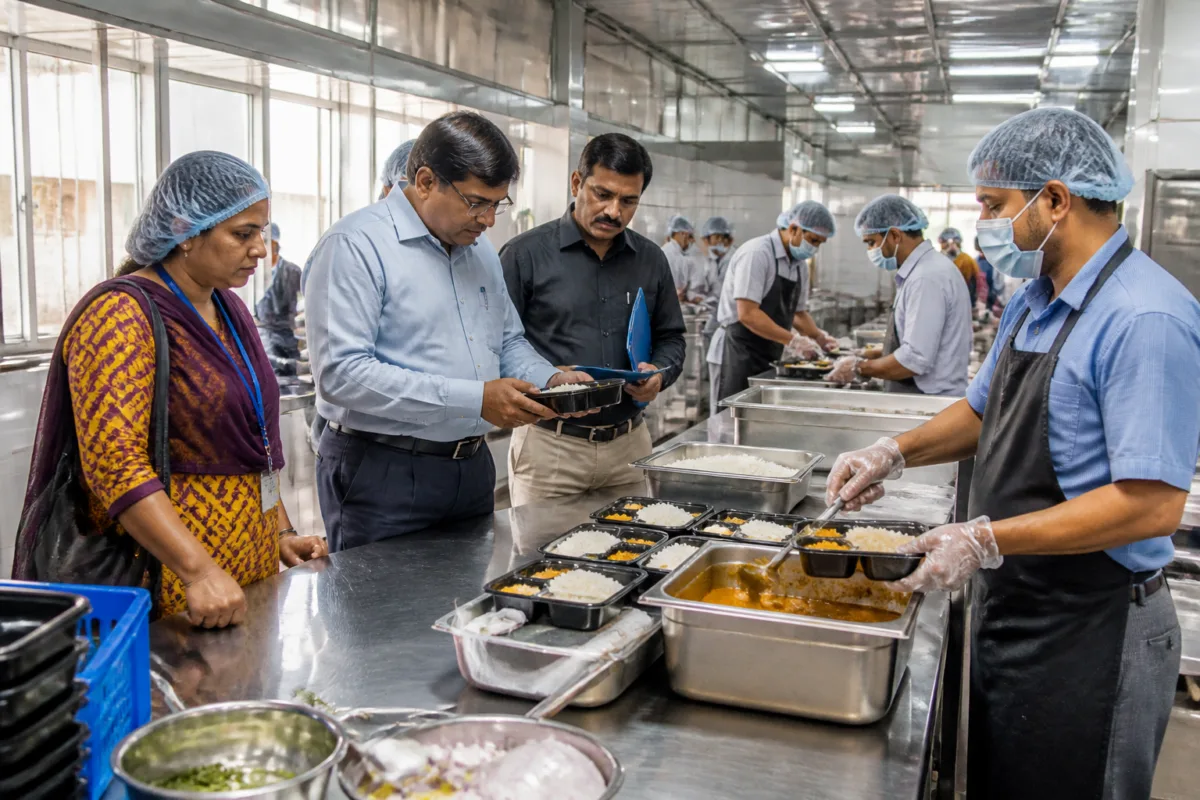
Railway food quality checks will become stricter in Pune and across India after the Indian Railway Catering and Tourism Corporation (IRCTC) partnered with the Quality Council of India (QCI) to conduct surprise third-party audits of trains, base kitchens and catering outlets.
Independent QCI teams are being formed to inspect the food served in trains departing from Pune, as well as the city’s base kitchens. The system will be introduced in phases across all railway zones, including Central Railway, according to the report by Sakal – Pune.
The inspections will cover food quality, hygiene and compliance at food plazas, Jan Aahar centres, catering stalls, base kitchens and onboard railway services. The QCI teams will conduct checks without prior notice and submit digital reports to senior officials within 24 hours.
The move follows passenger complaints involving hair, insects and stale food in meals, as well as the excessive use of oil and spices. Complaints have also included vegetarian passengers being served non-vegetarian food and vegetarian and non-vegetarian items being prepared at the same location.
IRCTC Group General Manager, Mumbai, Gaurav Jha, said the organisation had decided to conduct third-party audits through QCI to improve food quality and cleanliness on trains. He said inspections would be carried out across railway trains and catering stalls without prior notice, and that licences could be cancelled instead of only imposing fines when serious lapses are found.
The inspection process will use a dedicated application to record photographs, GPS locations and time stamps. These digital records are intended to provide evidence for action against contractors and vendors. Issues such as expired food, irregularities in the use of oil and spices, and negligence in pest control may lead to penalties. Serious violations may result in cancellation of the catering licence.
The reported scale of the catering system is significant. IRCTC supplies food to about 2 million railway passengers every day through approximately 800 trains. This makes the inspection system relevant not only to individual onboard vendors but also to the base kitchens and supply chains that prepare and distribute meals across the railway network.
The new audit framework also sets requirements for catering workers. Vendors must use aprons, gloves and head covers and carry medical certificates. Action may be taken for handling food in unclean clothing or misbehaving with customers.
The report said penalties earlier imposed for lapses generally ranged from Rs 5,000 to Rs 10,000. Under the new arrangement, digital evidence and the severity of a violation will be used to support further action, including cancellation of licences in serious cases. The inspections are scheduled to be implemented in phases across the railway system.

