


Punjab’s latest attempt to assert control over its water resources is not limited to a dispute over allocations. The five resolutions scheduled for consideration by the state Assembly bring together river-water rights, irrigation headworks, dam regulation, payments for supplied water and the management of flows towards Pakistan. Taken together, they show how Punjab’s water conflict is also a contest over infrastructure control, constitutional authority and the cost of sustaining an increasingly stressed water system.
The resolutions are scheduled for the concluding day of what is being viewed as the last session of the Bhagwant Mann-led Aam Aadmi Party government before the 2027 Assembly elections. Their timing gives the proposals immediate political visibility, but the issues they address predate the current government and are tied to the reorganisation of Punjab, inter-state agreements and the operation of irrigation assets spread across the region.
The first resolution seeks recognition of Punjab’s claim to a share of Yamuna waters. Its argument rests on the position that the river flowed through undivided Punjab before the state’s reorganisation in 1966. It refers to a 1954 agreement between the erstwhile Punjab and Uttar Pradesh under which Punjab was entitled to two-thirds of Yamuna waters. The resolution asks for a review of the 1994 memorandum of understanding on Yamuna water-sharing and calls on the Centre to decide Punjab’s complaint, filed in April 2025, seeking the constitution of an appropriate tribunal.
This proposal illustrates why water disputes in north India remain difficult to resolve through operational decisions alone. Present-day claims are often connected to older territorial arrangements, legal instruments and changes in state boundaries. The Assembly’s proposed course is therefore not simply to seek more water, but to reopen the institutional process through which competing claims are examined and adjudicated.
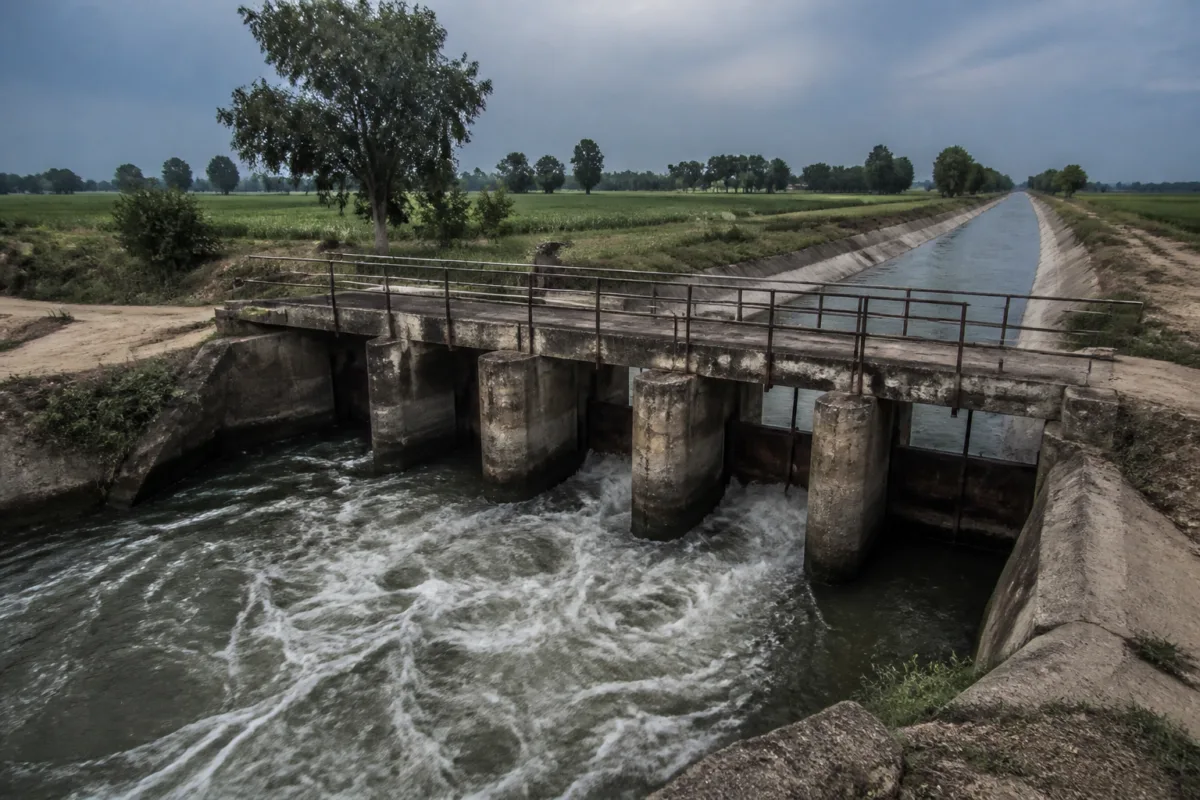
A second resolution focuses on the Ropar, Harike and Ferozepur irrigation headworks. Punjab argues that the structures lie entirely within its territory and that their operation is important for flood management and public safety. It wants administrative control transferred to the state government and urges the Centre to amend the Punjab Reorganisation Act, 1966, to provide permanent state control.
The issue is currently before the Supreme Court, where Punjab has challenged Sections 78 and 79 of the Reorganisation Act. The proposed resolution thus links the physical location of infrastructure with the question of who should administer it. For cities, settlements and agricultural areas dependent on regulated water flows, that distinction is significant: control over a headwork determines who operates a structure, responds to risk and makes decisions about the movement of water. The supplied report does not establish how the Supreme Court will decide the pending matter, but it confirms that the dispute has moved simultaneously through the legislative, executive and judicial channels.
The third resolution renews Punjab’s opposition to the Dam Safety Act, 2021. The state had previously sought its repeal through a unanimous Assembly resolution on May 5, 2025. The latest resolution maintains that the law encroaches on the constitutional powers of states over water resources and dams located within their boundaries, and again demands its immediate repeal.
This disagreement is about more than the wording of a central law. It reflects a recurring governance question in India’s infrastructure system: whether safety oversight should be organised primarily through a national framework or through state control of assets located within state territory. The resolution records Punjab’s position, but it does not alter the legal status of the Act or establish that the demand for repeal has been accepted by the Centre.
The fourth resolution turns the water dispute into a financial claim. Punjab says it has continued supplying Ravi, Beas and Sutlej waters to Rajasthan despite severe groundwater depletion and without receiving payment. The state government has issued notices seeking payment, including a demand notice dated August 10, 2026. The proposed resolution asks Rajasthan to acknowledge the liability and pay the amount claimed by Punjab, while also urging the Centre to create a mechanism for annual payments in the future.
The financial dimension is important because water infrastructure has operating costs even when inter-state supply is treated as a matter of allocation or public obligation. Punjab’s proposed demand for annual payments would seek to convert an unresolved and long-standing arrangement into a more formal recurring transaction. The report does not specify the total amount claimed, the basis used to calculate it, or Rajasthan’s response. Those details remain necessary to assess the scale and legal strength of the demand.
The fifth resolution addresses water flowing into Pakistan through the Ravi downstream of the Madhopur headworks. Punjab maintains that much of this flow originates in streams rising in Jammu and Kashmir, including the Ujh, Tarnah and Basantar, which join the Ravi downstream of Madhopur. It cites an average annual downstream flow of 0.62 million acre-feet during 2016-25 and argues that the water cannot be stored or diverted within Punjab under existing conditions.
The resolution consequently asks the Centre to expedite the Ujh Multipurpose Project and approve the second Ravi-Beas Link Project. This places the emphasis on physical capacity rather than allocation alone. Water that cannot be stored or redirected becomes a question of whether the state has the necessary infrastructure to use it. The proposal also shows how river management is linked to projects whose approval, financing and implementation depend on decisions beyond the state government’s direct control.
The five resolutions therefore cover different instruments of governance: a request for a tribunal, a demand to amend a reorganisation law, opposition to a central safety statute, recovery of alleged water charges and calls for new water-utilisation projects. Their common thread is Punjab’s attempt to gain greater authority over both the legal framework and the physical systems through which water is allocated, stored and released.
The evidence supplied also points to a conflict between resource stress and institutional fragmentation. Punjab’s government cites dwindling water resources and growing agricultural requirements while arguing that it continues to supply water outside the state. At the same time, control of key headworks, the validity of inter-state arrangements, dam safety regulation and the use of downstream flows involve the Centre, neighbouring states, Parliament or the courts. The result is a system in which responsibility for water outcomes is distributed across several institutions, while the consequences of scarcity are experienced within specific territories.
The groundwater reference adds a further layer. Punjab’s argument over payments is framed against severe groundwater depletion, suggesting that the state’s concern is not only the volume of surface water leaving or entering its system but also the relationship between surface-water obligations and the condition of its own water reserves. The report does not provide groundwater levels, agricultural demand figures or a breakdown of supply volumes beyond the cited downstream Ravi flow. It therefore establishes the policy concern but not the full scale of the resource imbalance.
The Assembly’s action will also not, by itself, settle the disputes. A resolution can state the state’s position and direct political pressure towards the Centre or another state, but the specific matters described in the report involve pending litigation, existing legislation, prior agreements, demand notices and project approvals. The next stages will depend on how those institutions respond and whether the resolutions translate into formal legal, administrative or financial action.
What the resolutions confirm is that Punjab’s water question has become an integrated governance problem. Allocation rights, infrastructure control, dam safety, payment mechanisms and project capacity cannot be treated as separate issues when the same rivers and headworks connect them. What remains uncertain is the response of the Centre, Rajasthan and the courts, as well as the status of the projects proposed for greater water utilisation. Those responses will determine whether the Assembly’s intervention produces a new administrative arrangement or remains another chapter in Punjab’s long-running inter-state water dispute.

