


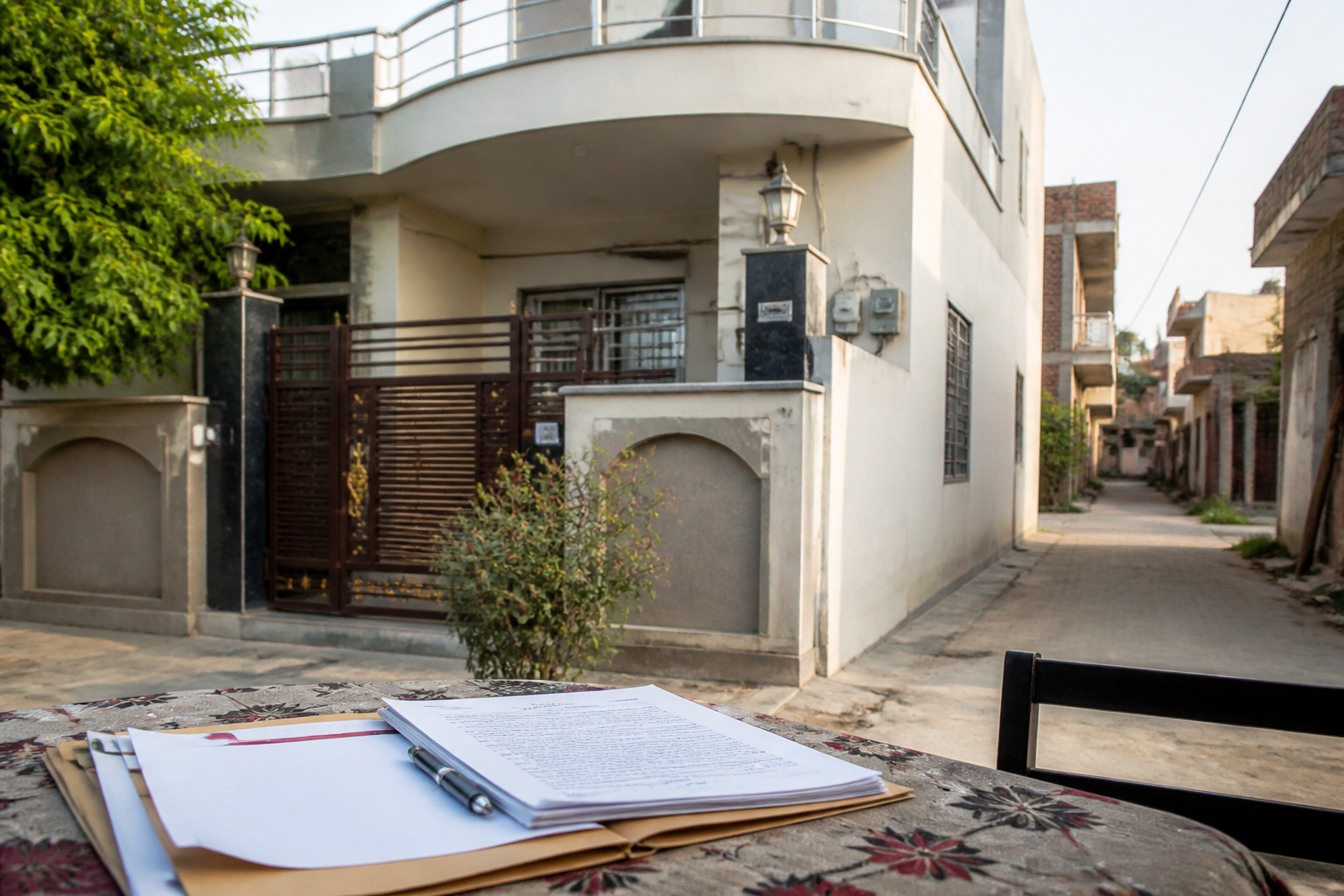
A Punjab tenant eviction case involving an NRI landlord has exposed a legal fault line in the way property owners seek to recover homes for personal use. The Punjab and Haryana High Court rejected an eviction plea after finding that the landlord had relied on a provision that had been repealed years before the tenancy began, while also leaving open the possibility of other remedies under the applicable law.
The dispute involved a residential property in Jagraon, Punjab. The owner purchased the property in 2012 and initially lived there. After moving to Canada in 2020, he rented it to a woman for Rs 20,000 a month. In 2021, he asked her to vacate, saying that he needed the house for his own use during visits to India because he faced difficulty finding suitable accommodation.
The tenant refused to leave, and the landlord filed an eviction petition on April 29, 2021. He invoked Section 13-B of the East Punjab Urban Rent Restriction Act, 1949, claiming the special protection available to a Non-Resident Indian landlord. The Rent Controller accepted his plea on August 12, 2021 and ordered the tenant to vacate.
The High Court subsequently overturned that order. According to the legal explanation cited in the report, the central problem was that Section 13-B had already been repealed on November 30, 2013. The tenancy in this case began only on January 17, 2020, more than six years after the repeal. The landlord therefore could not create a new right under a provision that was no longer in force when the tenancy was established.
The ruling matters because rent-control disputes are not decided only by the landlord’s stated need for a property. The legal route used to establish that need, the date when the tenancy began and the law applicable to the premises can determine whether the claim is maintainable at all. In this case, the High Court did not examine whether the landlord genuinely required the house for his own use because it found that the original eviction petition could not stand on the provision cited.
The landlord later attempted to rely on the Punjab Rent Act, 1995, which replaced the 1949 legislation from November 30, 2013. That alternative also failed on the facts described in the judgment. Section 24(3) of the 1995 Act provides a special remedy for NRI landlords in circumstances where premises were let out on or before the commencement of the Act and the NRI owner later returns to India for permanent residence. The tenancy in Jagraon began in 2020, so it did not fall within that specific provision.
The distinction is important for property owners who assume that NRI status by itself creates an automatic right to recover possession. The reported legal interpretation indicates that the special remedy is linked to statutory conditions and cannot simply be transferred from one rent law to another. A landlord must establish that the tenancy, the timing of the claim and the status of the premises fit the relevant legal framework.
Section 75 of the Punjab Rent Act, 1995 was also considered in the dispute. That provision preserves rights and proceedings that had already arisen or were already in existence under the repealed law. However, the explanation cited in the report is that it cannot be used to manufacture a new right after repeal. There was neither an existing tenancy nor a pending eviction proceeding concerning this property on November 30, 2013. As a result, there was no accrued Section 13-B right to preserve.
This is where the case moves beyond a narrow dispute between one owner and one tenant. It demonstrates how transitional provisions operate in urban property law. When legislation changes, the law may protect rights that already exist, but that protection does not necessarily extend to arrangements created years later. For landlords and tenants, the date of a tenancy can therefore be as important as the ownership documents or the stated purpose of occupation.
The court also considered whether the property could be exempt from the Punjab Rent Act, 1995. The landlord relied on the fact that he had purchased the plot in 2012. But the relevant exemption under Section 3(1)(c), as explained in the report, depends on when construction was completed rather than when the land was purchased.
The landlord had not established the legally relevant completion date through the completion intimation or property-tax assessment required under the Act. The Rent Controller had also not made a specific finding on the issue. This created a separate evidentiary weakness. Ownership of an older plot did not, by itself, prove that the completed building qualified for the statutory exemption.
The construction date has practical significance because the exemption is calculated from the completion of the building, not from the purchase of the underlying land. The report states that the relevant evidence would primarily include the completion intimation submitted to the authority or the first property-tax assessment, whichever occurred earlier. Without such records, a landlord may struggle to establish whether the property falls inside or outside the rent-control framework.
Even if the property were ultimately found to be exempt, that would not revive Section 13-B of the repealed 1949 law. The landlord would then have to pursue the remedies available under the general law governing exempt premises, subject to the tenancy documents and other applicable requirements. If the property is not exempt, the landlord would instead need to rely on the ordinary statutory grounds for eviction under the Punjab Rent Act, 1995.
The proceedings also contained a procedural concern. The High Court identified an issue with the Rent Controller effectively reconsidering an earlier order despite having no statutory power of review. The court held that, in any event, the eviction order could not survive because the original petition was not maintainable under the legal provision invoked.
For tenants, the ruling reinforces the importance of examining the legal basis of an eviction petition rather than responding only to the owner’s claim of personal need. For NRI landlords, it shows that returning to India or requiring accommodation during visits may not be sufficient to obtain possession through a special route. The statutory conditions must be met, and the records supporting those conditions must be available.
For the wider rental-housing system, the case highlights an administrative problem that often remains invisible until litigation begins: property records are not merely ownership documents. Completion certificates, property-tax assessments, tenancy dates and statutory notifications can determine the rights available to both sides. Missing or unclear records can turn a claim that appears straightforward into a prolonged legal dispute.
The High Court has not ruled that the landlord can never seek possession. It has rejected the particular eviction route used in this case while leaving open any other remedy available under the applicable law. The next legal question will therefore be which framework governs the property: an exemption based on the date of construction or the ordinary protections and grounds under the Punjab Rent Act, 1995. That determination will depend on the documents establishing the building’s completion date, the tenancy terms and the legal status of the premises.
