


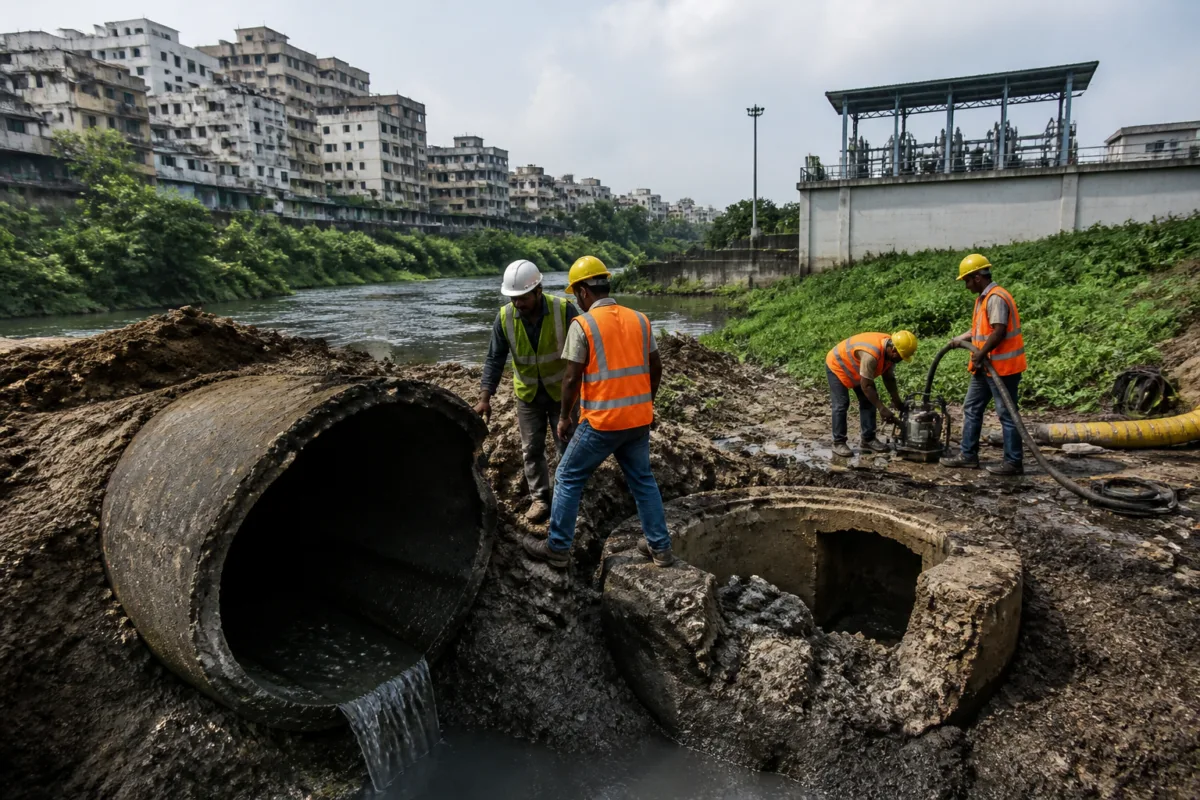
Pune’s sewage network continues to see major pipeline failures despite annual spending on repairs, with leaks reported near the Mutha River and around the Erandwane sewage treatment plant (STP), according to a report by Sakal.
The report said the Pune Municipal Corporation (PMC) spends crores of rupees each year repairing large-diameter pipelines that carry sewage to treatment plants. However, sewage is reportedly entering the river directly at several locations because damaged sections have not been repaired or comprehensively surveyed.
Pune generates sewage that is treated at a daily capacity of 477 million litres, while the city has approximately 200 km of large-diameter sewage pipelines. Failures in these lines can obstruct the movement of sewage to STPs and increase the risk of untreated discharge into natural water bodies.
The municipal sewage department has invited annual tenders for repair and maintenance work across the limits of 15 regional offices. This year’s tenders are valued at Rs 8.49 crore. The report questioned whether the expenditure is producing durable repairs, particularly because the department could not provide clear information on the total number of active leaks or the number of locations scheduled for repair.
At a location behind the Navsha Maruti temple on Sinhagad Road, a damaged pipeline section in the Mutha riverbed had reportedly been brought to the sewage department’s notice about a month earlier. Sakal reported that the repair had still not been completed and that thousands of litres of sewage were entering the river each day.
The publication said its inspection found five breaches in the same pipeline within a distance of about 100 metres. A separate inspection around the Erandwane STP and pumping station reportedly found two damaged large sewage pipelines, followed by three more breaches within another 100-metre stretch when the area was revisited.
The report also said that Erandwane STP has a treatment capacity of 50 million litres per day. When inflows exceed that capacity, the additional sewage is expected to move through the pipeline to the Tophkhana pumping station. A damaged chamber had instead allowed the excess water to enter a drain, according to the report. Repair work was subsequently reported to have begun at the location.
The reported failures raise questions about whether the PMC’s repair programme is identifying the full condition of the network or addressing only visible and reported defects. With approximately 200 km of large-diameter pipelines, isolated repairs may not establish the scale, cause or recurrence rate of failures across the system.
Vishal Haribhakt, chief engineer of the PMC sewage department, said the maintenance and repair tender would remain active throughout the year rather than for only three months. He also said surveys had been conducted while preparing the estimates and that the locations requiring work had been identified.
The report did not provide a citywide leak inventory, independent water-quality findings or details of the repair methods and completion standards being used. These details will be important for assessing whether the current works reduce untreated discharge and improve the reliability of sewage conveyance to Pune’s treatment plants.

