


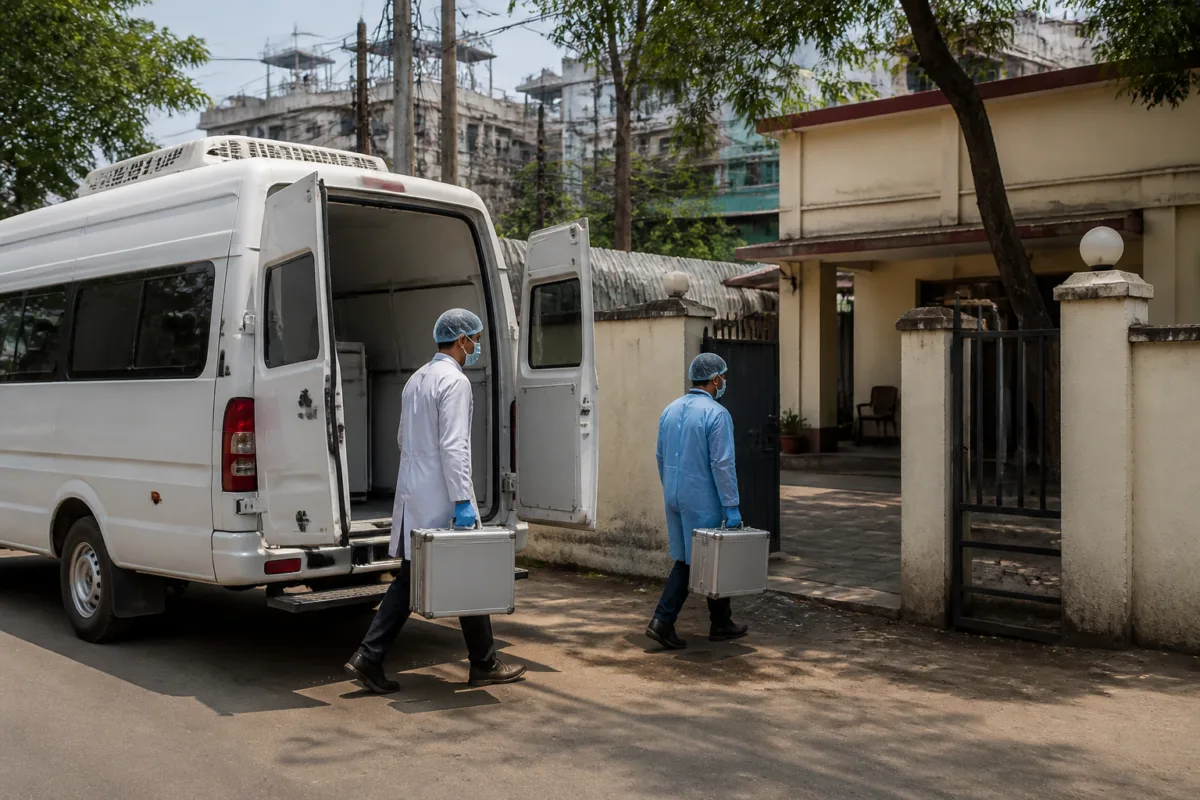
Nagpur division ranked fifth among Maharashtra’s divisions for crime-scene visits by mobile forensic laboratories between February 2025 and November 12, 2026, despite having 41 vehicles in its fleet, according to a report by Loksatta.
Across 35 districts, 259 mobile forensic laboratories visited 54,164 crime scenes during the period. Mumbai recorded the highest number of visits, with 43 vehicles attending 14,090 scenes. Pune followed with 10,253 visits by 38 vehicles, while Amravati recorded 7,585 visits using 29 vehicles. Nashik completed 6,788 visits with 34 vehicles.
Nagpur’s fleet reached 6,327 crime scenes, placing it behind the three divisions with smaller fleets. The report said Nagpur accounted for about 12% of the statewide visits, the same rounded share as Nashik.
The gap is more evident when visits are measured per vehicle. Mumbai averaged 327 visits per vehicle, followed by Pune at 269 and Amravati at 261. Nashik averaged 199 visits, while Nagpur recorded 154. The statewide average was 209 visits per vehicle, according to the figures cited by Loksatta.
The mobile laboratories were introduced to strengthen police investigations through scientific evidence collection. Under the Bharatiya Nyaya Sanhita, visits by forensic experts to crime scenes are mandatory for offences carrying a punishment of seven years or more, the report said.
The figures therefore measure more than fleet size: they indicate how extensively the forensic response system is being used across divisions. Amravati’s higher number of visits with 29 vehicles and Pune’s performance with 38 vehicles show that a larger fleet does not automatically translate into greater coverage.
For Nagpur, the reported average of 154 visits per vehicle is 55 below the statewide average. The report does not identify whether the difference is linked to staffing, vehicle availability, case referrals, geographic coverage, laboratory capacity or other operational factors. It also does not provide division-wise data on the number of eligible serious offences or the outcomes of the forensic examinations.
The available figures establish a clear utilisation gap but do not, by themselves, determine the quality or effectiveness of the evidence collected. They do show that the expansion of mobile forensic capacity has produced uneven levels of crime-scene coverage across Maharashtra, with Nagpur recording the lowest per-vehicle performance among the divisions listed in the report.

