


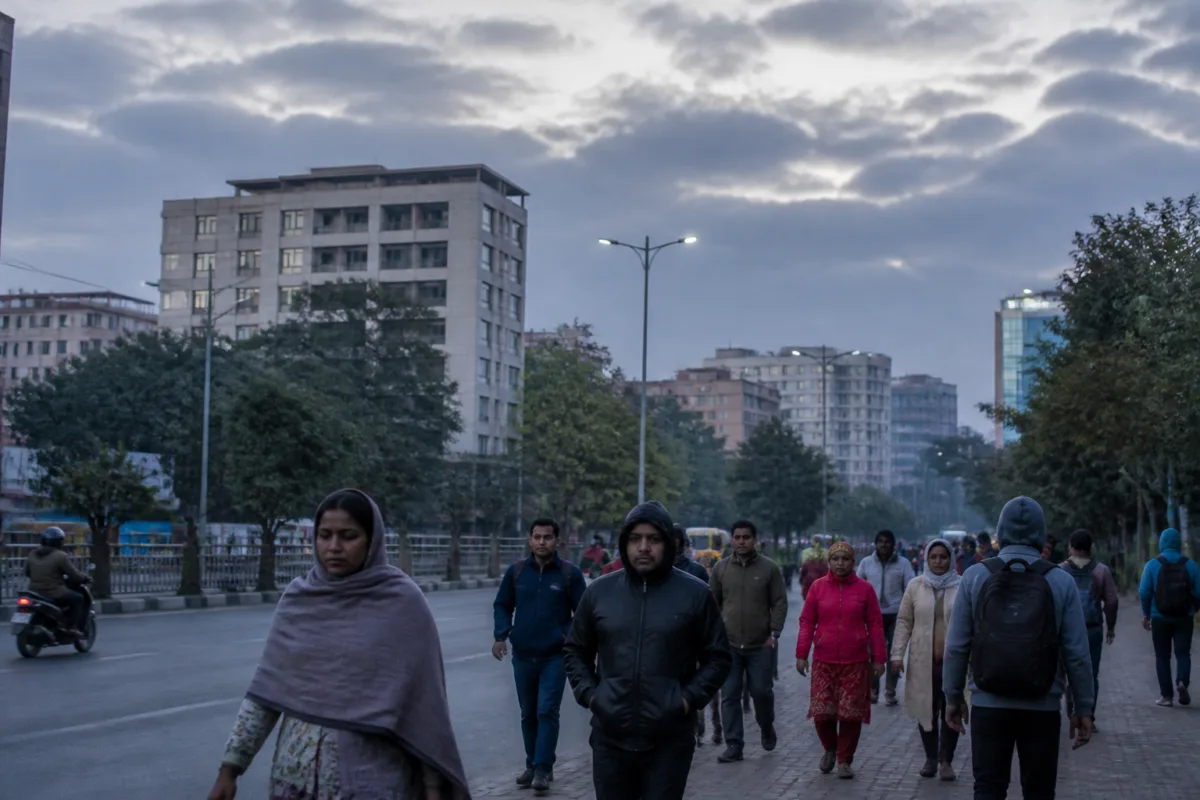
Pune recorded its coolest October morning in two years on Wednesday, with the minimum temperature falling to 14.9°C at Shivajinagar as a sharp 18°C gap between night and daytime temperatures coincided with increased complaints of joint pain and muscle cramps.
The India Meteorological Department attributed the drop in night temperatures to dry, cold northwesterly winds and clear skies that allowed greater radiational cooling. Shivajinagar’s minimum temperature fell from 17.4°C on Monday to 16.3°C on Tuesday before reaching 14.9°C on Wednesday, the lowest October reading recorded there since 2024, according to data cited in the report.
Other parts of Pune also recorded lower temperatures. Pashan registered a minimum of 15°C, Lohegaon 16.7°C and Chinchwad 20.5°C. In Pune district, Haveli recorded 14.2°C and Shirur 14.3°C.
SD Sanap, a scientist at the IMD, said the clear skies and dry northwesterly winds had driven the fall in minimum temperatures. However, the weather pattern is expected to shift. Sanap said moisture incursion linked to the movement of a tropical cyclone was likely to keep night temperatures above normal until October 31. Cloud cover could lower daytime temperatures, while minimum temperatures may rise by 2°C to 3°C.
The IMD has forecast partly cloudy skies for Pune, with thunderstorms accompanied by lightning, light to moderate rain and gusty winds at isolated places in the Pune Ghats on Thursday. The forecast introduces a rapid change between cool nights, warm afternoons and possible rain, conditions that can affect daily travel and outdoor activity across the city and surrounding district.
Doctors said they had seen more patients reporting musculoskeletal problems over the past several days. Devendra Vartak, associate consultant in orthopaedics at KEM Hospital, said patients were arriving with joint pain, muscle cramps and, particularly, calf and foot cramps at night. He linked the complaints to the early end of the rainy season, the rise in October daytime heat and the subsequent fall in night temperatures.
Vartak also pointed to inadequate hydration as a possible concern, saying some residents may reduce their water intake as temperatures change. He said the contrast between air-conditioned indoor environments and outdoor heat could add to the temperature variation the body has to manage. According to him, a day-night difference of around 10°C is generally manageable, while a difference of 20°C to 25°C can affect the body.
Abhijit Agashe, an orthopaedic and joint replacement surgeon at Sahyadri Hospital, said complaints had increased over the previous week to 15 days, especially among patients with rheumatoid arthritis, osteoarthritis and other inflammatory joint conditions. He said such patients could experience increased swelling, stiffness and pain, while lower temperatures and reduced movement could aggravate discomfort.
The IMD’s next forecast indicates that Pune’s immediate weather conditions may change again, with rain, lightning and gusty winds possible in isolated parts of the district and night temperatures expected to rise as moisture and cloud cover increase.

