


Pune Municipal Corporation has tightened restrictions on the use of drinking water for vehicle washing, private gardening, swimming pools and construction, with fines of up to ₹10,000 and possible criminal action for a third violation. The measures have been introduced amid concerns over water availability and are backed by an enforcement order issued by Additional Municipal Commissioner Pavneet Kaur.
Standing Committee Chairman Shrinath Bhimale announced the stricter action on Thursday. Under the enforcement framework, residents, businesses, housing societies and contractors found violating the restrictions can face penalties, while repeat offenders may face progressively tougher action. A third violation after two rounds of penalties could result in criminal proceedings, according to the announcement reported by Pune Mirror.
The order assigns monitoring responsibilities to the PMC’s water supply, garden, building permission, construction development and road departments, as well as ward offices. The arrangement places compliance across multiple civic functions rather than limiting enforcement to the water supply department.
Vehicle-washing centres, including public and private facilities, must stop operating during periods of water cuts. Centres that continue using PMC water in breach of the restriction can be fined ₹10,000. Operators using water from their own borewells or wells will be allowed to work on Sundays, Tuesdays and Thursdays.
The restrictions also apply to private gardens and swimming pools. Using PMC-supplied drinking water to maintain a private garden or fill a swimming pool will attract a ₹10,000 penalty for each violation. The order does not prohibit the activities themselves but targets the use of drinking-water supplies for them.
Construction companies and contractors have been barred from using PMC drinking water for building work, road projects and ready-mix concrete production. They must instead arrange treated water from sewage treatment plants or use supplies from private borewells and wells. A violation can lead to a ₹10,000 fine and a direction from the civic body to stop the construction activity.
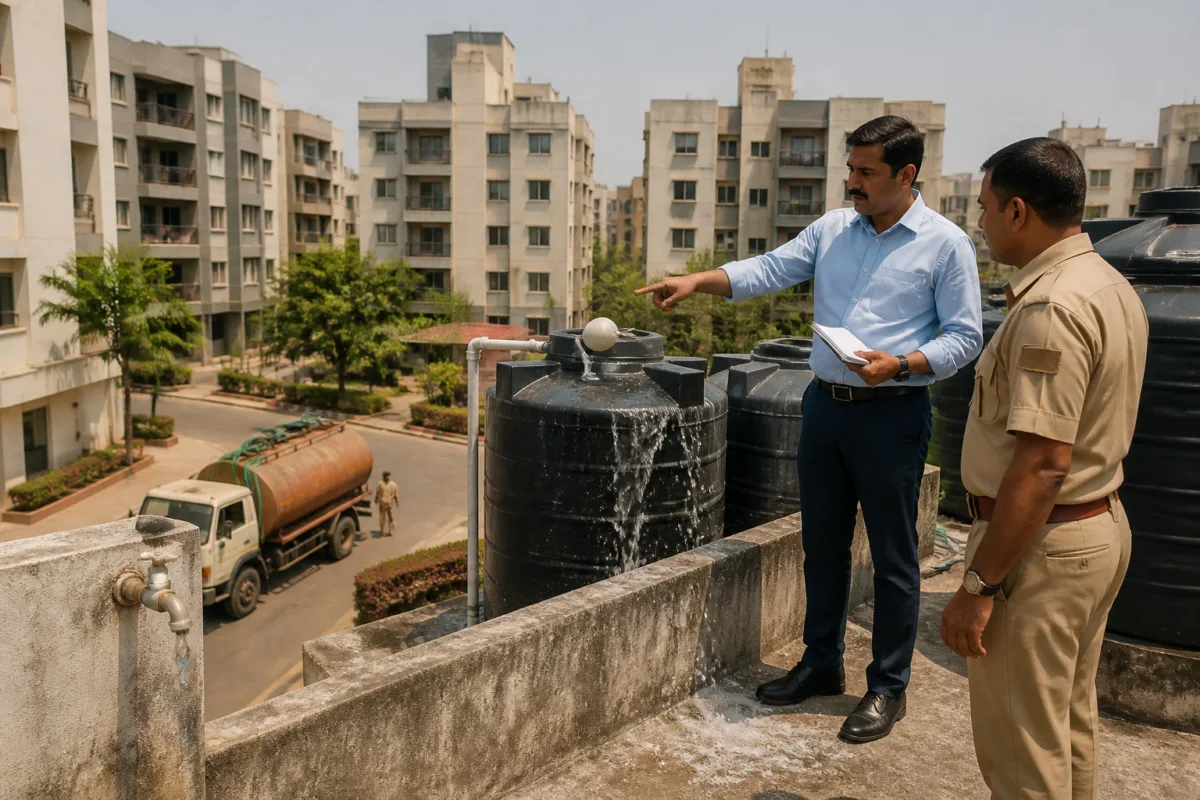
The PMC has also fixed a ₹5,000 penalty for unauthorised water connections and reserved the right to disconnect them immediately. The order covers wastage caused by storage and distribution failures as well. Housing societies that allow overhead tanks to overflow can be fined ₹1,000, while tankers found leaking water during transportation can attract a ₹10,000 penalty.
Housing societies with non-operational sewage treatment plants will receive notices directing them to restart the facilities. The civic administration plans to encourage the use of treated wastewater for activities such as gardening and toilet flushing, reducing the need to draw on drinking-water supplies for non-potable purposes. Societies will also be encouraged to install automatic float valves in storage tanks to prevent overflow.
The enforcement order makes water conservation a responsibility shared by households, private operators, construction agencies, housing societies and several PMC departments. Its immediate implementation will depend on inspections by ward offices and the designated civic departments, along with notices and penalties issued for breaches.

