


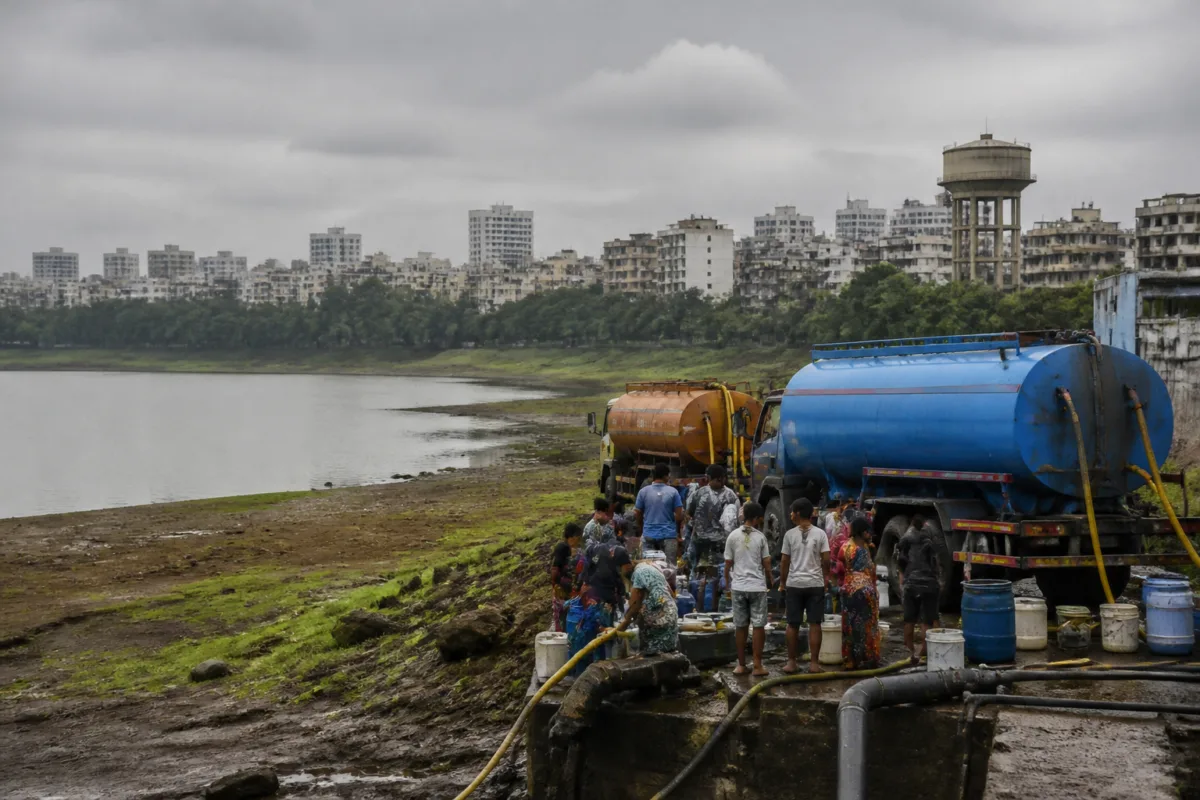
Pune’s water cuts debate is no longer only about whether the weekly shutdown should continue. It has become a test of how the city calculates demand, allocates reservoir water and accounts for the public money spent on reducing leakage and making supply more equal.
The Sajag Nagrik Manch has opposed any increase in Pune’s existing 10 per cent water cut, arguing that the city can meet its requirements until 31 August 2027 if the current arrangement of shutting water supply every Thursday continues. The citizen forum submitted a memorandum to Municipal Commissioner Naval Kishore Ram after the district administration proposed increasing the cut to 20 per cent.
The argument is based on a calculation of storage in the Khadakwasla dam chain and the city’s monthly withdrawal. According to the figures presented by forum representative Vivek Velankar, the reservoirs held 25.66 TMC of water as of 15 October. Pune Municipal Corporation is estimated to draw about 1.6 TMC a month from the system when no cut is imposed.
The forum estimates that Pune would require about 15 TMC between 15 October and 31 August if the weekly shutdown is retained. On that calculation, reserving 15 TMC for the city would leave 10.66 TMC in storage. After accounting for about 3 TMC for evaporation, the remaining 7.66 TMC could be available for irrigation and for filling drinking-water reservoirs serving the Daund and Indapur areas, the memorandum says.
These figures are presented by the citizen forum, not as an independently verified municipal water balance in the supplied report. That distinction is important because reservoir allocation is not determined only by the volume visible in storage. It also involves competing urban, rural, irrigation and drinking-water requirements, as well as the period over which the available water must be managed. The report does not include a response from the municipal commissioner, the district administration or the water resources authorities to the forum’s calculation.
The immediate policy question is therefore whether Pune needs a deeper cut or a more transparent explanation of its water accounting. A decision to increase the cut to 20 per cent would affect households, businesses, public institutions and neighbourhoods differently, particularly in parts of the city where supply is already uneven. A continuation of the current schedule would also require authorities to demonstrate that the projected balance remains adequate through the end of August 2027.
That makes the issue more complex than a dispute over one additional day without water. It raises the question of what the city treats as its effective water demand. The forum’s calculation uses a monthly withdrawal estimate and a defined period, while the city’s decision-making may also have to account for distribution losses, changing consumption, emergency reserves and the requirements of areas outside Pune supplied by the same reservoir system. The supplied report does not establish how each of these factors has been incorporated into the official proposal.
The controversy also brings Pune’s equal water supply project back into focus. The scheme was intended to reduce leakage and provide more uniform water supply across the city. Velankar has questioned what the project achieved after approximately Rs 2,000 crore was spent over the past five years from taxpayers’ money. The forum has asked the municipal corporation to publish a white paper detailing the scheme’s outcomes.
A white paper would be significant because the success of an urban water project cannot be measured only by the infrastructure constructed. It must also be assessed through the service residents receive: how much water enters the system, how much is lost before reaching consumers, how frequently different areas receive supply, and whether the gap between better-served and poorly served neighbourhoods has narrowed. The report, however, does not provide performance data on leakage, coverage, supply hours or neighbourhood-level outcomes.
This missing information is at the centre of Pune’s water governance problem. Reservoir storage is a visible and easily communicated number, but it does not by itself explain the reliability of the network. A city can have substantial water in its source reservoirs and still deliver an unequal service if its pipelines, storage tanks, pressure management and distribution schedules do not function consistently. Conversely, a temporary supply cut can be justified only if the authority clearly explains the assumptions behind it and the duration for which it is needed.
The proposed increase also highlights the institutional structure behind Pune’s water decisions. The municipal corporation manages urban distribution, while the district administration can influence the framework within which water cuts are considered. The Khadakwasla system serves needs that extend beyond the municipal boundary, including irrigation and drinking-water requirements in the Daund and Indapur areas. This means the city’s supply plan is part of a wider allocation system rather than a standalone municipal operation.
In such a system, public confidence depends on a common and verifiable water balance. The citizen forum has supplied one calculation: 25.66 TMC in storage, approximately 15 TMC required for Pune until 31 August, 3 TMC set aside for evaporation and 7.66 TMC potentially remaining for other uses. The administration’s case for a 20 per cent cut would need to explain where its calculation differs, including the assumptions on consumption, losses, reserve requirements and competing demand.
The numbers also show why the equal water supply project cannot remain separate from the water-cut debate. If the city is withdrawing about 1.6 TMC each month without cuts, then reducing losses could affect how much water needs to be drawn from the reservoirs. But the supplied report does not state the project’s measured reduction in leakage or whether the municipal corporation has linked those outcomes to its present water allocation. Without that information, residents cannot determine whether the infrastructure programme has improved resilience or whether the city remains dependent on periodic restrictions.
The dispute is therefore not evidence by itself that the proposed 20 per cent cut is unnecessary, nor does the citizen forum’s estimate establish that the current schedule is sufficient. It does establish that the public debate is taking place without a complete set of commonly available figures. The municipality’s response, the district administration’s water calculation and the promised or requested white paper would be needed to resolve that gap.
For Pune residents, the immediate consequence is practical: the existing Thursday shutdown may continue, or the restriction may become more severe. For the city, the larger question is whether water cuts are being used as a short-term response to storage pressure or as part of a clearly published allocation and distribution plan. The next important development will be the authorities’ response to the memorandum and whether the municipal corporation publishes a detailed account of the equal water supply scheme’s results.

