


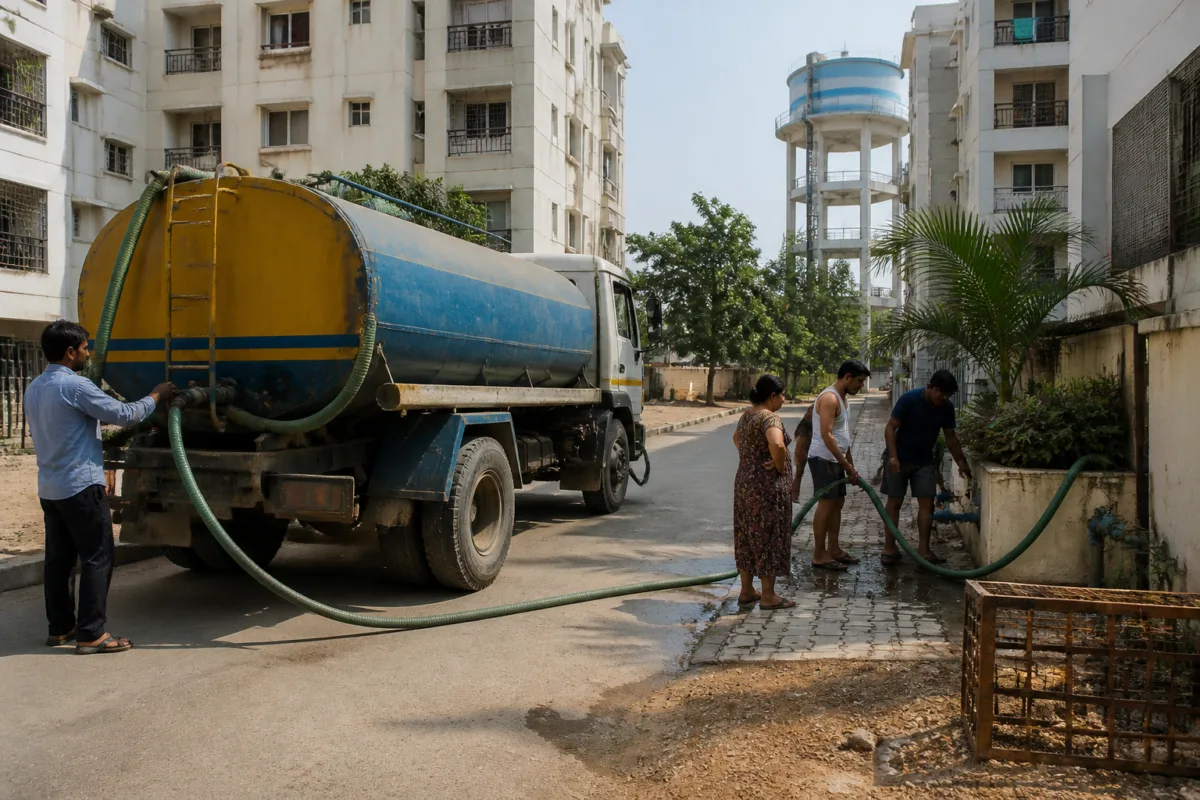
Housing societies in Pune and Pimpri Chinchwad have sought continued tanker water supply until distribution pipelines and overhead tanks under ongoing infrastructure projects become fully operational.
The demand was raised at a water committee meeting chaired by divisional commissioner Sheetal Teli-Ugale on Monday, where residents reported inadequate supply, low pressure and delays in commissioning overhead tanks. They also called for regular local-level meetings to resolve water complaints.
Sachin Londhe, president of the Pimpri Chinchwad Cooperative Housing Societies’ Federation, said no meetings on water issues had been held since April. He also questioned the lack of clarity over developers’ affidavits on water supply and over which authority is responsible for supplying water to housing societies.
Residents said several parts of Pimpri Chinchwad had been receiving water on alternate days for the past seven years. Societies in Pimple Saudagar reported uneven distribution, with some receiving adequate water while others in the same locality continued to face shortages.
In Mohammadwadi, residents said water supply from three Pune Municipal Corporation overhead tanks had begun, but several pockets remained dependent on tankers. Residents in Ambegaon reported severe shortages despite the area being incorporated into PMC limits in 2017. They said a 24×7 water-supply pipeline project was being implemented in the area without provisions for their locality.
The Balewadi Welfare Federation also highlighted a water deficit of around 2.5 million litres per day.
Following the complaints, Teli-Ugale directed officials from the Pune Municipal Corporation and Pimpri Chinchwad Municipal Corporation to address local water-supply grievances through area-level meetings and mohalla committees. Residents also sought periodic reviews to check whether infrastructure projects are translating into improved supply on the ground.
The demand for tanker support links immediate relief for affected housing societies with the delayed commissioning of permanent water infrastructure. The complaints also point to uneven distribution and unresolved responsibility for supply in expanding residential areas across the two civic jurisdictions.

