


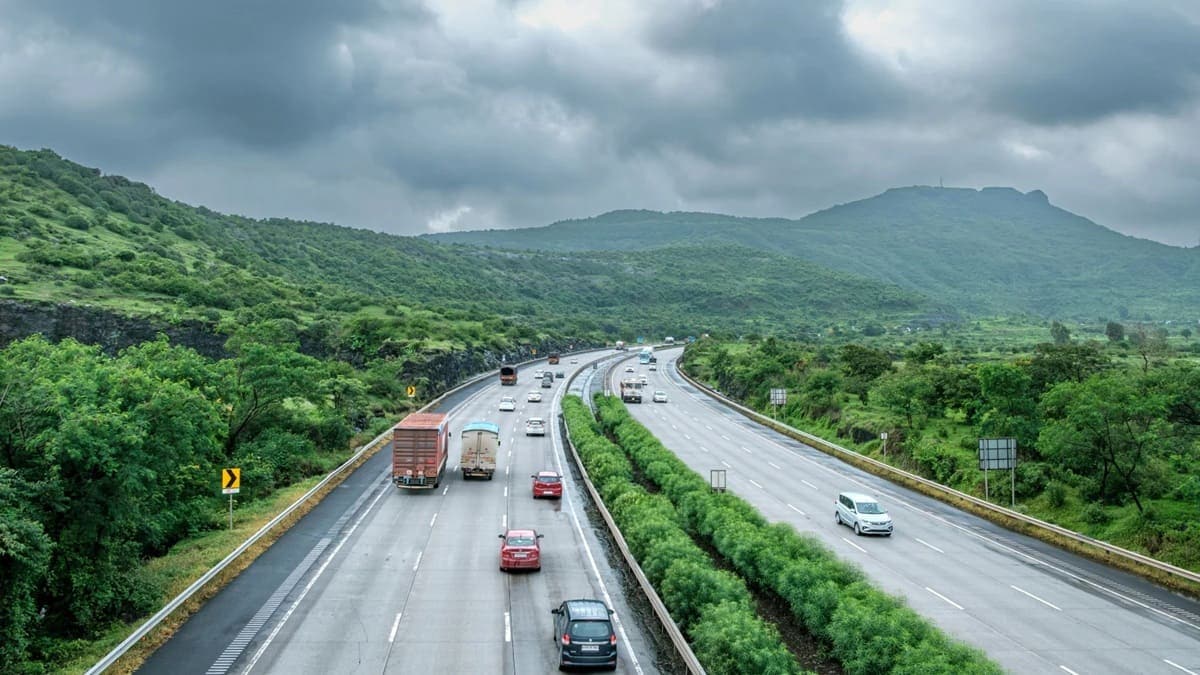
The reported police action against groups filming reels with luxury cars on roads in Mhalunge MIDC and Bavdhan has brought a recurring urban conflict into view: public roads being used as temporary production spaces, while ordinary traffic is forced to absorb the risk and disruption.
According to a report by Loksatta – Pune, three people were detained after a video recorded on an internal road in Mhalunge MIDC showed vehicles being driven in parallel, slowing down or stopping suddenly, and obstructing traffic for aerial and camera footage. Police seized four cars after identifying their registration numbers through CCTV footage. The reported filming took place on the road connecting Sant Tukaram Chowk towards Mindewadi.
A separate case was registered at Bavdhan police station after a newly purchased car and other vehicles were brought onto a highway for filming on August 27. The report said vehicles were parked together on the road, some were stopped in the carriageway and others were driven close together and in parallel. The case followed a complaint by police constable Suraj Tilekar, according to the report.
These are not simply disputes over where a video may be recorded. They involve the temporary conversion of a functioning transport corridor into a controlled set. A road that normally distributes traffic between industrial, residential and regional destinations becomes, for the duration of the shoot, a space in which vehicles are positioned for the camera rather than moved for public travel.
The Mhalunge incident reportedly became visible after a drone-filmed video was circulated on social media on September 3. Police used the footage and CCTV images to identify the vehicles. The reported conduct included sudden changes in speed, abrupt stopping and blocking the path of vehicles travelling behind them. The result, according to the police account cited by Loksatta, was congestion and queues on the road.
The account also says that filming with drones or drone-like cameras took place despite an order under Section 163 of the Bharatiya Nagarik Suraksha Sanhita restricting such photography at sensitive and important locations within the Pimpri-Chinchwad police commissionerate area. The report does not provide the full text, duration or geographic map of that order, so the precise scope of the restriction cannot be established from the supplied material. It does, however, identify the order as an additional basis for the police case.
The two reported cases show how the risk is produced collectively. A single vehicle stopping briefly may cause inconvenience. Several vehicles placed across lanes, driven side by side or slowed together can create a moving obstruction. The danger increases when the filming requires repeated takes, camera positioning, drone operations or sudden manoeuvres. The road user approaching from behind may have little warning about why traffic has stopped or how the vehicles will move next.
The reported conduct also illustrates a gap between the private logic of digital content production and the public function of roads. For those making a reel, the road is a visual backdrop and the vehicles are part of the performance. For other users, the same space is a regulated corridor with expectations of predictable movement. When filming changes speed, lane use or stopping behaviour, it imposes the production’s requirements on people who have not consented to participate.
That conflict is particularly important in industrial areas. Internal MIDC roads are not merely empty backgrounds. They serve workers, goods vehicles, service providers and residents moving between employment centres and surrounding neighbourhoods. Their apparent openness can make them attractive for vehicle shoots, but the absence of a formal studio or controlled traffic environment does not remove the road’s operational role.
The Bavdhan case adds a different setting but a similar pattern. The reported filming involved a newly purchased car, another car and additional vehicles brought together on a highway. The vehicles were allegedly arranged or driven in ways that affected the flow of traffic. The complaint reportedly names the vehicle owner, photographer, driver and others, and police have registered a case under provisions of the Bharatiya Nyaya Sanhita and the Motor Vehicles Act.
The supplied report does not specify the exact sections applied in either case, the number of people formally arrested, the duration of the traffic disruption, or whether anyone was injured. It also does not establish whether the two groups were connected. Those distinctions matter. The Mhalunge report refers to three people being detained and four cars being seized, while the Bavdhan account describes a separate complaint involving several participants. The incidents should therefore be understood as two reported police actions, not as one combined operation involving a single group.
What is clear from the report is the enforcement sequence. In Mhalunge, a publicly circulated video drew attention to the conduct; CCTV footage was then used to identify the vehicles; the cars were seized and a case was registered. In Bavdhan, a police constable filed a complaint, and the station began investigating. The actions indicate that digital evidence can make road-safety violations more visible after the event, even when the original filming has ended.
That sequence also exposes the limits of relying on viral footage as the main detection mechanism. A video can show a particular manoeuvre, but it may not establish the full location, duration, traffic impact or identity of every participant. CCTV, vehicle-registration records and the investigating agency’s complaint provide the additional links needed for enforcement. In the reported Mhalunge case, the police account says those links were created through CCTV and vehicle numbers.
The use of drones adds another layer of governance. A drone can capture a road from an angle that makes a convoy or manoeuvre appear visually controlled, but its operation may still be restricted in designated places. The issue is therefore not only whether vehicles obstruct traffic; it is also whether filming equipment is being used in a location covered by a security or public-order prohibition. The report identifies this as a factor in the Bavdhan case, although the available material does not set out the relevant order in detail.
The incidents raise a broader question for cities experiencing rapid growth in short-form video production: who controls the temporary use of public infrastructure for commercial, promotional or personal content? The supplied report does not indicate that either group obtained permission for traffic management, road closure, drone operation or organised filming. Nor does it state whether a formal permitting system was approached. These facts remain unestablished.
That uncertainty is significant because ordinary road users have no practical way to distinguish an authorised shoot from an improvised one. A permitted production may involve traffic marshals, safety plans and a designated location. An unplanned shoot may depend on drivers reacting to vehicles stopped ahead. Without clear enforcement and visible authorisation, both activities can appear similar until congestion or danger results.
The police cases also show why traffic obstruction cannot be treated as a minor inconvenience when it is deliberate or repeated. The report says the conduct created queues, obstructed vehicles behind the filming group and posed a risk to the lives and safety of other road users. The public road is a shared asset, and its temporary occupation by one group transfers the cost of production to everyone else using it.
At the same time, the available evidence does not support broader claims about how widespread such filming is in Pune or Pimpri-Chinchwad. The report provides two cases, the dates of the reported incidents and the enforcement actions that followed. It does not include comparative data on similar complaints, traffic-delay measurements or the number of reels filmed on public roads. Any claim of a citywide trend would therefore require additional police, traffic or municipal records.
For now, the cases establish a narrower but important point. The production of social-media content can become an urban mobility issue when vehicles are deliberately slowed, stopped, grouped or driven in parallel on roads still being used by the public. In Mhalunge, the reported response included CCTV-based identification, seizure of four cars and detention of three people. In Bavdhan, police registered a separate case and began an investigation.
The next questions are procedural: what charges will be sustained after investigation, whether the seized vehicles will remain in police custody, what the relevant drone restriction order covers, and whether authorities will identify any additional participants. Until those steps are documented, the incidents are best understood through the verified elements in the police account: roads were used for filming, traffic was obstructed, and enforcement followed.
