


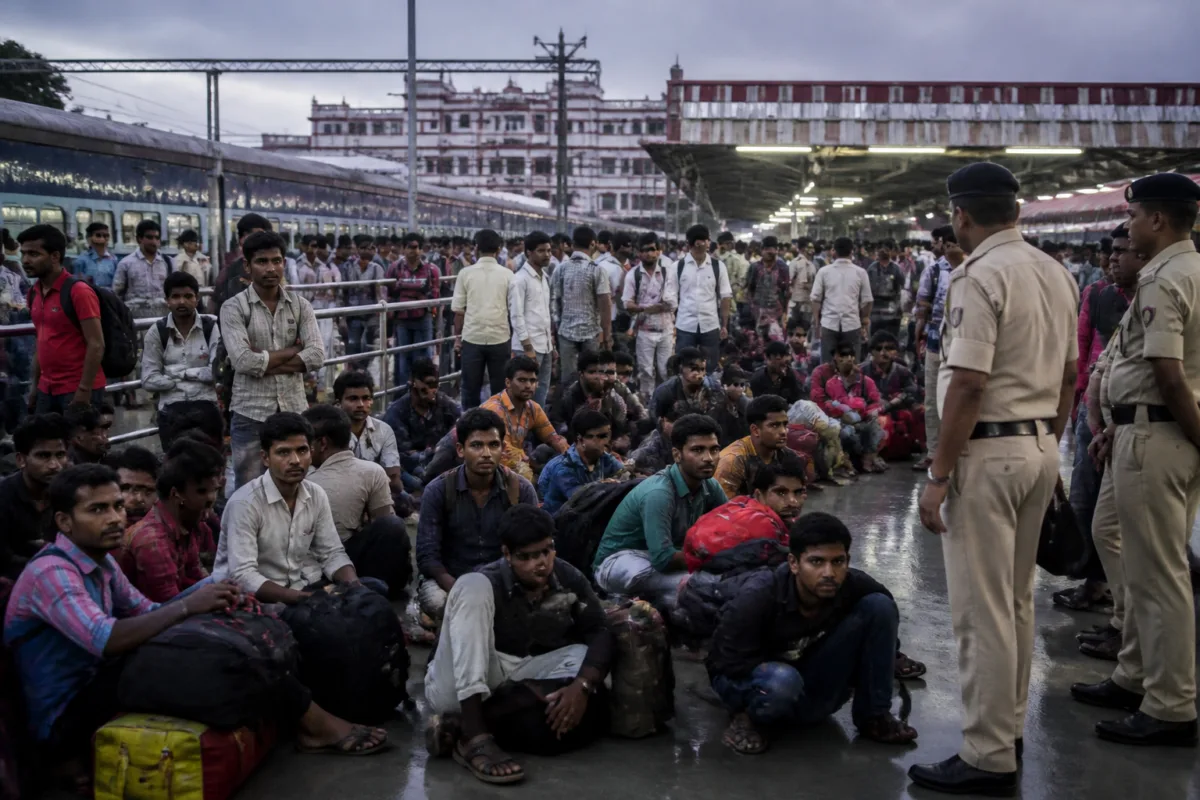
Pune migrant workers from Bihar are leaving the city this festive season after losing jobs to workers from drought-hit districts of Maharashtra, according to a report by the Times of India. Several workers travelling from Pune Junction before Diwali and Chhath said they were uncertain about returning because employers had replaced them with relatives and acquaintances whose farm livelihoods had been affected by drought.
Dinu Kumar, 40, from Supaul district in Bihar, said he lost his job at an automobile repair shop in Nigdi after working there for two years. He told the Times of India that his employer hired three men from Beed, who had previously worked in farming. Kumar said he planned to look for work in Delhi or Mumbai next year rather than return to Pune.
The reported job changes illustrate how distress in rural parts of Maharashtra is affecting the city’s informal and low-wage labour market. Workers from drought-affected districts are moving to urban areas in search of employment, while migrant workers from other states are travelling home after being displaced from jobs in repair shops, eateries, security services and construction-related work.
Giridhar Paswan, 46, from Madhubani district in Bihar, said he had worked as a waiter and security guard in Pimpri for a year. He told the newspaper that his manager asked him not to report for work until July next year because a relative affected by drought had to be accommodated. Paswan said he could not wait without a job and would look for work elsewhere.
At Pune Junction, hundreds of passengers waited in the holding area as the Azad Hind Express arrived at platform 1 at around 7.40pm on Thursday. The report said the area was humid despite several ceiling fans, while Railway Protection Force personnel managed queues and questioned passengers attempting to move ahead. Some personnel were accompanied by sniffer dogs as the station handled the festive-season rush.
Rakesh Mahto, 35, from Jehanabad district in Bihar, said he lost his security guard’s job at a commercial complex in Hadapsar after working there for more than two years. He said he was removed last month and later learnt that a worker from Nanded had been appointed in his place. Mahto was travelling to Kolkata, where a friend had promised to help him find employment.
The workers interviewed by the newspaper did not express anger towards the employers who replaced them. Mahto said circumstances had forced those decisions and that better opportunities could emerge elsewhere. Hira Singh, 43, a mason from Katihar district, said he had been removed after three years of work and was returning home to celebrate Chhath with his elderly mother. He said he expected to find construction work again.
Not every worker travelling from Pune planned to leave permanently. Ravi Kumar, 25, from Vaishali district, said he worked as a security guard at a housing society in Koregaon Park and wanted to spend time with his family. He said he might return after the visit, while also considering marriage during the trip.
The report places Pune Junction at the centre of a wider movement of workers responding to changing employment conditions across Maharashtra. For workers who lose urban jobs, the immediate choices are to return home, seek work in another city or wait for an employer to call them back. The account also shows how drought-related livelihood loss in one region can quickly alter staffing patterns in urban businesses and the movement of workers across state borders.

