


A report linking a recent firing incident involving actor Tiger Shroff to renewed attention on the Lawrence Bishnoi gang has brought Pune’s alleged organised-crime connections back into focus. The report also points to a wider concern for Pune and Pimpri-Chinchwad: businesses facing extortion threats, attacks intended to create fear and the continued use of new local recruits despite arrests in earlier cases.
The account, published by Pudhari – Pune, does not provide details of the reported firing incident involving Shroff, including its location, date, police station handling the case or the evidence linking it to the Bishnoi gang. That gap is material because the incident is presented as the immediate trigger for the renewed discussion. The report therefore requires confirmation from the relevant police authorities before the connection can be treated as established.
The broader issue described in the report is the alleged intersection between a national organised-crime network and local contacts in Pune district. It refers to the murder of Nationalist Congress Party leader and former minister Baba Siddique in Mumbai in October 2024, saying that the investigation brought forward the name of Anmol Bishnoi, identified as Lawrence Bishnoi’s brother, along with other accused persons. The report also says that Shubham Lonkar, who was associated with the Warje area of Pune, came under investigation in that case.
According to the report, investigating agencies claimed that Lonkar was in contact with Lawrence Bishnoi and Anmol Bishnoi. It further states that Akola police had arrested him in an illegal-pistol case, and that investigators later found that he had re-established contact with the gang after obtaining bail. His alleged involvement in the conspiracy related to Siddique’s killing was also reported. These are investigative claims and allegations, not findings independently established in the supplied material.
Pune’s reported links to the network had surfaced earlier in the investigation into the murder of Punjabi singer Sidhu Moosewala. The report names Santosh Jadhav from Pune district and his associate Siddhesh Kamble, also known as Saurav Mahakal, as accused whose names emerged in that case. It says police had stated at the time that the two were in contact with the Lawrence Bishnoi gang.
Taken together, these cases present Pune not simply as a location where suspects may have lived or travelled, but as a possible local operating environment for wider criminal networks. The report does not establish the extent of that network, its organisational structure or the nature of any financial flows. It does, however, identify a recurring investigative challenge: tracing local contacts, weapons, facilitators and recruits connected to cases that may originate outside the city.
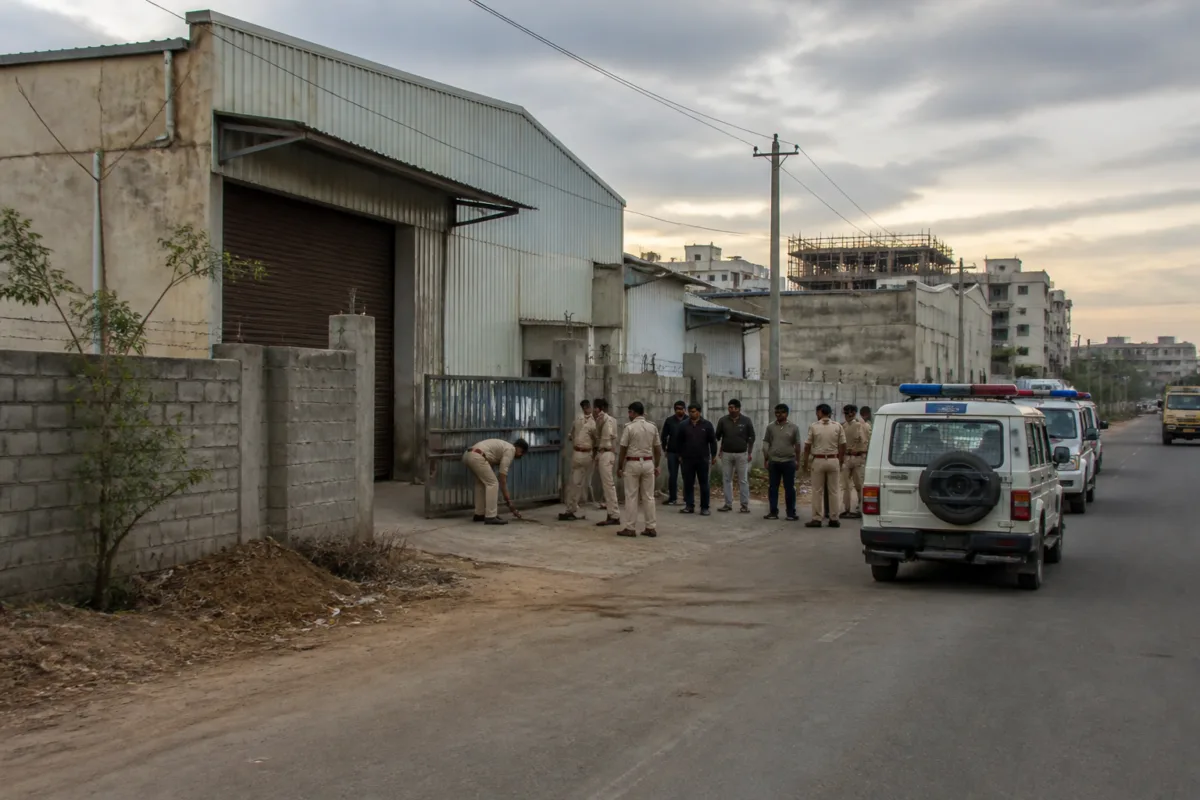
The most immediate urban concern is the reported use of threats against commercial establishments. The article refers to incidents in Pune city and Pimpri-Chinchwad in which business owners were allegedly threatened for extortion. It also mentions firing at a warehouse belonging to a businessman in the Fursungi area after threats were issued. The report does not provide the case number, date, weapon details, injuries, damage assessment or the exact sections of law invoked. Those details would be necessary to assess the scale and pattern of the threat.
Even with those limitations, extortion has a distinct impact on the functioning of an urban economy. A business targeted by threats may face direct financial loss, disruption to operations and pressure on employees and suppliers. When threats are followed by violence or firing, the effect extends beyond the individual establishment. Nearby businesses, transport workers, industrial units and residents may also experience a heightened sense of insecurity, particularly in areas where warehouses, workshops and commercial premises operate alongside housing.
Fursungi’s mention in the report is significant in an administrative sense because such incidents require coordination across policing, criminal investigation, local intelligence and the monitoring of illegal firearms. Pune city police and Pimpri-Chinchwad police have separate jurisdictions, while cases involving suspects from Pune district or other states can extend beyond municipal boundaries. The report’s account suggests that arrests have been made in many of the extortion cases, but it also says that new recruits or “p旁ters” are allegedly being used for criminal activities. This claim is not supported by case-level details in the supplied material and requires official clarification.
The distinction between arrests and disruption is central to understanding the problem. Arresting individuals after a threat or firing incident may address an immediate case, but it does not necessarily reveal who ordered the action, how communications were conducted, how weapons were sourced or how money moved. The report specifically identifies the search for absconding accused persons, investigation of extortion threats and scrutiny of criminal-finance channels as continuing requirements. It does not state whether a dedicated inter-agency operation, financial investigation or coordinated prosecution mechanism has been announced.
The cases cited also show how urban crime investigations can become geographically dispersed. A suspected local contact may be connected to a case in Mumbai; a shooter from Pune district may be named in a murder investigation in another state; and an extortion threat may be executed against a business in a rapidly urbanising edge area such as Fursungi. These links create challenges for information-sharing, evidence preservation and the assignment of investigative responsibility.
The report’s references to illegal firearms and firing also place weapons control within the wider public-safety question. However, the supplied material does not establish whether the weapons in the cited cases came from a common source or whether the incidents were operationally connected. Treating every case carrying the Bishnoi name as part of one coordinated network would therefore go beyond the available evidence. Police statements, charge sheets, court records and official case updates would be required to distinguish proven links from investigative leads.
For businesses, the immediate institutional test is whether threats can be reported safely and acted on before they escalate. The report says that stringent action is expected from police to prevent intimidation of commercial operators in Pune and Pimpri-Chinchwad. It does not identify any new police protocol, helpline, protection mechanism or business-association response. The absence of those details means that the present account documents a concern rather than demonstrating the effectiveness of the response.
The larger urban question is whether fast-growing commercial areas are being treated only as crime scenes after incidents occur, or whether their policing systems are equipped to identify coercive networks earlier. Warehouses, workshops and small businesses often operate across jurisdictional boundaries and may not have the security resources available to larger corporations. When extortion becomes a tool for controlling local economic activity, the issue affects not only law enforcement but also the confidence with which businesses function in the city.
The evidence supplied confirms that the Lawrence Bishnoi gang’s name has appeared in investigations involving the Siddique murder, the Moosewala murder and alleged extortion-related incidents in the Pune region, with several connections described as police or investigative claims. It does not establish the precise relationship between those cases, the confirmed role of the gang in the reported Tiger Shroff firing incident, or the scale of any current Pune-based network. Those points require confirmation from police records, official statements and court documents. The next developments to monitor are confirmation of the recent firing case, the status of absconding accused persons, the findings of investigations into the Fursungi warehouse attack and any documented action targeting the alleged financial and local-contact infrastructure behind the threats.

