


Pune dengue cases rose to 662 in September, the highest monthly count recorded between June and September, prompting the Pune Municipal Corporation to issue show-cause notices to four ward-level officials and order immediate preventive action. The civic body has also intensified inspections and penalties to stop mosquito breeding across the city.
According to Pune Municipal Corporation data reported by Pudhari, the city recorded 1,643 dengue cases over the four-month period. Monthly cases increased from 103 in June to 366 in July, 512 in August and 662 in September. The progression shows that reported infections more than doubled between June and July and continued rising through the following two months.
The civic administration has directed officials to implement ward-wise preventive measures without delay. The four officials who received show-cause notices have been asked to explain the situation, although the report does not identify them individually or specify the wards involved.
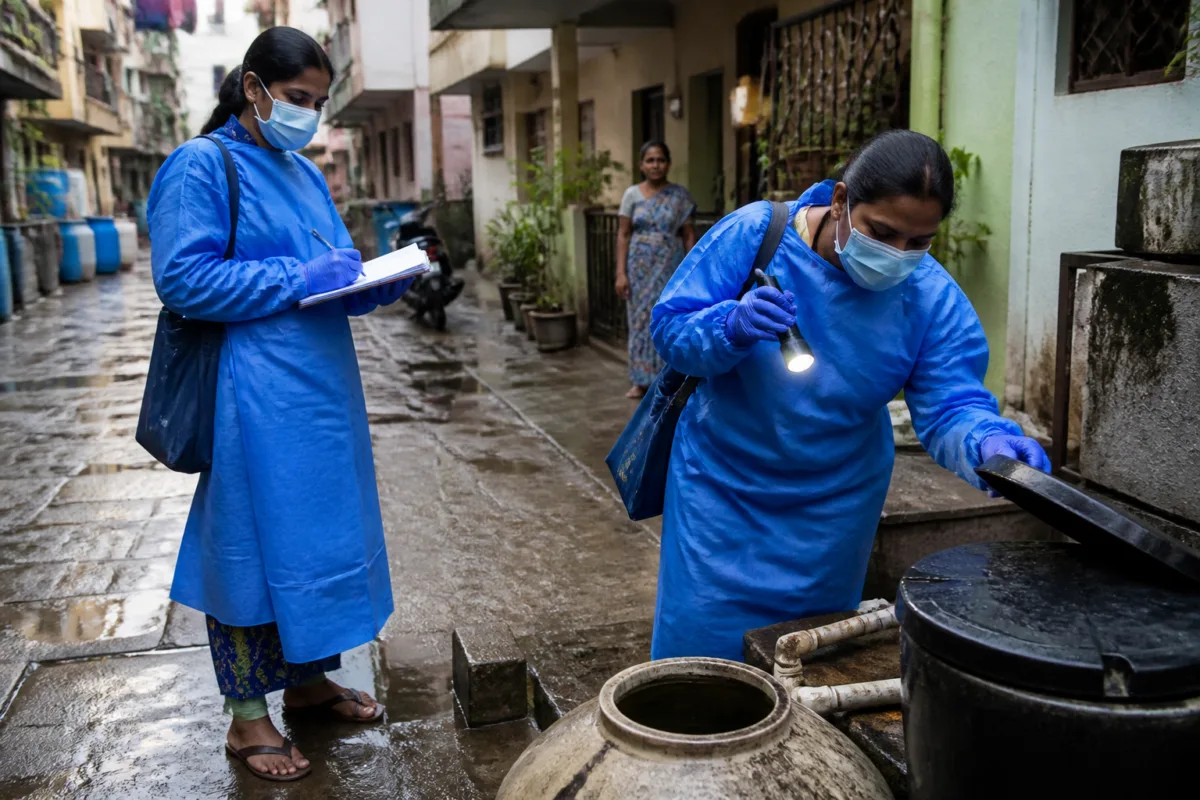
The municipal corporation said its mosquito-control teams inspected 398,000 water containers and other potential breeding sites in September. Conditions favourable for mosquito breeding were found at 3,348 locations. The civic body issued 402 notices to those responsible and collected fines amounting to Rs 145,500 during the month.
The figures cover inspections of containers and sites where stagnant water could support mosquito breeding. Such sites can occur in household containers, building premises and other urban locations, making dengue prevention dependent on regular monitoring beyond public hospitals and clinics. The municipal action reported in Pune combines inspections, notices, penalties and directions to ward officials.
Rising patient numbers have also been reported by private healthcare providers. Ruby Hall Clinic recorded 139 dengue patients from September until the time covered by the report. Of these, 93 tested positive for both NS1 antigen and IgM antibody, while 46 tested positive only for IgM antibody. The report does not provide a city-wide figure combining public and private healthcare data, so the hospital numbers should be read separately from the municipal case count.
Dr Simon Grant, a medical expert and trustee at Ruby Hall Clinic, said dengue can lead to complications including bleeding, leakage of fluid from blood vessels and a decline in platelet counts. He said disease severity should not be assessed only by looking at the platelet count. The distinction is significant for treatment decisions because a single laboratory indicator may not capture the full clinical condition of a patient.
The Pune Municipal Corporation’s health department has advised residents to seek medical help immediately if they experience persistent fever, severe abdominal pain, repeated vomiting, bleeding or unusual drowsiness. The civic body is continuing inspections and punitive action as part of its effort to reduce mosquito-breeding conditions across the city.

