


The Maharashtra FDA crackdown on expired food products has exposed a weak point in the urban retail system: the chain that is supposed to remove unsafe, damaged and rejected goods before they return to consumers. Between October 14 and 15, FDA teams seized food stock valued at Rs 48,09,924 across Thane and Pune districts. Police subsequently registered an FIR at Shanti Nagar police station in Thane against 10 people associated with Reliance Consumer Products, Reliance Retail, Blinkit, Zomato Hyperpure, disposal agencies and local suppliers.
The case is significant not only because of the value of the seized stock, but because of the alleged route through which products meant for destruction were diverted. According to the preliminary investigation cited in the report, expired, damaged and customer-rejected food items were allegedly moved through disposal agencies, unlicensed sorting yards and brokers before reaching retailers. That points to a governance problem extending beyond the conduct of an individual shop or warehouse: the formal disposal process itself may become a route for re-entry into the market when records, physical destruction and downstream movement are not independently checked.
The FIR has been registered under relevant provisions of the Food Safety and Standards Act, 2006, and the Bharatiya Nyaya Sanhita, 2023. It names V Subramaniam, whole-time director of Reliance Consumer Products; Ashok Kumar Singh of Reliance Consumer Products; Vijay Bhikaji Kharmale, nominee of Reliance Retail; Nilesh Ramdasrao Deshmukh, warehouse manager of Reliance Retail; Arbinder Singh Dhinsa and Deepak Singh of Blinkit Commerce; Abid Shaikh of Zomato Hyperpure; and operators, suppliers and retailers linked to the alleged disposal chain.
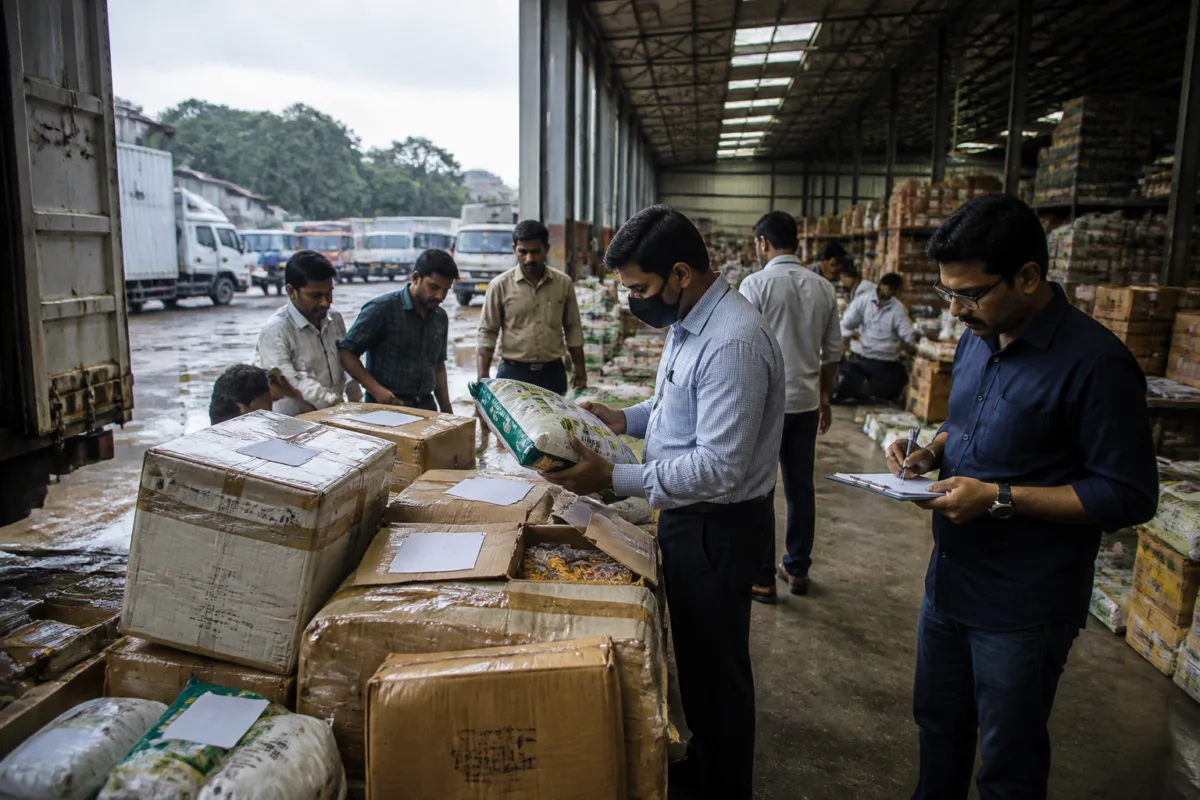
The FDA’s operation covered multiple locations in Thane and Pune. Seven teams comprising assistant commissioners and food safety officers conducted coordinated inspections, inventoried stock, collected samples and recorded statements. The largest seizure, valued at more than Rs 24 lakh, came from a disposal yard in Bhiwandi. Other seizures included stock worth around Rs 4.92 lakh from a Reliance Consumer Products warehouse at Vadpe and nearly Rs 7.81 lakh from a Zomato Hyperpure facility at Usatane.
These locations matter because the case follows the geography of contemporary urban distribution. Warehouses, disposal yards, brokers, suppliers and neighbourhood retailers form a connected system around major consumption centres. Goods that are no longer fit for sale do not simply disappear when they leave a branded warehouse. They enter a secondary chain involving transport, documentation, sorting and destruction. Each transfer creates a point at which accountability can become blurred, particularly when the receiving facility is unlicensed or when the paperwork does not match the physical stock.
FDA sources cited in the report said disposal agencies allegedly issued certificates and other documents stating that products had been destroyed without adequate verification of actual destruction. Officials also found discrepancies in disposal records, including mismatches in quantities and inconsistencies in consignor-consignee details. These findings place documentation at the centre of the case. A certificate of destruction may close an internal compliance process on paper, but it does not by itself establish that the goods were physically destroyed or that every unit was prevented from returning to commerce.
The alleged use of unlicensed sorting yards in Bhiwandi adds another layer to the problem. The FDA’s preliminary investigation indicated that saleable-looking packets were separated from other material and sold to brokers and suppliers. Expired and leaking products were later found displayed at a retail outlet in Gulzar Nagar, Bhiwandi, which was operating without a licence or purchase bills. The details show how food safety can become inseparable from the regulation of land uses, storage premises, transporters and informal commercial activity in expanding urban industrial belts.
Bhiwandi’s role in the case is also a reminder that urban consumers experience the consequences of supply-chain decisions far from the organised retail outlet or delivery app through which they buy a product. A product may be sourced, stored, rejected, transferred, sorted and resold across several districts before reaching a customer. Enforcement that examines only the final retailer can miss the upstream failures that made the sale possible. Conversely, a system focused only on warehouse compliance can fail if disposal contractors and secondary markets remain outside effective inspection.
The involvement of large consumer and delivery-linked companies raises questions about the limits of corporate control over outsourced disposal. The report does not establish the final culpability of the named individuals or companies; that will be determined through the legal process. However, the alleged discrepancies show why responsibility in a distributed supply chain cannot end when a company hands rejected stock to a disposal agency. The practical issue is whether the originating company can demonstrate the full chain of custody, including what was collected, where it was taken, how it was rendered unsaleable and what happened to the remains.
The FDA response combined inspection, seizure, sampling, statements and restrictions on movement, sale or destruction of the stock. Following hearings on October 15, licences of five establishments were suspended, while operations at four unlicensed premises were stopped. These are immediate enforcement measures, but the underlying system requires continuous oversight because expired and rejected food is generated routinely by modern retail operations. The scale and frequency of that flow are not provided in the supplied report, but the case demonstrates that disposal is an operational function of the food economy rather than an occasional clean-up activity.
The legal framework is therefore only one part of the institutional picture. The Food Safety and Standards Act provides the basis cited in the FIR, while the FDA is responsible for inspections and action within Maharashtra. Companies, warehouse managers, nominated representatives, disposal operators, suppliers and retailers occupy different positions in the chain. The alleged record mismatches indicate that enforcement must connect these roles rather than treat them as isolated premises. The authority’s coordinated operation across two districts reflects that need, although the report does not say whether similar inspections are planned elsewhere.
There is also a basic urban administration challenge: formal and informal systems operate side by side. Organised retailers and quick-commerce platforms depend on documented inventory systems, but rejected goods may move into less formal channels once they leave the main network. Unlicensed yards and retailers without purchase bills make the flow harder to trace. In such circumstances, the same product can move from a highly controlled warehouse into a poorly regulated market without a clear break in legal responsibility.
The numbers in this case show the scale of the immediate intervention: Rs 48.09 lakh in seized stock, more than Rs 24 lakh from one Bhiwandi disposal yard, Rs 4.92 lakh from a Reliance Consumer Products warehouse and nearly Rs 7.81 lakh from a Zomato Hyperpure facility. Five establishment licences were suspended and operations at four unlicensed premises were stopped. These figures do not establish the total volume of products diverted or the number of consumers affected. They do, however, indicate that the investigation involved several nodes rather than a single isolated retail counter.
The central urban question is whether food-disposal systems are designed mainly to produce compliant records or to guarantee that unsafe products cannot re-enter the market. The alleged certificates, quantity mismatches and consignor-consignee inconsistencies described by the FDA suggest a gap between those two objectives. A system can appear complete administratively while remaining vulnerable physically if no one verifies the movement and destruction of every consignment.
The case also highlights how the expansion of warehouse-based retail and rapid delivery increases the importance of back-end governance. Faster fulfilment depends on dense networks of storage and distribution, while product rejection and returns generate material that must move in the opposite direction. If reverse logistics is weaker than forward delivery, rejected goods can become an opportunity for diversion. The supplied report does not provide a comparative assessment of company systems or establish whether the alleged practices were widespread, so broader conclusions about the sector remain unconfirmed.
What the evidence currently confirms is that Maharashtra’s FDA found and seized substantial quantities of food stock, identified alleged discrepancies in disposal records, found products at an unlicensed retail outlet and secured an FIR naming people connected to several companies and disposal businesses. It also confirms that licences were suspended and unlicensed operations stopped after hearings. What remains unresolved is the individual and institutional responsibility for the alleged diversion, the extent of any consumer exposure and whether the seized products were connected through one coordinated network or several transactions. Those questions now depend on the police investigation, further FDA findings and the legal proceedings that follow.

