


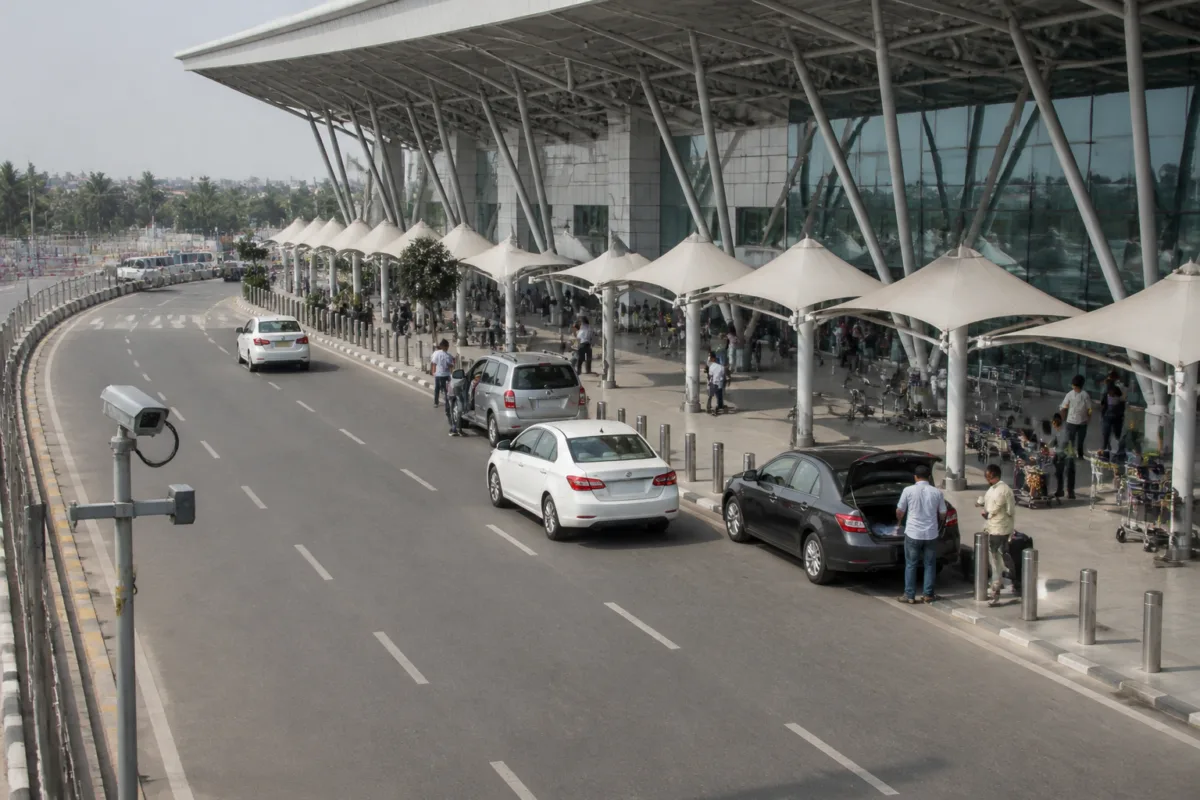
Pune Airport has introduced a 15-minute limit for vehicles using its designated pick-up and drop-off lanes, with a ₹500 penalty for overstaying scheduled to begin on December 1, 2026. The airport said the measure is intended to reduce congestion and improve vehicle movement at the terminal.
The restriction is currently being implemented on a trial basis to familiarise motorists with the arrangement. No penalties will be imposed until November 30, according to the airport. The 15-minute period includes five minutes of dwell time for passenger boarding and alighting.
Pune Airport said the decision followed observations that vehicles were remaining in the pick-up and drop-off lanes for extended periods, including while waiting or parking. It said the practice restricted the movement of other vehicles and sometimes led to disagreements between motorists and traffic-management personnel.
An airport committee examining the issue approved the restriction. The time limit will be monitored through an Automatic Number Plate Recognition (ANPR) system, with cameras at entry and exit points recording vehicle registration details and images. The system will calculate the time spent by each vehicle in the designated lanes and identify vehicles that exceed the permitted duration.
The ₹500 penalty will be collected through digital payment facilities, preferably using FASTag or QR-code-based payment methods. A payment facility will be provided within the pick-up and drop-off area, the airport said, to avoid congestion at the exit gate. The penalty will be imposed under applicable provisions of the Airport Regulations, 2003.
Passengers and vehicle operators requiring more time to wait for arriving passengers or accompany them inside the terminal have been advised to use the Multi-Level Car Park or Aero Mall parking facilities. A complimentary shuttle bus operates between the Multi-Level Car Park and the terminal.
Union Minister of State for Civil Aviation and Cooperation Murlidhar Mohol backed the initiative, saying the technology-enabled limit would help reduce congestion, improve vehicle turnover and make better use of available kerbside space. The airport said its primary objective was smoother traffic circulation and passenger access rather than revenue collection through penalties.

