


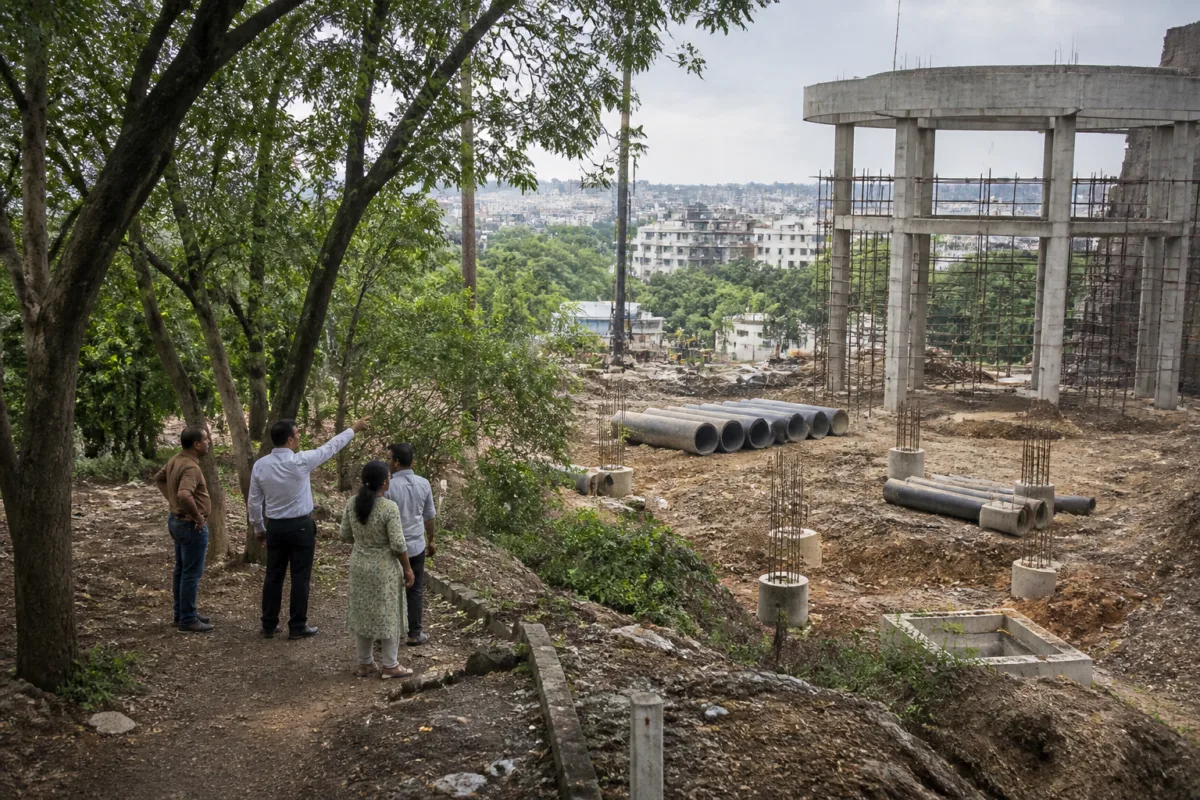
A Pimpri-Chinchwad water-supply project designed to reduce the civic body’s dependence on electricity-intensive pumping stations has triggered opposition over proposed tree felling at Durga Tekdi in Nigdi’s Sector 23.
The Pimpri Chinchwad Municipal Corporation (PCMC) has sought permission to fell 245 trees for the project. Officials estimate that 92 trees may actually be affected, while a proposal to save 24 trees along the pipeline route could reduce that number further. A tree hearing has been scheduled for December 1 after residents submitted a 51-point representation to the civic commissioner.
The project involves constructing two water-storage tanks—one at ground level and another elevated—and laying nearly 2.8 km of pipelines. According to Mahesh Baride, executive engineer in the PCMC water-supply department, raising the elevation of the proposed tanks would allow water to move through gravity and gradually reduce the civic body’s dependence on pumping stations.
Durga Tekdi is among the highest-elevation areas in Pimpri-Chinchwad. A water-treatment plant was established there in the 1980s, but the expansion of the distribution network has made it difficult to supply the city entirely through gravity. The civic body now relies on 16 pumping stations, increasing electricity expenditure and exposing water supply to disruptions during power failures, Baride said.
He cited a recent power outage in Nehrunagar that disrupted water supply as an example of the limitations of the existing arrangement. The proposed storage infrastructure is therefore intended to address both energy consumption and the reliability of distribution, according to the water-supply department.
The project’s environmental and procedural questions remain central to the upcoming hearing. PCMC garden department head Mahesh Gargote said a site inspection indicated that the trees likely to be affected were exotic species. Residents, however, have questioned the identification and assessment of the trees listed in the felling proposal.
Residents said notices had been pasted on at least 27 trees, but the absence of geo-tagging made it difficult to match the trees on the ground with the details in the civic body’s proposal. They have also sought a scientific assessment of trees estimated to be at least 30 years old to establish whether they qualify for heritage status.
The difference between the 245 trees included in the permission request and the lower number officials currently expect to be affected has also become a point of concern. PCMC officials said the larger figure was included as a precaution so that additional permissions would not be needed if more trees were found to be affected during implementation.
The December 1 hearing will therefore have to consider both the project’s stated water-supply benefits and the accuracy of the tree assessment. For the civic body, the proposed tanks and pipeline are intended to improve distribution efficiency and reduce vulnerability to electricity interruptions. For residents, the process must establish precisely which trees would be removed, whether alternatives can protect more of them and whether older trees require heritage consideration.
The available account does not state the project’s construction cost, implementation schedule or the final number of trees that will be affected. Those details, along with the outcome of the hearing, will determine how the water-network benefits are balanced against the impact on Durga Tekdi’s existing tree cover.

