


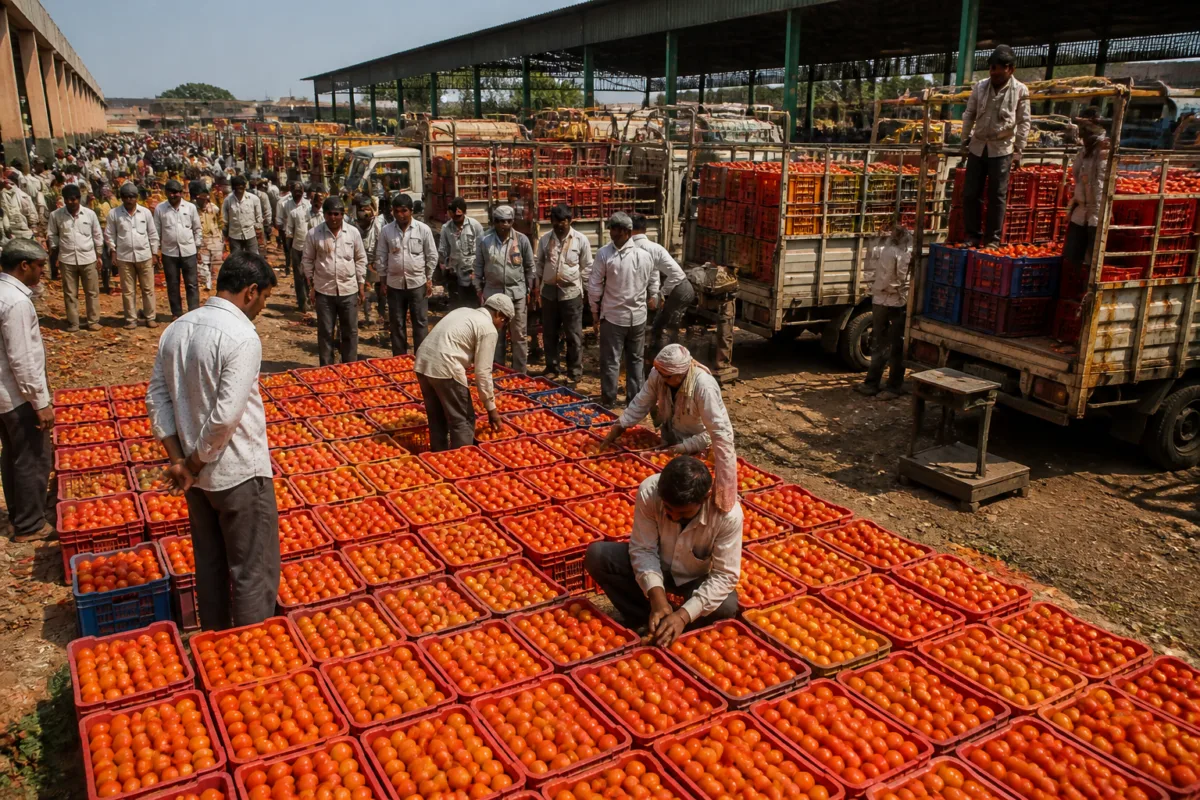
Pimpalgaon tomato prices have fallen nearly 65% in a week at the Agricultural Produce Market Committee, dropping the average wholesale rate to Rs 111 for a 20kg crate as oversupply and weak demand squeeze farmers in Nashik’s major tomato-producing belt.
The average wholesale price fell from Rs 321 per 20kg crate, or about Rs 16 per kg, on October 12 to Rs 111 per crate, equivalent to Rs 5.55 per kg, on Monday. The decline has also reached Nashik’s retail market, where tomatoes were selling at about Rs 20 per kg, down from nearly Rs 40 per kg a week earlier.
The price movement has been accompanied by a sharp rise in arrivals at Pimpalgaon APMC, one of India’s largest wholesale tomato markets. An APMC official said between 3 lakh and 3.75 lakh crates had been arriving daily over the past week, with supply far exceeding demand.
Prices varied significantly according to quality on Monday, ranging from Rs 20 to Rs 331 per crate. Poor-quality tomatoes fetched as little as Rs 1 per kg, while premium produce reached Rs 16.55 per kg. The spread highlights the pressure on growers whose produce may lose value quickly if it cannot be sold soon after harvest.
An official overseeing the tomato section at the APMC attributed the unusually high arrivals partly to soaring temperatures. The heat accelerated ripening, causing larger quantities of tomatoes to reach the market at the same time. This compressed supply window has intensified competition among growers and traders.
The demand side has also weakened. APMC officials said several wholesale markets remained closed during the Navaratra period, affecting market movement. Export demand has also been subdued. At the same time, Uttar Pradesh, Bihar and Madhya Pradesh are meeting their requirements through local supplies, reducing their dependence on tomatoes from Nashik.
Retail prices generally respond to wholesale changes with a delay. A Nashik retailer said the decline in wholesale rates takes one or two days to reflect in retail markets. If the current trend continues, consumers could see further price corrections in the coming days, although the immediate benefit of lower retail prices is being accompanied by falling returns for farmers.
The collapse comes as growers deal with rising cultivation costs and difficult production conditions. The supplied market report did not specify the extent of losses for individual farmers or the cost of cultivation, but the wholesale figures show that the value of the crop varies sharply by quality and timing of arrival.
Traders and market officials expect prices to remain under pressure if arrivals continue at the current level and demand does not recover. The next movement in Pimpalgaon will depend on the volume of incoming produce, the reopening and activity of wholesale markets, export demand and the availability of buyers in consuming states.

