


India’s pilot fatigue debate has moved beyond an employment dispute after the Directorate General of Civil Aviation (DGCA) extended a special exemption from flight duty time limitation rules until 31 March 2027. Pilot organisations say the extension risks converting a temporary operational measure into a long-term weakness in the country’s aviation safety system.
The Federation of Indian Pilots (FIP) has written to the Civil Aviation Ministry opposing the extension, according to a report by Jagran – New Delhi. The organisation has argued that the interests of airlines cannot be prioritised over fatigue management and flight safety. Its objection focuses on the DGCA’s decision to extend the exemption from 31 October 2026 to 31 March 2027.
The immediate question is how long a regulatory relaxation can remain temporary before it begins to shape normal operations. The supplied report does not include the full DGCA order or the precise provisions covered by the exemption. It does, however, establish the central institutional conflict: airlines have received additional flexibility in managing flight-duty schedules, while pilot organisations say that flexibility is being sustained at the expense of rest and safety safeguards.
That conflict matters because flight duty time limitation rules are not simply administrative requirements. They determine how long pilots may remain on duty, how rest is calculated and how airlines organise crew rosters. In practical terms, these rules connect airline capacity, staffing, scheduling and passenger safety. Any extension therefore affects not only pilots and carriers but also the reliability and safety conditions of the wider aviation network.
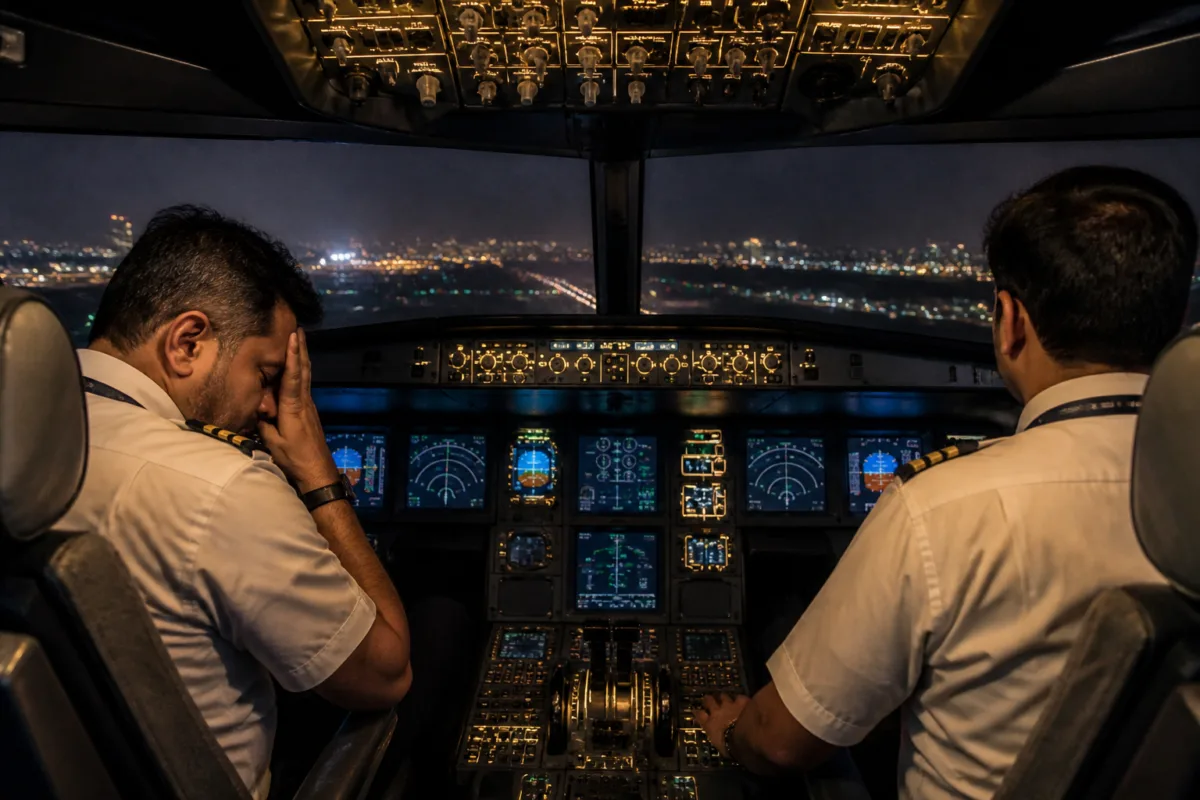
The concerns cited by the FIP are linked to the experience of fatigue inside cockpits. The report says 66 per cent of pilots surveyed admitted that they had unintentionally fallen asleep in the cockpit. It also says 71 per cent believed that extreme fatigue had left them feeling not fully fit to conduct flight operations. These figures are presented in the report as survey findings; the supplied material does not identify the survey methodology, sample size, date or full publication details.
The report also cites earlier scientific analyses by the Safety Matters Foundation, which described pilot fatigue as a major aviation-safety threat. According to the account, those analyses found that remaining awake for 17 to 19 hours could reduce thinking, decision-making and reaction capacity to a level comparable with a blood-alcohol concentration of 0.05 per cent. The underlying study details are not included in the supplied material, so the comparison should be treated as an attributed finding rather than independently assessed evidence in this report.
Even with those limitations, the numbers point to a problem that cannot be addressed only through individual discipline. If fatigue is repeatedly reported across a workforce, the relevant question shifts from whether a particular pilot managed a demanding duty period to whether the roster, reserve capacity and staffing model are producing conditions in which fatigue becomes routine.
That is the institutional issue at the centre of the FIP’s objection. FIP president Captain C.S. Randhawa has argued that India does not face a pilot shortage serious enough to justify relaxing safety standards across the aviation industry. The organisation’s position is that if airlines have failed to plan recruitment, rosters and reserve manpower adequately, passengers and pilots should not bear the consequences through longer or more permissive duty arrangements.
The distinction between a genuine staffing shortage and weak workforce planning is important, although the supplied report does not provide industry-wide manpower data to resolve it. It records the FIP’s demand for an independent audit of airline manpower and calls for scrutiny of whether carriers have sufficient crew reserves. That demand places the responsibility for fatigue management within the airline’s operating system rather than treating it as a private matter between an individual pilot and a supervisor.
The extension also raises questions about the role of the regulator. A temporary exemption can help an industry manage disruption, but its safety implications depend on the conditions attached to it, the evidence used to justify it and the monitoring that follows. The report does not state the DGCA’s reasons for extending the exemption, whether the regulator published a safety assessment, or what performance indicators will be used before March 2027. Those missing details are central to understanding whether the extension is a controlled measure or an open-ended accommodation.
The reference to Delhi High Court orders adds another layer of institutional complexity. Pilot organisations have argued that repeatedly extending the exemption could conflict with relevant court directions. The report does not reproduce those orders or establish whether a legal challenge has been filed. The claim therefore remains the FIP’s stated concern, not a confirmed judicial finding. What it does show is that fatigue rules sit at the intersection of regulation, airline operations, labour conditions and judicial oversight.
The aviation system also depends on the willingness of pilots to report fatigue. The organisations cited in the report have alleged that pilots who report fatigue can face punitive pressure from airlines. They have called for that practice to end and for a more transparent safety framework. The supplied material does not identify specific cases or name airlines accused of such pressure, so the allegation cannot be generalised across the industry. But the reporting mechanism itself is a material safety issue: a rule is difficult to enforce if workers believe that using it may damage their careers.
The proposed independent manpower audit is significant for the same reason. It could move the debate from competing assertions about pilot availability to evidence about crew strength, reserve capacity and roster design. The report does not say that such an audit has been ordered, nor does it provide a timetable. For now, it remains one of the pilot organisations’ demands.
The available data also shows why a narrow focus on the exemption’s end date would miss the larger question. The extension is due to run until 31 March 2027, but the operational effects described in the report are already being experienced through fatigue incidents and perceptions of fitness to fly. The issue is therefore not only whether the exemption expires on schedule. It is whether the system can demonstrate, during the extension period, that safety margins are being protected and that fatigue reports are being acted upon.
There is a further gap between public visibility and regulatory evidence. Passengers can observe delays, cancellations or schedule changes, but they generally cannot see the fatigue risk embedded in a crew roster. That makes transparent reporting particularly important. Without published information on the scope of the exemption, staffing levels, fatigue reports, audits and corrective action, the public is left with opposing claims: airlines require flexibility, while pilots say the flexibility has become unsafe.
The report does not establish that the extension has caused an accident or that any specific flight was operated unsafely because of it. It does establish that pilot organisations have linked the regulatory decision to concerns about prolonged wakefulness, cockpit sleep episodes, perceived unfitness for duty and airline staffing practices. Those are serious warning signals, but they are not substitutes for a formal safety assessment or independently verified operational data.
The immediate policy test is therefore one of evidence and accountability. The DGCA’s decision, the airlines’ manpower position and the pilots’ fatigue concerns need to be evaluated through documented standards rather than through the length of the exemption alone. The next developments to watch are whether the DGCA publishes the basis and conditions of the extension, whether an independent manpower audit is conducted, how fatigue reports are protected from punitive action, and whether the relevant court directions are clarified.
What the available material confirms is that India’s pilot-fatigue debate is also a debate about how aviation infrastructure is governed. When staffing and scheduling pressures are managed through regulatory flexibility, the boundary between operational convenience and safety protection must remain visible. The unresolved question is whether the authorities and airlines can provide enough verifiable evidence to show that the extended arrangement remains temporary, controlled and safe.

