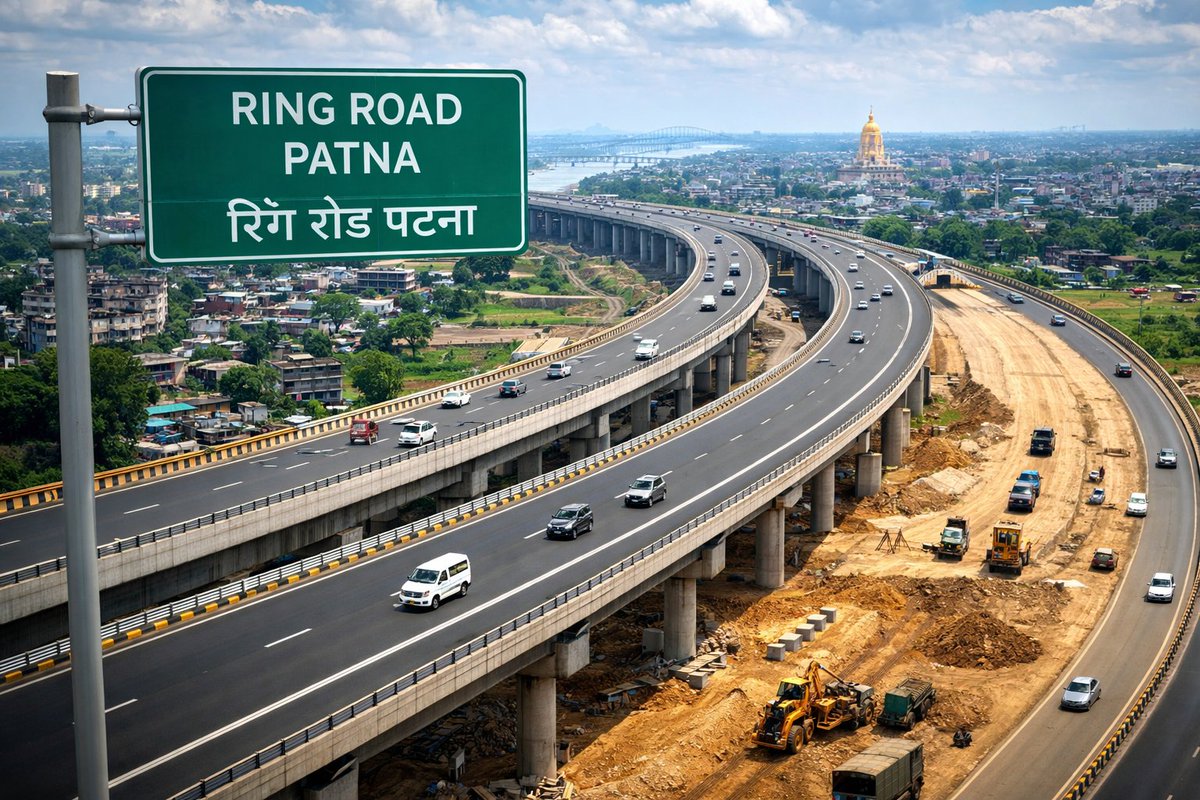
A proposed 150-km Patna ring road project is set to transform mobility patterns and unlock new development corridors across Bihar’s capital region, signalling a strategic shift in how the city plans for growth, congestion management and regional connectivity. The project, aligned with national highway expansion frameworks, is expected to link key peripheral zones while easing pressure on the city’s overstretched core road network.
Urban planners indicate that the Patna ring road project is not just a transport intervention but a structural response to the city’s rapid and often unplanned expansion. By connecting outer settlements and emerging growth clusters, the corridor is likely to redistribute traffic flows that currently converge within central Patna, reducing travel time and logistics costs for both commuters and freight operators. Officials familiar with the development suggest that the alignment will pass through multiple peri-urban zones, creating a circular mobility spine that integrates existing highways and rural roads into a more cohesive network. This is expected to improve access to industrial nodes, agricultural markets and residential areas that have historically remained disconnected from formal infrastructure systems. From a real estate perspective, the Patna ring road project could trigger a new wave of land use transformation. Industry observers anticipate increased demand for plotted developments, logistics parks and affordable housing along the corridor, particularly in areas that currently lack urban infrastructure but offer lower land acquisition costs.
However, experts caution that without strong zoning regulations and environmental safeguards, such growth could replicate patterns of sprawl seen in other Indian cities. The project also aligns with broader national efforts to strengthen multimodal connectivity and reduce bottlenecks in freight movement. By diverting heavy vehicles away from inner-city roads, the ring road is expected to improve air quality and road safety—key concerns in Patna, where rising vehicular density has intensified urban stress. Environmental planners highlight that large-scale road infrastructure must be designed with climate resilience in mind. Incorporating green buffers, stormwater drainage systems and non-motorised transport lanes will be critical to ensuring that the project supports sustainable mobility rather than exacerbating emissions and ecological degradation.
For citizens, the impact could be tangible in everyday life. Reduced congestion, faster inter-district travel and improved access to employment hubs may enhance economic participation, particularly for communities located on the city’s fringes. At the same time, equitable land acquisition and rehabilitation processes will remain central to maintaining social balance during execution. As detailed planning and clearances progress, the focus will shift to timely implementation and governance. The success of the Patna ring road will ultimately depend on how effectively it integrates transport planning with housing, environment and economic development—setting a precedent for emerging cities navigating the complexities of urban growth.