


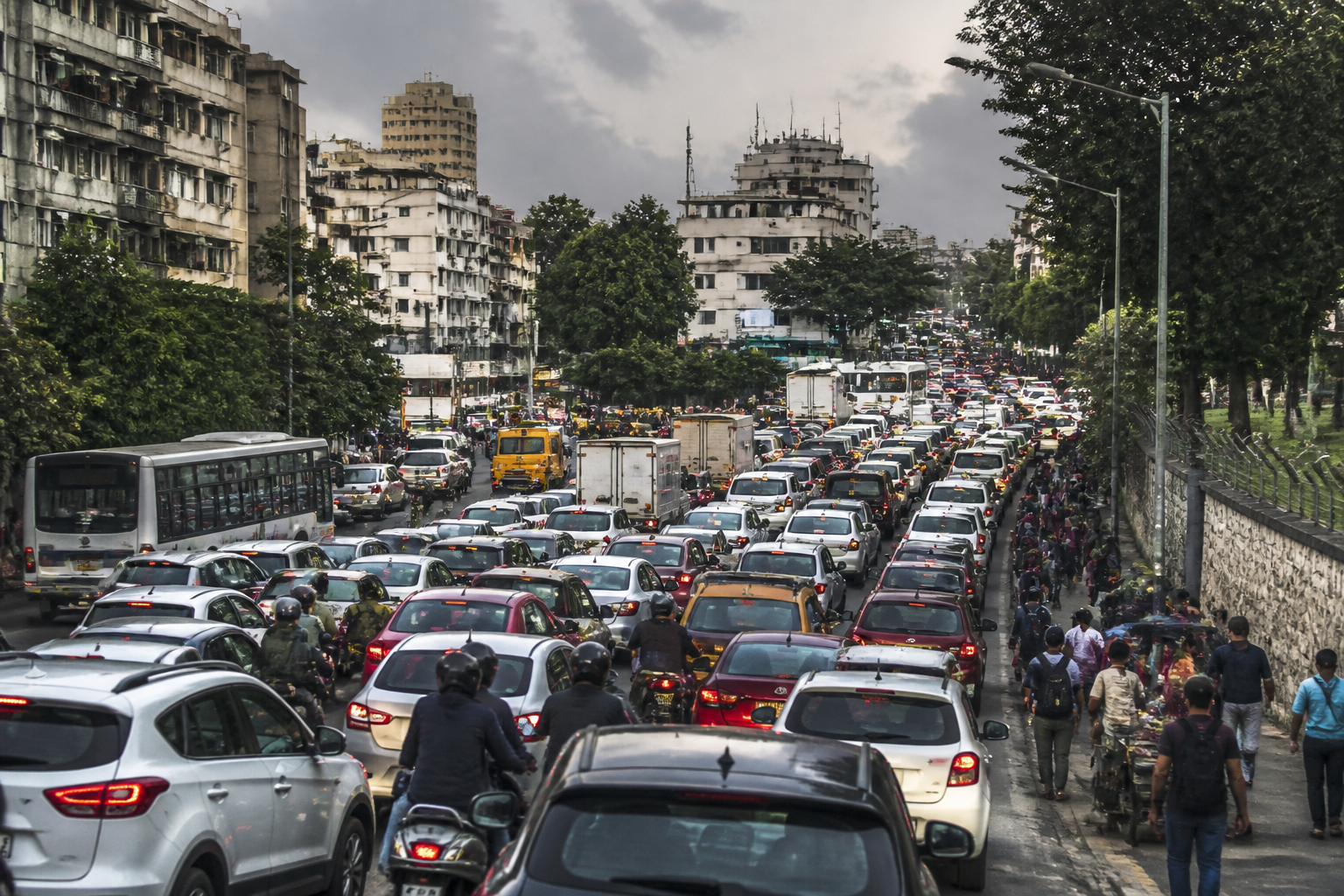
Pashan Circle’s traffic crisis is pushing Pune Municipal Corporation towards a familiar but difficult response: widen the road, redesign the junction and create an alternative route. The proposal is significant not because construction has begun, but because it reveals how quickly residential and commercial growth around Sus and Bavdhan can overwhelm a corridor where expansion is constrained by government and defence establishments.
PMC road department officials have conducted site inspections around Pashan Circle and the gaothan area to assess existing conditions and identify land parcels that may need to be acquired. Local corporators Mayuri Kokate and Ratnamala Satav have submitted a traffic improvement blueprint to the PMC standing committee, seeking funds and faster land acquisition for the proposed works.
The proposal includes three interventions at the junction: a grade separator, widening of the existing chowk and a traffic island intended to improve vehicle movement. It also proposes an alternative road link between Nimhan Mala and Someshwarwadi. Together, these measures point to an attempt to address both the immediate bottleneck and the wider network that feeds traffic into Pashan Circle.
That distinction matters. A junction can be redesigned to move vehicles more efficiently, but if the roads approaching it remain narrow, congestion can simply shift to another point. The proposal’s combination of junction improvement, road widening and an alternate connection suggests that local officials recognise the problem as a corridor-level issue rather than a single intersection failure. However, the report does not establish whether any of the proposed works have received final administrative approval, funding sanction or a construction timeline.
The scale of the daily problem is evident in the accounts of residents and commuters cited in the report. Sandip Desai, an IT professional who works in Sus, said queues can extend up to 1.5 km on either side of the junction when a vehicle breaks down or an accident occurs. He also said schoolchildren are caught in the gridlock and officegoers face repeated delays. These incidents show how a road system with limited spare capacity can become unreliable even when the disruption begins with a relatively minor event.
Pashan Circle’s pressure is linked in the report to rapid residential and commercial growth in nearby Sus and Bavdhan. Sus Road has undergone widening, but roads in the Pashan belt remain comparatively narrow. This uneven expansion has created a mismatch between the volume of traffic generated by growing neighbourhoods and the capacity of the routes that connect them.
The problem is therefore not simply that one road is too narrow. It is also that development and transport capacity have not advanced at the same pace across the area. As new housing and commercial activity increase movement towards and through Pashan, the corridor’s physical constraints become more consequential. The result is a traffic system that may function under ordinary conditions but fails quickly when demand rises or an incident blocks part of the carriageway.
Land availability is the central institutional challenge. Resident Rajesh Nimhan said defence establishments in the vicinity limit the scope for large-scale road expansion. Vishal Doke, a Sus Road resident, similarly said the road narrows abruptly near Pashan Circle, with government and defence establishments on both sides. These constraints mean that PMC cannot treat widening as a routine engineering exercise. Any expansion may depend on identifying available parcels, completing acquisition or securing access to land controlled by other public institutions.
This is why the request for immediate funds and expedited acquisition is a substantive part of the proposal. Road widening requires more than a design decision. It involves determining the required width, identifying affected land, establishing ownership, arranging compensation or transfer where applicable, and coordinating with institutions whose land or operations may be affected. Until those steps are completed, a proposed widening remains an intention rather than additional road capacity.
The alternate Nimhan Mala–Someshwarwadi link is intended to reduce the concentration of vehicles on the Pashan corridor. Its potential value lies in giving some trips a route that avoids the most congested section. But the report does not provide the proposed road’s length, estimated cost, land requirement, design status or implementation schedule. Those details will determine whether the link becomes a practical diversion or remains another proposal on the city’s traffic-planning list.
The grade separator raises a similar question about what kind of movement PMC is trying to prioritise. A grade separator can reduce conflict between crossing and through traffic at a junction, but its effectiveness depends on the connecting roads, entry and exit arrangements and the traffic patterns around it. The proposal also includes a traffic island and junction widening, indicating that officials are considering how vehicles currently converge at the circle. The available information does not establish the final design or whether pedestrian movement and school access have been incorporated into it.
That gap is important because the traffic problem described is not limited to motorists. The report specifically mentions schoolchildren caught in congestion, while residents describe delays affecting daily commutes. A road intervention that improves vehicle throughput but leaves pedestrians exposed or makes local access more difficult would address only part of the problem. At this stage, however, the supplied proposal does not include details of pedestrian facilities, crossings, public transport operations or non-motorised movement.
Pashan Circle also illustrates the limits of treating congestion as a problem that can always be solved through additional road space. In this case, the proposed solution itself is constrained by the built environment and by institutional land ownership. The corridor has growing demand on one side and restricted expansion possibilities on the other. That makes prioritisation unavoidable: PMC must decide which movements require protection, which land parcels are essential, and whether a junction structure, a parallel road or a combination of interventions offers the most workable response.
The immediate administrative test is whether the proposal can move from a blueprint to a funded and coordinated project. The corporators have sought allocation of funds and faster acquisition, while the road department has begun site inspections. These are early steps, not confirmation that the project will be executed. The next stage will require the civic administration to establish the land parcels involved, determine the cost and approve a design that can operate within the restrictions created by nearby government and defence properties.
For commuters, the distinction between proposal and implementation is critical. Pashan Circle’s traffic is already described as chronic, with queues of up to 1.5 km during incidents and delays affecting school and work journeys. But the evidence supplied does not yet show that the proposed grade separator, traffic island, widening or alternate road has a sanctioned budget or completion date. Until that information becomes available, the civic response remains at the planning and assessment stage.
The larger urban question is how Pune manages growth in areas where transport corridors are narrower than the development they serve. Sus and Bavdhan have increased the traffic burden around Pashan, while the corridor’s institutional land constraints reduce the city’s room to respond. The proposed package acknowledges both pressures. Its success will depend not only on engineering the junction, but also on resolving land, funding and coordination issues that have made the bottleneck difficult to address.
PMC’s site inspections and the proposal submitted to its standing committee now create a defined administrative pathway: assess the land, secure funding, finalise the interventions and determine the next implementation steps. Until those milestones are recorded, Pashan Circle remains a case of urgent congestion confronting a road network whose physical and institutional limits are already visible.
