


The West Bengal government has begun planning a Partition Museum in Kolkata to document the 1947 division of Bengal, refugee displacement and the social, economic and cultural changes that followed. The concept has been approved and a preliminary roadmap was discussed by the information and cultural affairs department on Friday.
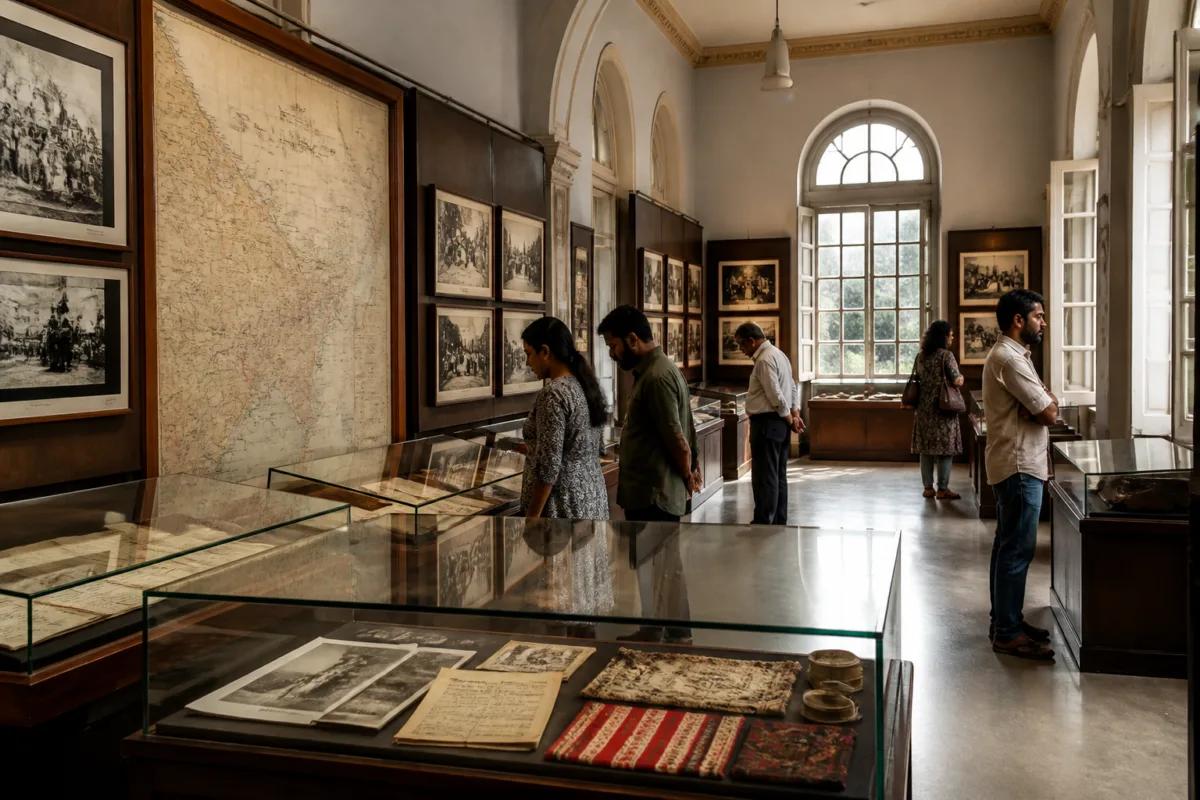
The proposed Partition Museum Kolkata project is expected to bring together archival documents, personal accounts, photographs, maps, government records, newspaper reports and historical artefacts. An official said the museum would offer a comprehensive account of Partition, with particular emphasis on the division of Bengal, the movement of millions of people and the consequences for communities on both sides of the new border.
The meeting was held in the presence of Minister of State Purnima Chakraborty and department secretary Saumitra Mohan. Proposals from historians and other experts were reviewed as officials discussed the initial framework for the museum.
Dedicated galleries are planned on the events leading to Partition, the Radcliffe Line and the division of undivided Bengal into West Bengal and East Pakistan, now Bangladesh. The displays are expected to use maps, official records, newspaper reports and photographs to explain how the border was drawn and how it altered the geography and administration of Bengal.
A separate section would focus on refugees who crossed the new border in search of safety and shelter. Family belongings, letters, photographs, oral histories and survivors’ testimonies are proposed as key components of the exhibition. These materials would record the experiences of families who lost homes, ancestral properties and livelihoods during the upheaval.
The museum is also expected to document refugee rehabilitation in Bengal, including the emergence of refugee colonies in and around Kolkata, the challenges of resettlement and the role of government initiatives. Experiences from refugee camps and rehabilitation centres may also be included in the galleries, according to the official cited in the report.
Another proposed component would examine Partition’s influence on Bengali literature, music, cinema, food habits and collective memory in communities on both sides of the border. This would place the museum’s historical account within the cultural changes that continued long after the 1947 division.
The Kolkata project would be the country’s third Partition museum after institutions in Amritsar and Delhi. The Amritsar museum, housed in the town hall, was fully inaugurated with 14 galleries in August 2017. It traces Partition from the pre-Partition period and the independence movement to the division of the country. Delhi’s museum at the Dara Shikoh Library on the Ambedkar University campus is described as a people’s museum built around memories and memorabilia carried across the border.
The West Bengal government has not yet announced the museum’s location, construction schedule, gallery count or opening date. The next stage is expected to involve developing the preliminary roadmap and refining proposals with historians and experts.

