


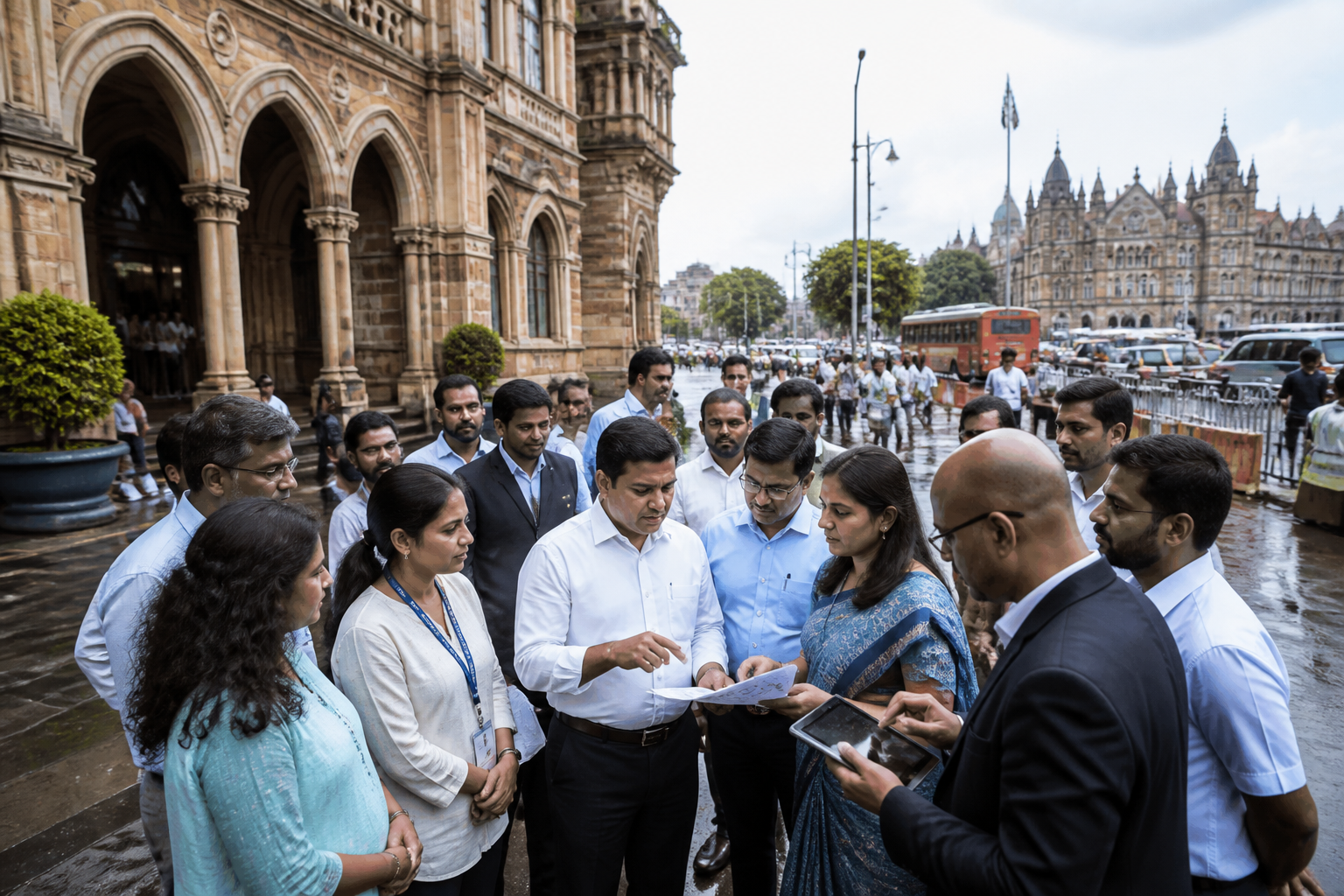
The Brihanmumbai Municipal Corporation will launch Participate Mumbai on Tuesday, a one-stop digital platform intended to connect more than 450 civic projects and needs with companies, corporate social responsibility organisations, non-governmental organisations, experts and citizens.
The platform and a comprehensive agreement with Samagra, an organisation working on governance and public service reforms, will be launched at 11 am at the BMC headquarters and civic general body hall. Maharashtra Chief Minister Devendra Fadnavis is scheduled to attend, while Deputy Chief Ministers Eknath Shinde and Sunetra Ajit Pawar are also expected to be present.
Through Participate Mumbai, organisations and individuals will be able to support civic initiatives with technology, expertise, skills, materials, equipment, services, volunteer participation and project implementation assistance. The BMC said the platform is designed to create a coordinated link between civic requirements and capabilities available with industry, CSR organisations, social organisations and citizens.
The integrated platform will list more than 450 civic projects and needs. Potential partners will be able to identify initiatives based on their interests, CSR objectives, technical capabilities, experience or available resources. BMC departments will upload projects, civic needs and development opportunities, while participating organisations will be able to propose technology-based solutions, social initiatives and other project concepts for Mumbai.
The proposals will be reviewed by the relevant BMC departments for technical and administrative feasibility and their relevance to civic needs. The civic body said 27 CSR partners, 23 NGOs, 56 implementation partners and more than 500 volunteers have already been brought together through the initiative. HUL, RPG, CMS and Narayana are among the organisations that have proposed initiatives, which are being examined by the respective departments.
The BMC has clarified that CSR funds will not be accepted or transferred directly to the civic body through Participate Mumbai. Instead, the platform will facilitate contributions in the form of materials, equipment, technology, services, expert knowledge, skills, infrastructure support, project implementation and volunteer participation.
The project will create a digital repository covering areas including education, healthcare, gardens, the environment, sanitation, solid waste management and civic infrastructure. The BMC said the longer-term objective is to develop a system of co-creation in which the civic body, government, industry, NGOs, experts and citizens work together to identify urban challenges and develop solutions.
The agreement with Samagra will focus on administrative reforms intended to make civic services faster, easier, more transparent and more effective for the BMC’s more than 1.3 crore citizens. The reforms will cover complaint management, emergency response and the simplification of services for citizens and businesses.
As part of the proposed changes, the BMC plans to reduce unnecessary documents, visits to civic offices, procedural steps and waiting periods, while making services available digitally wherever possible. An integrated complaint management and emergency response system is also being developed to improve the process from complaint registration to resolution and strengthen coordination among agencies during fires, floods, medical emergencies and other civic crises.
Citizen-facing government-to-citizen and business-facing government-to-business services will be reviewed under the arrangement. Real-time dashboards are expected to allow officials to monitor performance from the ward level to the civic leadership and take corrective measures where required. The BMC said it will retain ownership of the processes, administrative responsibility and final decision-making authority.
The reforms will be implemented in mission mode through a structured change-management process covering working methods, interdepartmental coordination, responsibilities, technology use and capacity building among civic officials and employees. The BMC said regular reviews, performance measurement and timely resolution of implementation challenges will support the programme. Expected outcomes include faster grievance redressal, quicker emergency response, fewer documents and office visits, shorter waiting periods and greater transparency in civic performance.

