


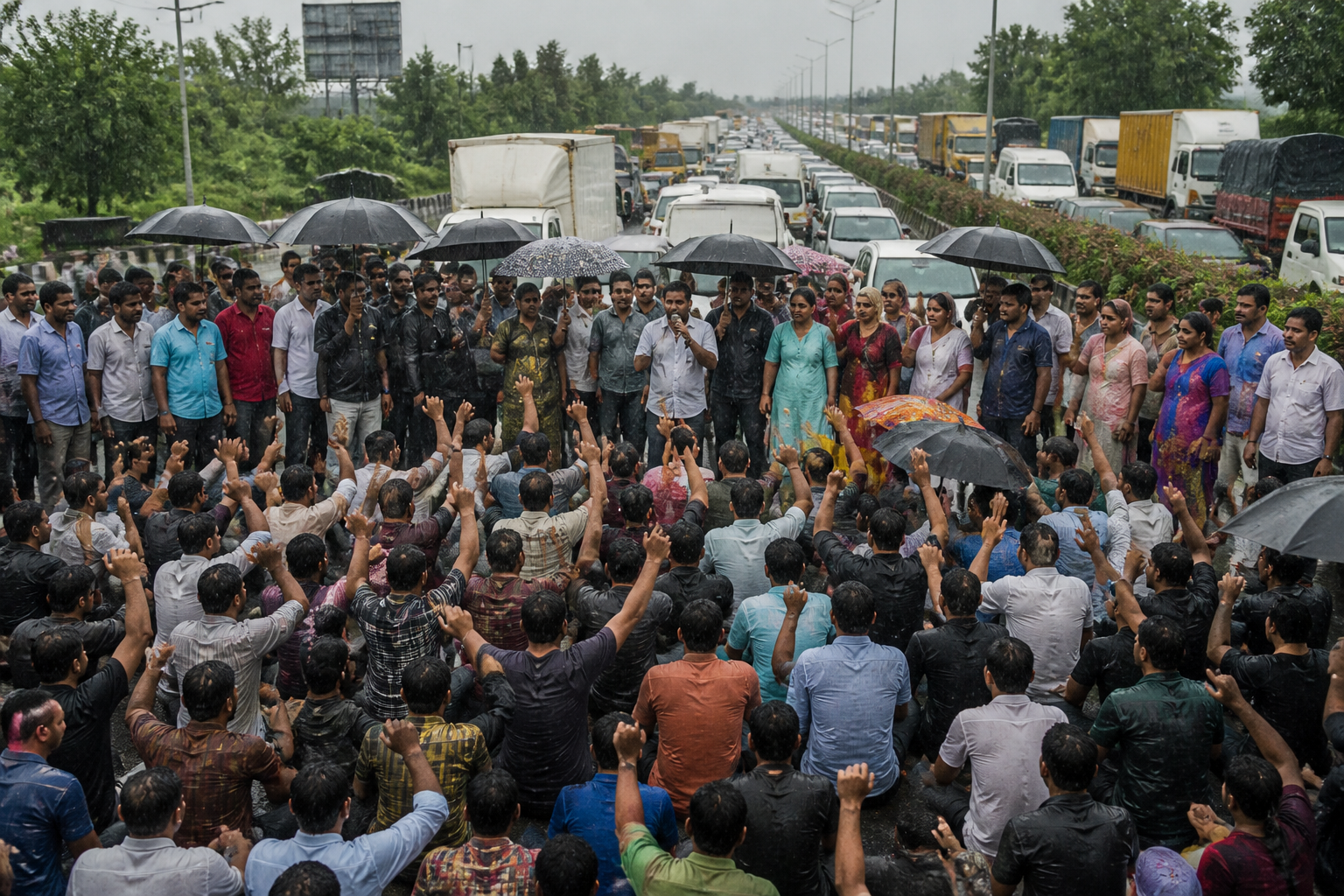
A protest against the compulsory installation of smart electricity meters in Palghar district blocked the Mumbai–Ahmedabad National Highway for about two hours on Thursday, September 10, with MSEDCL officials reportedly assuring demonstrators that meters would not be forcibly installed.
The road blockade was held near Dahanu under the leadership of the Communist Party of India (Marxist), as opposition to the smart-meter installation process intensified across Palghar and other parts of Maharashtra. According to the report, around 5,000 to 6,000 citizens joined the protest despite heavy rain.
The blockade disrupted traffic on both sides of the highway for approximately one-and-a-half to two hours. Long queues of vehicles formed along the route during the demonstration, which was attended by CPI(M) central leader Ashok Dhawale, Dahanu MLA Vinod Nikole, party office-bearers and a large number of women and men from the area.
Local groups, including the Vadhavan Port Opposition Struggle Committee, also supported the protest. Residents from Palghar district and adjoining areas reportedly travelled to the site to participate in the demonstration.
Protesters alleged that MSEDCL was installing smart meters without giving consumers adequate prior notice and that the new meters were resulting in higher electricity bills. Their principal demand was that smart meters already installed should be removed and replaced with the older meters.
The dispute has previously led to confrontations between residents and MSEDCL employees at several locations, according to the report. During an earlier protest in Dahanu, residents removed hundreds of smart meters and deposited them at an MSEDCL office. The meters were reportedly installed again after two months, leading to renewed dissatisfaction among residents and another mobilisation by the CPI(M).
The latest protest focused on the reported assurance that compulsory installation would not continue. The report did not provide details of a written order, a revised installation schedule or the technical basis for the residents’ allegations about higher bills. It also did not specify the number of smart meters installed in the district or the number of consumers affected.
The immediate next step reported from the protest was MSEDCL’s assurance regarding non-compulsory installation. Further clarification from the utility on the installation policy, consumer consent process and the status of meters previously removed remains awaited.
