


Subheadline: Official figures cited by the district health department show infant deaths falling from 453 in 2014-15 to 220 in 2025-26, while seasonal control rooms and tracking systems have strengthened emergency coordination.
Standfirst: Palghar’s reported decline in infant and child deaths is linked by the district health department to a combination of seasonal control rooms, tracking of pregnant women and children, improved ambulance coordination and full immunisation coverage. The change is significant in a district where monsoon access, seasonal migration, malnutrition and gaps in rural health infrastructure have repeatedly shaped health outcomes. Yet the figures do not establish that one intervention alone caused the decline. They show instead how administrative coordination can address specific points of failure—identifying high-risk pregnancies, moving patients during difficult weather and ensuring that ambulances are available for clinical emergencies. The larger question is whether these systems can be sustained and matched by improvements in hospitals, neonatal care, local employment and social conditions.
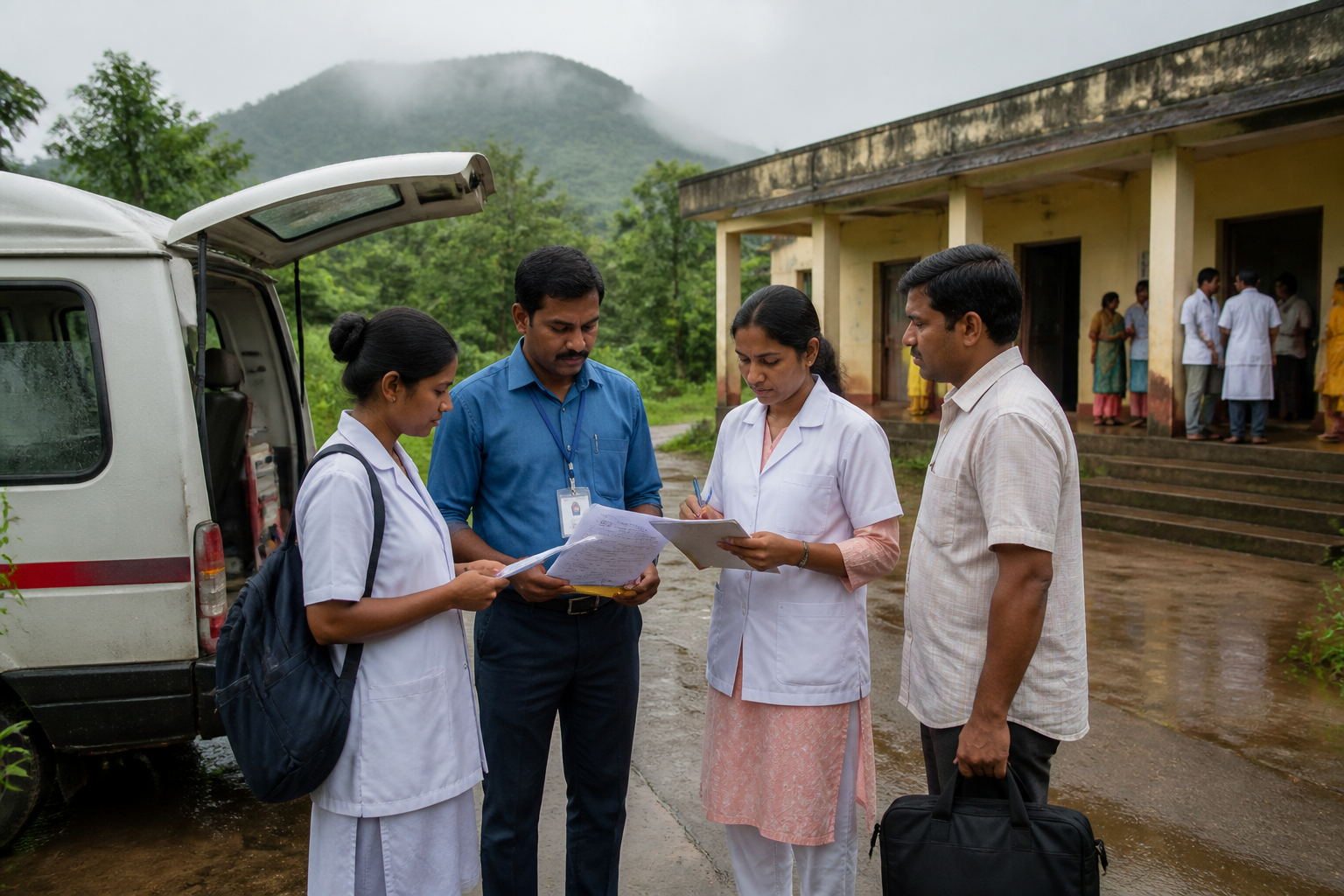
Palghar’s reported fall in child mortality has come through a system designed to manage the district’s most difficult months. The district health department established special control rooms at district and taluka levels for the four months of the monsoon, provided separate mobile phone numbers for coordination and introduced a tracking system for pregnant women, infants and children. According to the report, these arrangements helped health officials identify sick children, coordinate ambulances and take them to health institutions for treatment.
The figures cited in the report show a substantial decline over the period since Palghar district was established. In 2014-15, 453 deaths among children below one year were recorded. That figure fell to 220 in 2025-26, according to the district-level data cited by Loksatta. Deaths among children up to six years declined from 626 in 2014-15 to 262 in 2025-26.
The data also indicate that the monsoon remains a high-risk period. By the end of July in the current year, 64 infant deaths and 81 deaths among children up to six years had been recorded. The report says the numbers were considered to be under control, although it also notes that deaths have historically been higher during the rainy season. Because the supplied material does not provide population-based mortality rates, age-specific denominators or a comparison with other districts, the figures should be read as reported death counts rather than as a complete assessment of Palghar’s health performance.
The district’s geography and patterns of migration are central to understanding the problem. Families in Jawhar, Mokhada, Vikramgad, Talasari and Wada often leave for urban areas after the Ganesh festival and Diwali in search of employment. The report says that living and working conditions at migration destinations can expose families to illness. When residents return to their villages in June, the health of some adults and children may already be fragile, increasing their vulnerability during the monsoon.
This movement creates a health-management challenge that cannot be addressed only inside a primary health centre. A pregnant woman or sick child may not be in the village where health officials last recorded them. The tracking system described by the district administration attempts to maintain contact with these groups and identify people who may need help before a medical emergency becomes difficult to manage. The report says high-risk pregnant women were moved to safer, connected locations several weeks before delivery, allowing health workers to monitor them and refer them to health institutions at the appropriate time.
Emergency transport was another reported point of intervention. In rural areas, the 108 ambulance system was sometimes unavailable for different reasons, while ambulances under the 102 system attached to primary health centres were reportedly being used to transport medicines, supplies or administrative materials to district headquarters. The health department created a separate arrangement for bringing medicines and medical supplies to primary health centres. The stated objective was to keep ambulances available more often for children requiring treatment and pregnant women needing transport for delivery.
District Health Officer Dr Santosh Chaudhari told Loksatta that the improved availability of ambulances helped the health system provide timely treatment. He attributed a significant reduction in child and maternal deaths to the measures taken by the department. That attribution is an official assessment, not an independently verified causal study. The report does not provide ambulance response times, the number of emergency journeys, referral outcomes or a breakdown of deaths by cause, all of which would be needed to measure the separate contribution of transport coordination.
The district also reported achieving a 100 per cent immunisation target during the year. The health department said this helped protect newborns and children from several infectious diseases and reduced illness to some extent. Again, the supplied report does not define the target population, list the vaccines covered, explain the method used to calculate coverage or provide disease-specific data. The immunisation claim is therefore best understood as an administrative result reported by the district rather than as a complete measure of effective coverage.
The Palghar experience illustrates the importance of coordination in districts where distance, weather and limited transport can turn a manageable illness into an emergency. Control rooms provide a communication link between families, field workers, health institutions and ambulance services. Tracking creates a list of people who require continuing attention. Relocating high-risk pregnant women before delivery reduces the dependence on last-minute travel during heavy rain. Keeping primary health centre ambulances focused on patient movement addresses a practical conflict between logistics and emergency care.
However, coordination systems cannot substitute for health infrastructure. The report acknowledges that Palghar still needs to improve the quality of facilities and accelerate the operation of updated hospitals. It also identifies a requirement for better neonatal services and dedicated neonatal ambulances when newborns need referral care. These gaps matter because a timely journey is only one part of survival. The receiving facility must also have trained personnel, equipment, medicines and the capacity to provide specialised care.
The district’s public-health challenge is also connected to social and economic conditions. The report calls for efforts to reduce malnutrition, create local employment and address migration-related vulnerability. It further identifies child marriage, literacy and the continuation of girls’ education through Class XII as issues requiring attention. These are not emergency medical interventions, but they influence household health, maternal age, nutrition, access to information and the ability to seek care.
This makes the mortality figures a measure of more than clinical performance. They reflect the interaction between household conditions, seasonal migration, transport availability, vaccination, referral systems and the capacity of public institutions to maintain contact with vulnerable residents. The reduction from 453 infant deaths in 2014-15 to 220 in 2025-26 is important, but the available material cannot determine how much of the change resulted from each factor or whether the trend is uniform across Palghar’s talukas.
The evidence also leaves several questions open. The report does not provide annual figures for every year in the period, mortality rates per live births, maternal mortality numbers, causes of death, facility-wise performance or the number of high-risk pregnancies successfully relocated. It does not indicate whether the reported July figures are comparable with the same period in previous years. Without those details, it is not possible to assess the scale of year-on-year improvement or whether seasonal fluctuations are narrowing consistently.
For Palghar’s administration, the immediate institutional task is to maintain the control rooms and tracking arrangements through the monsoon while ensuring that the data generated by them lead to action. The longer-term task is broader: strengthen rural health facilities, improve neonatal referral capacity, keep emergency ambulances available, reduce malnutrition and make local livelihoods less dependent on seasonal migration. The district’s reported progress confirms the value of coordinated public-health administration, while the remaining gaps show that mortality reduction cannot rest on coordination alone.
