


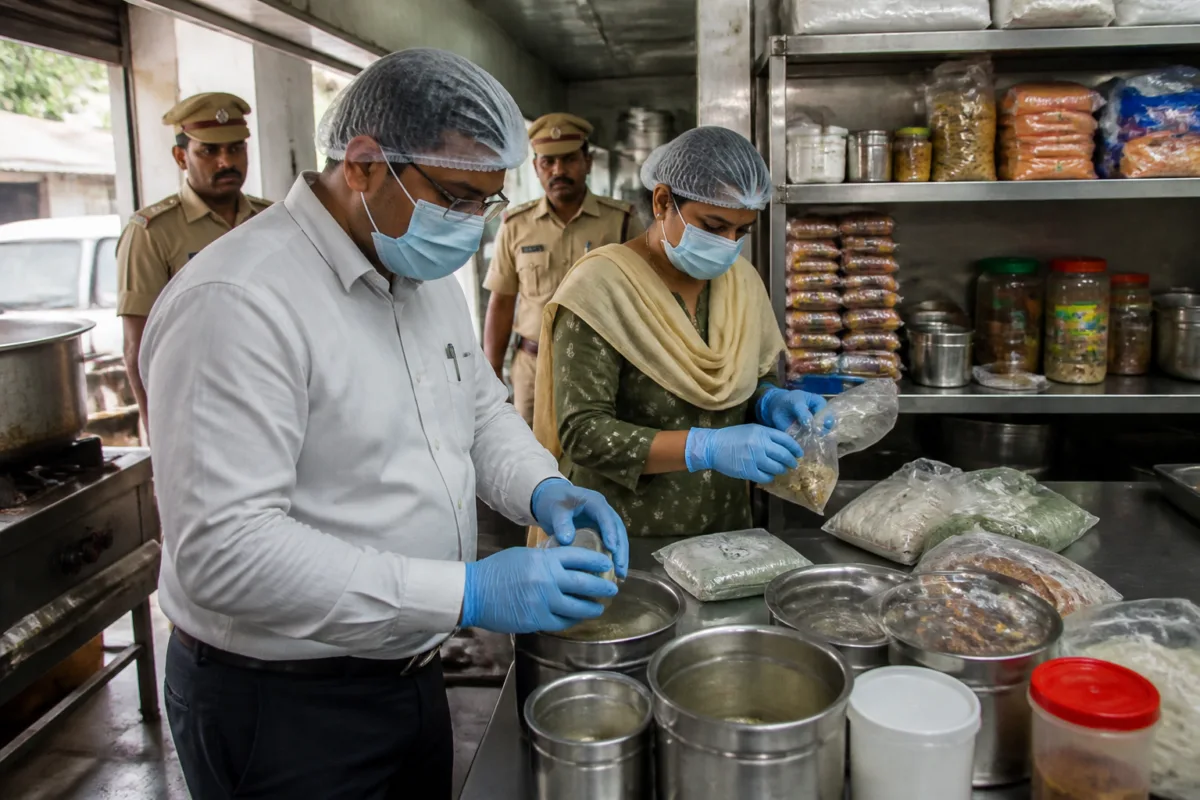
Nizamabad food safety enforcement has led to the suspension of licences of 13 establishments after inspections found unhygienic kitchens, pest infestations, expired products and improper storage practices, according to Telangana Today. The establishments were directed to stop business operations immediately in the interest of public health.
Fourteen enforcement teams comprising food safety officers and police personnel inspected 28 establishments in Nizamabad district on Tuesday. The units covered businesses involved in manufacturing spices, packaged drinking water, sweets and other food products.
Officials detected cockroach and rodent infestations, spoiled vegetables, expired food articles and food handlers working without protective gear. Several establishments were also found using newspapers to cover food articles and selling loose powdered spices, practices described in the report as violations of food safety regulations.
The suspended licences include those of LP Products, Zunaira Family Restaurant, Chappan Bhog Sweets, Qureshia Hotel, Water Solution Company, Janatha Traders, Ira Foods and Beverages, Sukhjit Starch Mills, Sri Ayyappa Traders, Radhe Mithai Watika, Shree Radhe Enterprises, Mogh Foods and Quality Sweets and Chikki.
During the inspections, officials collected 26 samples on suspicion of adulteration. They also seized or discarded 9,645 kg of food articles valued at Rs 17.28 lakh. The action covered both manufacturing and retail-related establishments, including businesses dealing in prepared food, sweets, spices and packaged drinking water.
Maharaja Sweet & Bakes, Panchavati Sweets, Shiva Shakti Ice Cream and Sagar Bakery were closed for operating without an FSSAI licence. The report did not specify how long the closures or licence suspensions would remain in force.
Show-cause notices were issued to 12 establishments, while improvement notices will be served on three others. Officials said further action, including penalties, would depend on the violations recorded and the compliance status of the establishments. The collected samples are part of the enforcement process concerning suspected adulteration.

