


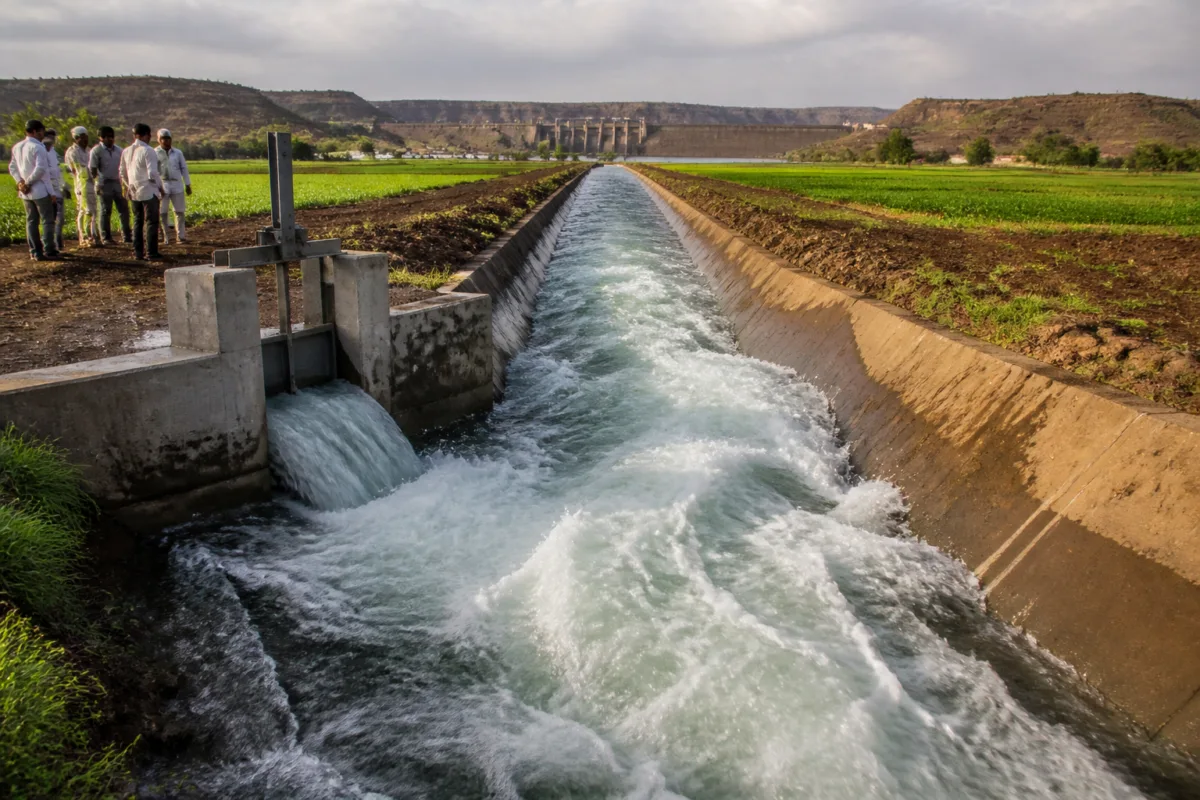
The Nira Valley water release has brought relief to farmers facing water shortages, with water being released at full capacity through both the Nira Right Bank and Nira Left Bank canals from Veer Dam. Water is also being transferred to Veer Dam from the Nira-Deoghar, Bhatghar and Gunjavani reservoirs to support irrigation and drinking-water needs.
The release comes after below-normal rainfall created water stress across several parts of the Nira Valley. Reduced storage in wells, ponds, streams and small check dams had made irrigation planning difficult for farmers. The current reservoir-to-reservoir transfer is intended to improve water management in the command area served by Veer Dam.
According to the report, the Nira Right Bank Canal is receiving 1,550 cusecs, while the Nira Left Bank Canal is receiving 827 cusecs. The release is expected to support rabi-season crops and fodder cultivation in areas dependent on the canal network.
Veer Dam is a key point in the Nira irrigation system because it regulates supplies to both canals. The water available at the dam therefore affects not only farms close to the reservoir but also users across the wider command area, including those at the tail end of the distribution system.
The reported storage levels were 93% in Bhatghar Dam, 94% in Nira-Deoghar Dam, 65% in Veer Dam and 90% in Gunjavani Dam. Combined storage across the four reservoirs stood at 83%, according to the report. Water from the upstream reservoirs is being planned and released to maintain supplies through Veer Dam.
The release is expected to help address both agricultural demand and drinking-water requirements in the affected areas. However, the available storage will still need to be managed carefully because the reservoirs are supporting multiple uses during a period of reduced rainfall.
Pravin Jagtap, deputy chairman of the panchayat samiti, said water distribution should be managed so that farmers at the head of the canal system and those at its tail end receive equitable supplies. The current release will remain part of a broader allocation challenge involving irrigation, rabi crops, fodder and drinking water across the Nira Valley.

