


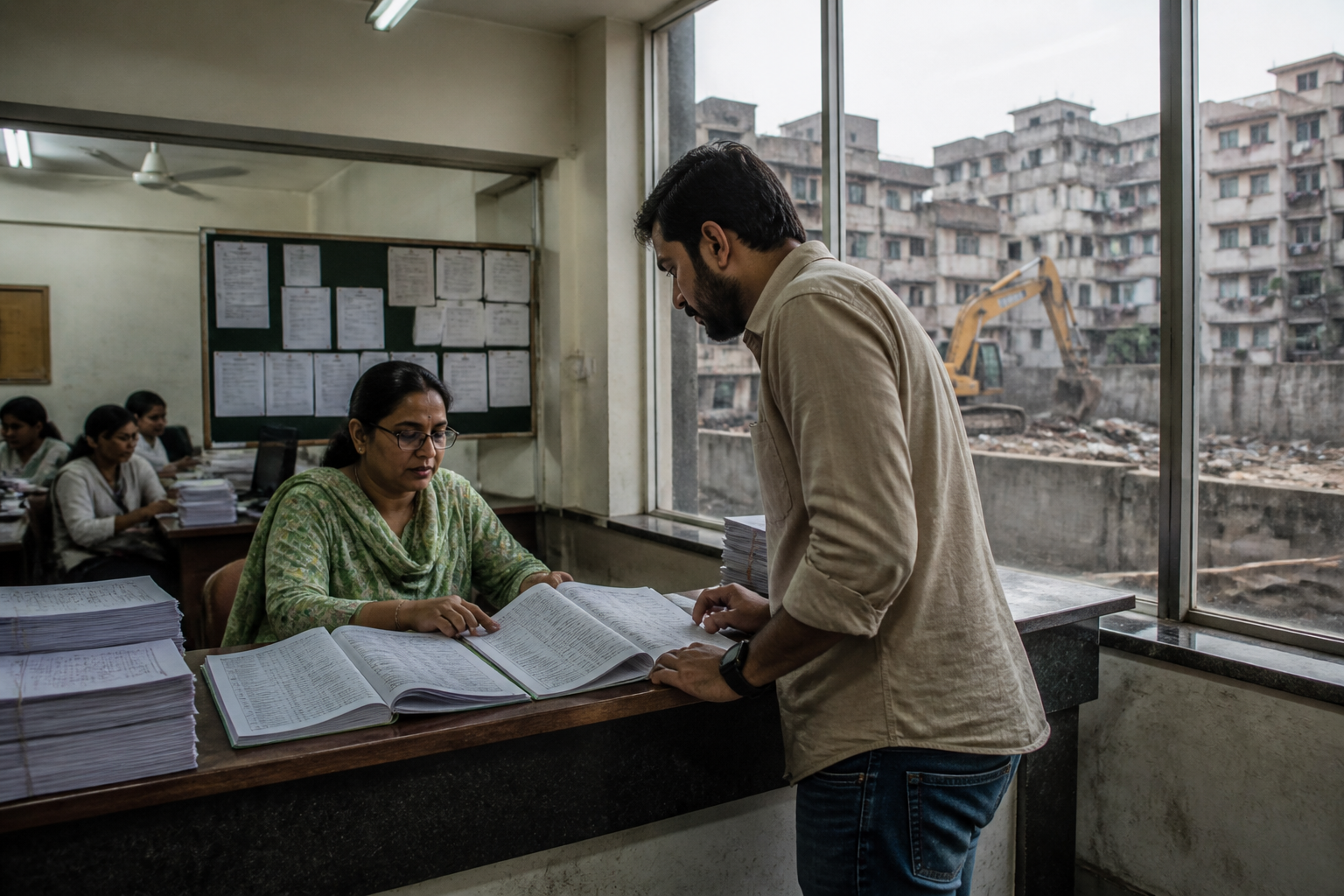
The New Delhi voter list dispute has revived a question that goes beyond Arvind Kejriwal’s defeat in the 2025 Delhi Assembly election: how should citizens, political parties and election authorities interpret large changes in an electoral roll when the same data is being used to support opposing claims? A NewsLaundry report based on Special Intensive Revision (SIR) data has become the latest trigger for that debate, with the Aam Aadmi Party arguing that the figures strengthen its allegations of manipulation and the Bharatiya Janata Party rejecting the charge.
The immediate issue concerns voters added to and removed from the electoral roll in New Delhi Assembly constituency. According to the report cited by Live Hindustan, 1,430 voters were added in January 2025, of whom 560 were later absent from the draft list published after the SIR exercise. Of the 2,369 voters added in December 2024, 783 were subsequently removed. The report also said that the constituency had 1,09,788 voters at the time of the Assembly election, while 37,315 names were removed during the SIR process.
Those figures have been placed alongside another set of changes. The report said that 25,185 voters had been removed between January and June 2026, while 5,713 new names were added during that period. Taken together with the SIR removals, the figures were presented as showing that around 62,500 voters had been removed from the constituency since the election. These numbers are the foundation of the current political dispute, but they do not by themselves establish why each name was removed or whether any removal was unlawful.
That distinction is central to understanding the controversy. An electoral roll is not a static list. Names may change because residents move, properties are redeveloped, voters die, addresses are corrected, duplicate entries are identified or verification requirements are not met. At the same time, unusually large changes in a closely contested constituency can generate legitimate public concern, particularly when the changes are discussed without a clear, voter-level explanation of the administrative reason behind each deletion.
The New Delhi constituency is politically sensitive because Kejriwal lost the seat to BJP candidate Parvesh Sahib Singh Verma by slightly more than 4,000 votes in the 2025 Assembly election. A change in the voter roll that appears large relative to the winning margin can therefore become politically consequential. But the relationship between post-election deletions and the election result cannot be established merely by comparing the two numbers. The voters removed after the election may not be the same people who voted, may have moved after the poll, or may have been included in the roll for reasons unrelated to the election.
AAP has nevertheless used the new report to reinforce allegations it had made before and after the election. After a meeting of the party’s Political Affairs Committee, senior leader Manish Sisodia alleged that large numbers of false voters had been created before the election and later removed during the SIR process. His statement treated the disappearance of names from the later draft list as evidence that those voters were illegitimate at the time of polling. The supplied report does not include voter-level documentation establishing that conclusion.
Kejriwal made a similar allegation in a public message addressed to Prime Minister Narendra Modi, claiming that the Delhi election had been won through large-scale tampering with the voter list. His statement was political in character and did not provide additional documentary evidence beyond the figures discussed in the media report. The distinction matters because electoral-roll disputes require more than competing assertions: they require an audit trail showing when an application was filed, what verification was conducted, why an objection was accepted or rejected, and whether affected voters had an opportunity to respond.
The Election Commission’s earlier position, as reported by Live Hindustan, was that changes to the voter list had been made in accordance with procedure. That response addresses the formal process, but the present controversy shows why procedural compliance alone may not settle public questions. Citizens want to know not only whether notices were issued or verification rules were followed, but also how many voters were removed for each reason, how many contested the removals, and how many names were restored.
The BJP’s explanation focuses on the built environment and population movement in the constituency. Verma said that flats in Sarojini Nagar had been demolished for redevelopment and that voters declined when residents moved out. He added that government employees returned after new flats were built, leading to the addition of voters again. This explanation links electoral-roll volatility to redevelopment and the movement of residents through government housing.
That is an important urban dimension of the dispute. New Delhi is not an ordinary residential constituency. It includes government housing, redevelopment sites and populations whose addresses may change as buildings are demolished, rebuilt and reoccupied. When an electoral register is maintained through addresses, redevelopment can create a gap between the physical existence of a neighbourhood and the administrative record of who lives there. Temporary relocation, vacant units, returning residents and changed allotments can all affect the roll.
However, the redevelopment explanation also requires evidence. The supplied report does not provide the number of flats affected, the dates on which residents moved, the number of voters linked to those addresses, or the administrative records used to remove and later restore names. Without that information, redevelopment remains one possible explanation advanced by the constituency’s elected representative, rather than a complete account of the figures.
The dispute therefore exposes a data problem as much as a political one. Aggregate figures can reveal that a large number of entries changed, but they cannot explain the reason for each change. A credible public review would need to separate deletions caused by relocation from deaths, duplicate entries, failed verification, address corrections and other categories. It would also need to distinguish names removed from a draft list from final deletions, since a draft roll is part of a revision process and may change after claims and objections.
The timing of the changes makes this classification especially important. The report refers to voters added in December 2024 and January 2025, before the Assembly election, and to removals between January and June 2026, after the election. It also refers to the SIR exercise and a later draft list. These are different administrative moments. Treating all additions and deletions as one continuous movement risks obscuring whether the changes occurred during routine revision, election preparation, post-election updating or a distinct verification exercise.
The institutional question is who is responsible for making this information understandable. Election authorities manage the roll, but political parties and citizens are the principal users of the data. If the published information only shows additions and deletions without reasons, affected voters and observers are left to infer intent from totals. That makes the electoral process vulnerable to both genuine irregularities and politically motivated misinterpretation.
A transparent response would not require the disclosure of sensitive personal information. It could publish constituency-level counts by reason for deletion or addition, the number of notices issued, the number of objections received, the number of cases restored and the stage at which each figure was recorded. Such information would help establish whether the changes reflect ordinary population movement, administrative correction or a pattern requiring investigation. The supplied report does not say that such a consolidated public explanation has been issued.
The role of media data analysis is also relevant. The NewsLaundry report, as described by Live Hindustan, identifies a numerical pattern from SIR data. That is valuable as a trigger for questions, but a data pattern is not automatically proof of manipulation. It becomes stronger evidence only when linked to records, addresses, notices, objections and final decisions. Conversely, an official assertion that procedures were followed does not by itself answer whether the outcome was accurate in every case.
For residents, the practical concern is more immediate than the political argument. A voter whose name disappears from a draft or final roll may face difficulty participating in an election, even if the deletion resulted from an address change or an administrative error. The reliability of the roll therefore depends on both accurate updating and an accessible correction process. In a constituency affected by redevelopment and mobile populations, that process must be capable of tracking residents without treating movement as disappearance.
What the available evidence confirms is that the New Delhi roll has undergone substantial changes and that those changes have reopened a dispute over the 2025 election. What it does not establish is that every removed name represented a false voter, that every deletion was improper, or that the changes altered the election result. Those conclusions require a more detailed examination of the underlying records than is contained in the supplied report.
The next stage of the controversy will depend on whether election authorities publish a reason-wise account of the changes and whether political parties provide voter-level evidence for their allegations. Until then, the figures will continue to support competing narratives. The larger lesson for Delhi’s urban governance is that electoral data must keep pace with redevelopment, relocation and changing addresses while remaining transparent enough for citizens to verify what has happened to their names.
