


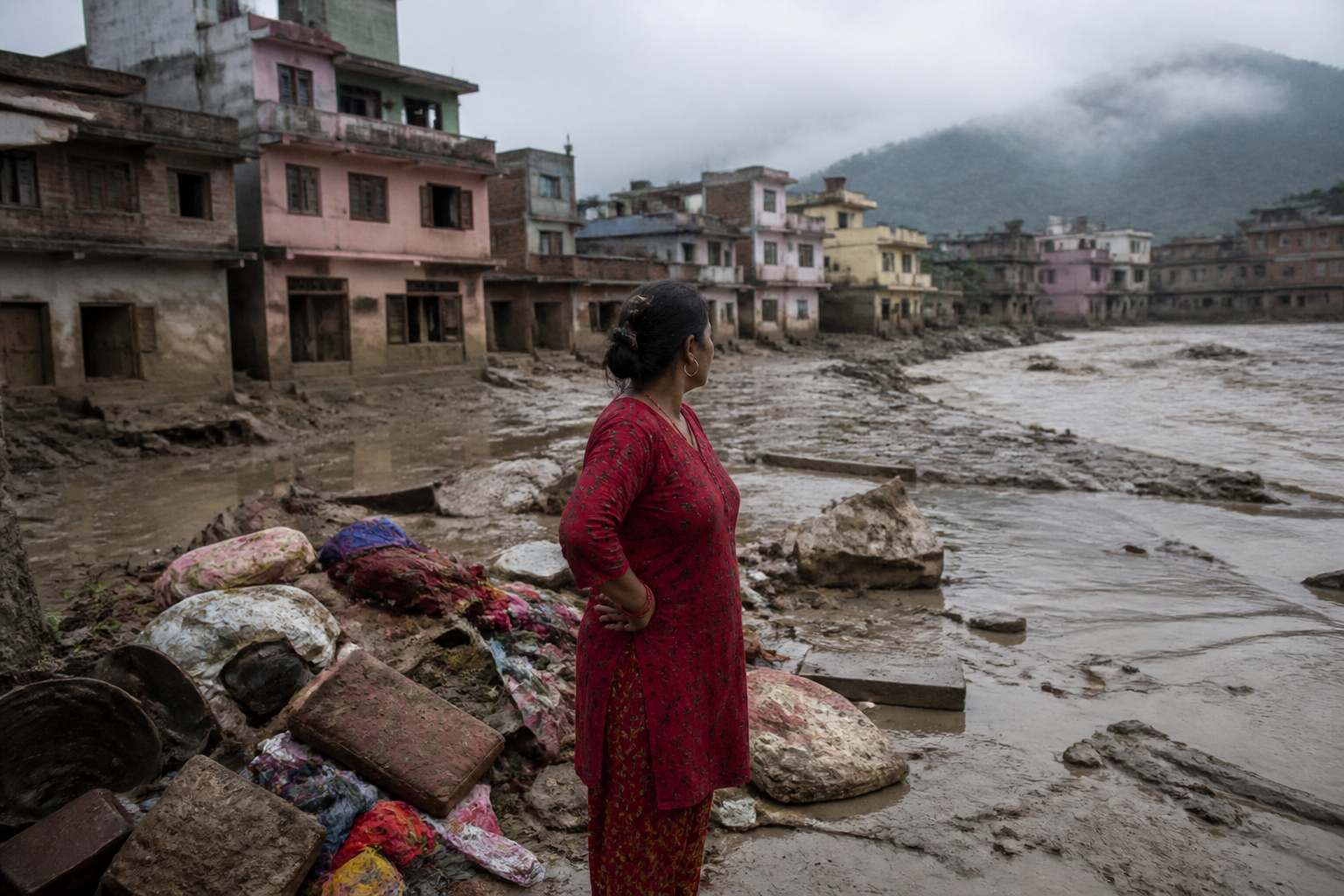
Subheadline: For families whose homes and belongings were swept away, recovery may depend on policy wording, insured perils, coverage limits and the evidence left after a disaster.
Standfirst: Nepal’s catastrophic flash floods have raised a practical question that follows almost every major urban and rural disaster: who pays when a home is destroyed? A report by NDTV Business, citing Chetan Vasudeva of Elephant.in, Alliance Insurance Brokers, says insurance can assist homeowners whose policies cover floods and other relevant natural perils. But the report also underlines the limits of the protection many people assume they have. A home policy may cover the physical structure without covering every belonging inside it. Flood, inundation, landslide and storm protection may need to be specifically included. The amount insured can also fall short of rebuilding costs, while temporary accommodation and contents may be governed by separate terms. The larger issue is not simply whether insurance exists, but whether households understand what has been insured, at what value and against which risks.
The scale of the destruction makes the insurance question immediate. Families affected by the flash floods in Nepal have faced homes that were not merely damaged but, in some cases, completely washed away. NDTV Business reported that the disaster killed hundreds and left thousands missing. Once rescue operations move on and floodwaters recede, survivors must begin a different process: establishing what was lost, determining whether any of it is insured and seeking funds to restore shelter and household life.
According to Chetan Vasudeva, Senior Vice President Business Development at Elephant.in, Alliance Insurance Brokers, a completely destroyed home could potentially qualify for an insurance claim if the homeowner had an active policy covering the relevant natural perils. His assessment, as quoted by NDTV Business, is conditional rather than automatic. The existence of a policy is only the starting point. The policy must cover the event that caused the loss, and the claim remains subject to the terms and limits of that contract.
That distinction is central to understanding home insurance after a flood. The phrase “home insurance” can suggest broad protection, but policies are defined by their wording, exclusions and insured perils. The report says some policies may provide protection against floods, landslides and inundation, while homeowners cannot assume that every natural disaster is covered simply because they have purchased a policy for their property.
In practical terms, the relevant question is not only whether a flood destroyed a house. It is whether the specific policy covers flooding in the location and circumstances described by the contract. The report does not establish how many affected households in Nepal held insurance, how many policies included flood cover or how insurers will assess claims arising from this particular disaster. Those gaps matter because the financial consequences of a disaster depend on the relationship between the hazard, the policy and the value of the loss.
A total loss does not remove the importance of the sum insured. If a property is assessed as completely destroyed, the claim would generally be considered according to the insured amount and the applicable policy terms, Vasudeva said in the report. A homeowner who insured the property for substantially less than the cost of rebuilding may therefore receive a settlement that does not cover the full expense of reconstruction.
This is the problem of underinsurance. The policy may respond to the peril, and the claim may be accepted, but the payout can still be inadequate if the insured value is below the property’s actual replacement cost. The supplied report does not provide reconstruction estimates or examples of settlement amounts. It does, however, identify the basic exposure: purchasing cover is not the same as purchasing enough cover to restore a house after a total loss.
The distinction between a building and its contents adds another layer. A policy that covers the physical structure does not necessarily reimburse every object inside the property. Furniture, televisions, refrigerators, appliances, jewellery and important documents may require contents coverage or specific declarations under the policy. Temporary accommodation expenses may also depend on what the policy provides.
This separation is especially significant after a flood because household losses extend beyond walls, roofs and foundations. A family may lose the structure in which it lived, as well as the appliances, furniture and documents needed to resume daily life. If the building is insured but its contents are not, the accepted claim may address only part of the household’s financial loss. The report therefore presents insurance as a set of distinct protections rather than a single blanket guarantee.
The claims process itself becomes more difficult when the property has been swept away. Insurers need information to establish ownership, the nature of the damage and the value of the loss. Yet a flood can destroy precisely the records that would ordinarily support a claim. Receipts, policy papers, photographs, inventories and documents may be lost along with the house.
Vasudeva advised policyholders to notify their insurer or broker promptly after the flood, while first ensuring their own safety. He also recommended preserving whatever evidence remains. The report identifies photographs and videos of the damage, location details, proof of ownership, insurance documents, policy schedules, purchase receipts and inventories of damaged belongings as potentially relevant records. These materials may help establish the claim when physical evidence is incomplete.
The advice reflects a broader tension in disaster recovery. The household is expected to document loss at the same moment it is dealing with displacement, safety risks and uncertainty about missing family members. In cases where buildings disappear under water and debris, documentation may be partial. The report does not say that missing records automatically invalidate a claim, nor does it describe a uniform procedure for all insurers. It says that prompt notification and damage records may help.
The policy landscape described in the report is therefore contractual and risk-specific. Coverage depends on the policy wording, the perils listed, the sum insured and any provisions for contents or temporary accommodation. The insurer’s responsibility is assessed against those terms, while the policyholder’s recovery prospects depend partly on whether the policy was active and adequately matched the property and its risks.
That framework also places emphasis on the timing of decisions made before a disaster. Flood insurance cannot be evaluated only after a home has been destroyed. The relevant choices whether to insure the structure, whether to include contents, which natural perils to cover and how much to insure are made in advance. Once the disaster occurs, the claim process tests those earlier decisions against the actual loss.
The evidence available in the NDTV Business report does not support a broader estimate of Nepal’s insurance penetration, the value of property damage, the number of claims or the likely settlement rate. It also does not establish whether government assistance, relief payments or other recovery mechanisms will supplement insurance for affected households. Those questions remain outside the supplied material and would require official figures, insurer data or further reporting.
What the report does establish is a recurring pattern in disaster risk: the visible loss may be comprehensive, while financial protection is fragmented. A destroyed house, lost contents and the cost of temporary shelter can fall under different parts of a policy or outside it altogether. Even where flood cover exists, an insufficient sum insured can leave a family unable to rebuild to the same standard.
For urban planners and housing authorities, the insurance question connects household finance with climate resilience. A flood is not only an emergency-management event; it can become a long-term housing crisis when families lose their structures, possessions and documentation at once. The supplied report does not examine Nepal’s land-use planning, building standards or flood-control systems, so no conclusion can be drawn here about the causes of the destruction. But it shows how the consequences of a disaster continue after the water recedes and how recovery depends on systems that operate at household level.
For residents, the immediate lesson supported by the report is narrower and more concrete. Homeowners should not treat the label “home insurance” as proof that every flood-related loss is covered. The policy wording, insured perils, sum insured, contents provisions and accommodation clauses determine the scope of protection. After a disaster, prompt contact with the insurer or broker and preservation of surviving evidence may assist the assessment.
Nepal’s floods have made the gap between physical destruction and financial recovery visible. The report confirms that insurance may play a significant role for households with active and relevant cover, but it does not promise full recovery for every affected family. The next stages will depend on individual policy assessments, available documentation, the valuation of losses and the terms governing each claim.
