


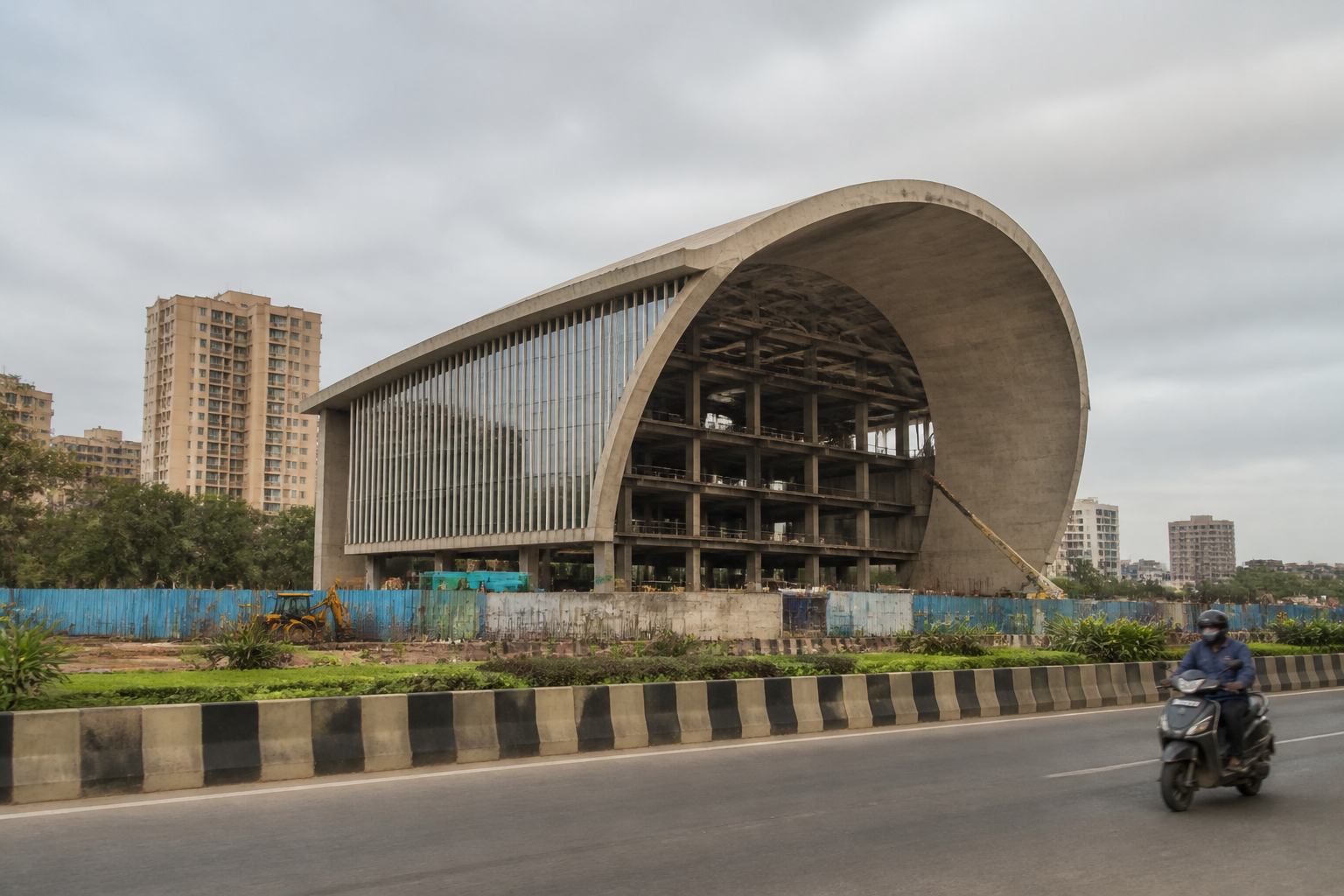
Navi Mumbai’s Science Park was conceived as more than a municipal building. Spread across 19,999 square metres in Nerul, the Rs 236 crore project is intended to combine a science museum, convention centre, interactive exhibits, educational programmes and workshops. Yet its latest deadline shows how easily a public institution built around long-term learning can become trapped in the short-term mechanics of construction, procurement and phased delivery.
The Navi Mumbai Municipal Corporation now expects to open only the first phase in May 2027, according to city engineer Shirish Aradwad, after the project missed an earlier completion target of March 2026. The structure at Sector 19 has been completed, but interiors and exhibits remain to be delivered. The second phase, which will include exhibits brought from abroad, has no fixed completion date.
That distinction matters. A science park is not operational merely because its shell is ready. Its public value depends on the relationship between the building, the exhibits, the scientific content and the programmes that bring visitors into the facility. In this case, the civil works and the experience intended for citizens are being delivered through separate and increasingly staggered processes.
## The project has moved from one deadline to three stages
The original plan divided the work into two broad components: structural construction and exhibit installation. The project has now been split into three parts: completion of the structure, partial installation of exhibits for phase one, and imported exhibits for phase two.
The structural component itself was expected to be ready by December 2025. It was subsequently delayed to October 2026. The opening target for the first phase has now moved to May 2027, with tenders for interiors floated recently and installation expected to require another six to seven months.
This sequence reveals the administrative challenge behind the headline. Construction and content procurement are not interchangeable activities. A completed structure can demonstrate physical progress, but it does not necessarily mean that a visitor-ready institution is close to opening. The project requires interiors, models, three-dimensional displays, audio-visual films, scientific literature and other material across departments covering biology, environmental sciences, energy engineering and space science.
The cost structure reflects this division. Structural work is estimated at Rs 109 crore, while interiors and exhibits are projected to cost another Rs 127 crore. Together, these components take the total project cost to Rs 236 crore. The supplied report does not establish whether the repeated delays have already changed that estimate, but experts cited in the report warned that further delays could increase costs.
That risk is built into projects where construction and content are delivered over a long period. Delays can affect contractor mobilisation, procurement schedules and the relevance of equipment or displays. The longer a public facility remains incomplete after its main structure is built, the greater the possibility that the final expenditure will be shaped by time as much as by design.
## A civic building is only the first layer of a public institution
NMMC’s stated ambition is substantial. The corporation wants the science park to offer interactive exhibits, educational programmes and workshops for citizens and tourists, while strengthening Navi Mumbai’s global identity. The plans include 225 exhibits and departments focused on multiple branches of science and technology.
Municipal commissioner Kailas Shinde has stressed the need for reader-friendly scientific literature in every department, along with international standards for models, exhibits, audio-visual content and related material. NMMC has also said it consulted Indian and international scientists while developing the facility.
These requirements make the project more demanding than a conventional public building. A museum or science park must translate technical knowledge into an experience that can be understood by visitors of different ages and educational backgrounds. The building, the display systems, the written material and the programming must work together. If one part is completed much earlier than the others, the result may be a functioning structure without the full public offer originally promised.
The decision to open phase one in May 2027 appears to be an attempt to make part of that promise available before the full project is ready. It may allow NMMC to begin using the facility and installing a first set of exhibits while the imported material is still being procured. However, the supplied information does not specify how many of the 225 exhibits will be available in phase one, which departments will open first, or whether the convention centre and science museum will operate together.
Those details will determine what “partial opening” means in practice. A phased launch can reduce the waiting period for citizens, but only if the first phase is coherent, safe and capable of supporting meaningful programming. Without a clear public schedule, visitors may find it difficult to understand which sections are open, which remain under work and when the remaining exhibits will arrive.
## Imported exhibits create a separate procurement clock
The second phase is particularly uncertain because it includes exhibits from abroad. NMMC officials plan to visit international facilities to select what Aradwad described as world-class exhibits. The procurement effort is expected to cover the latest models, 3D images, audio-visual films and displays on advances in science and technology.
This introduces a procurement timeline that is distinct from civil construction. International selection, contracting, production, shipping, installation and technical integration can each affect the final opening schedule. The source material does not provide a deadline for these activities or identify the countries, suppliers or institutions involved. It only confirms that no deadline has been set for phase two.
The absence of a date is therefore not a minor administrative detail. It creates an open-ended part of a project whose public identity depends on the quality and completeness of its exhibits. Phase one may bring the facility into use, but the eventual standard of the science park will also be judged by whether the imported exhibits are delivered within a credible framework and integrated with the rest of the visitor experience.
The project’s iconic archway and main structure have been completed, giving the development a visible physical presence. But the unresolved content and procurement schedule show why visual completion can be a poor measure of readiness for public use. The most important remaining work is largely inside the building and in the systems that will make its displays useful.
## The larger governance question is delivery after construction
Navi Mumbai’s Science Park illustrates a familiar governance problem without requiring the project to be judged a failure: municipal bodies often find it easier to define and measure construction than to manage the institutional functions that follow it. A structure can be tendered, monitored and certified through physical milestones. Exhibits, scientific interpretation, visitor programming and international procurement require a longer chain of decisions and coordination.
NMMC’s own project structure reflects this challenge. The work began with two broad divisions and has since been reorganised into three phases. That change may help the corporation open part of the facility earlier, but it also indicates that the original delivery model has been revised as the project progressed.
The municipal commissioner’s emphasis on cleanliness, timely execution, planning and reader-friendly content points to another requirement: the science park will need continuing operational attention after inauguration. Its performance will not depend only on whether the archway, museum or convention centre is completed. It will depend on whether exhibits are maintained, content is updated and educational programmes continue to attract citizens and tourists.
The available information does not establish the proposed operating model, annual maintenance budget, staffing structure or responsibility for updating scientific displays. Those details will become important as the May 2027 phase-one target approaches. They will show whether the project is being treated solely as a capital construction scheme or as a public institution with recurring operational needs.
For now, the confirmed picture is one of partial progress and divided timelines. The structure has been completed, the total planned cost stands at Rs 236 crore, interiors and exhibits remain to be installed, and phase one is targeted for May 2027. The second phase remains undated. The next significant milestones are the interior tenders, the six-to-seven-month exhibit installation period and NMMC’s international selection process for the remaining exhibits.
The science park’s eventual success will therefore be measured not by the number of revised deadlines alone, but by whether the municipal corporation can convert a completed structure into a reliable, accessible and continuously useful civic institution.

