


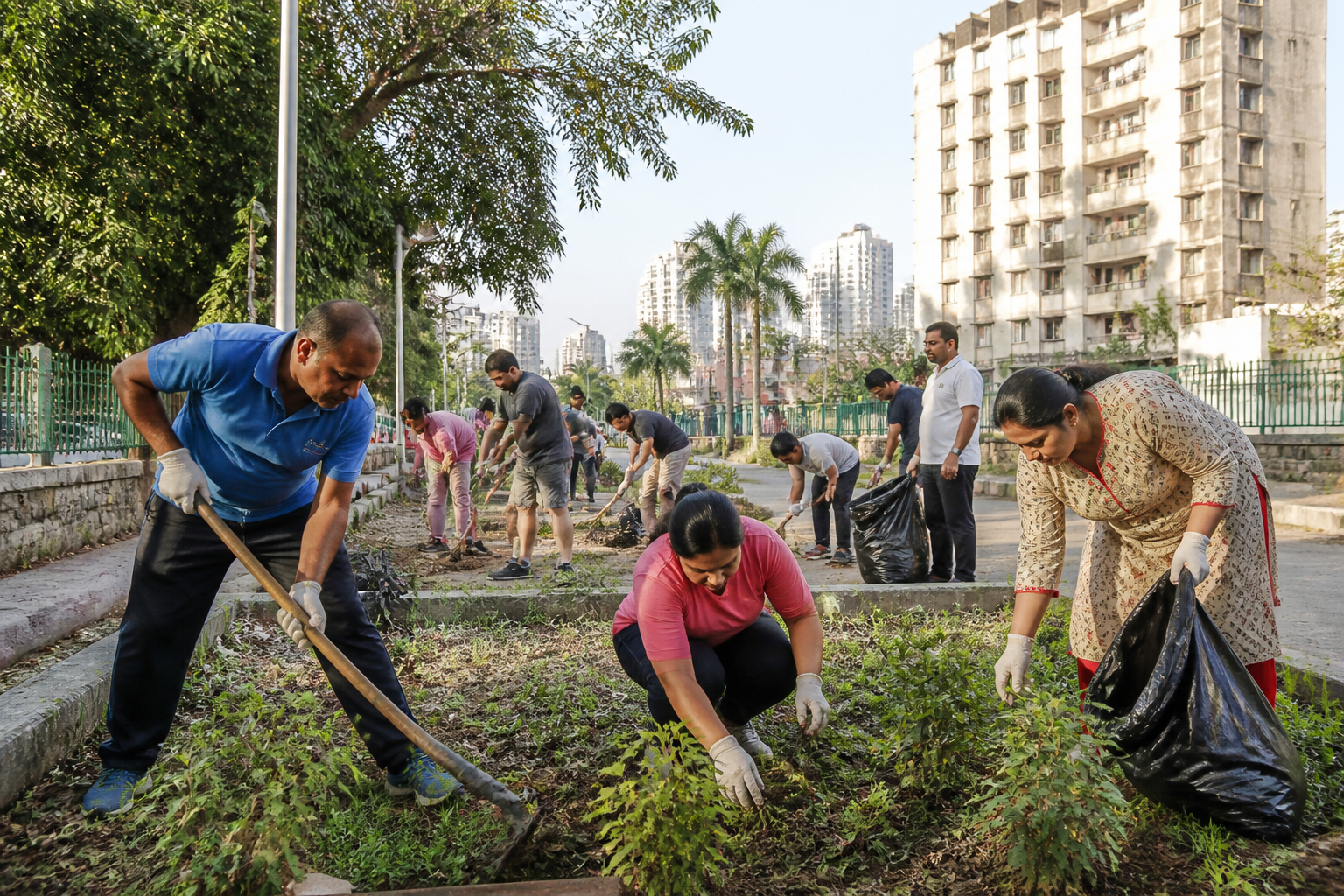
Navi Mumbai has launched the Sugandhi Shahar Abhiyan–Angan Dattak Yojana 2026, inviting residents, institutions and other groups to take responsibility for keeping small public spaces around their buildings clean. More than 100 citizens came forward to adopt such spaces at the launch event held at the Vishnudas Bhave Natyagruha in Vashi, according to a report by Loksatta – Navi Mumbai.
The campaign was inaugurated by Maharashtra Forest Minister Ganesh Naik in the presence of around 1,200 citizens. Participants who agreed to become “Angan” custodians were felicitated with certificates during the programme. The initiative seeks to shift responsibility for public cleanliness from being solely a municipal function to one that also involves residents and local organisations.
Under the concept explained at the event, residents are encouraged to voluntarily maintain a public area measuring approximately 10 to 15 feet around their residential or commercial premises. The programme is built around three elements — the building, the space and the individual — according to Navi Mumbai Deputy Mayor Dashrath Bhagat, who outlined the campaign’s approach.
The plan combines routine cleanliness with the wider idea of making public areas visually and environmentally more pleasant. The “Sugandhi Shahar”, or fragrant city, concept is intended to add this dimension to sanitation efforts, Naik said at the launch. The campaign’s stated objective is to create a cleaner, more attractive and sustainable Navi Mumbai through public participation.
The initiative comes after Navi Mumbai secured first place in Maharashtra and third place nationally in the Swachh Survekshan cleanliness assessment, as cited in the report. Naik said that active citizen involvement would be necessary if the city is to move towards the top position in the country’s cleanliness rankings.
The Angan Dattak model places the focus on the small spaces immediately surrounding buildings rather than only on large municipal facilities or citywide cleaning operations. Its implementation will therefore depend on how residents, institutions and other participating groups coordinate their voluntary responsibilities with the civic administration. The launch report does not specify the number of spaces to be adopted across the city, the duration of each commitment, or the municipal monitoring process.
Naik said the participation of citizens, organisations and other groups had given the initiative the character of a public movement. He also expressed the view that the concept could become a model nationally and internationally. The programme’s next operational milestones, including the formal allocation and monitoring of adopted spaces, were not detailed in the report.
