


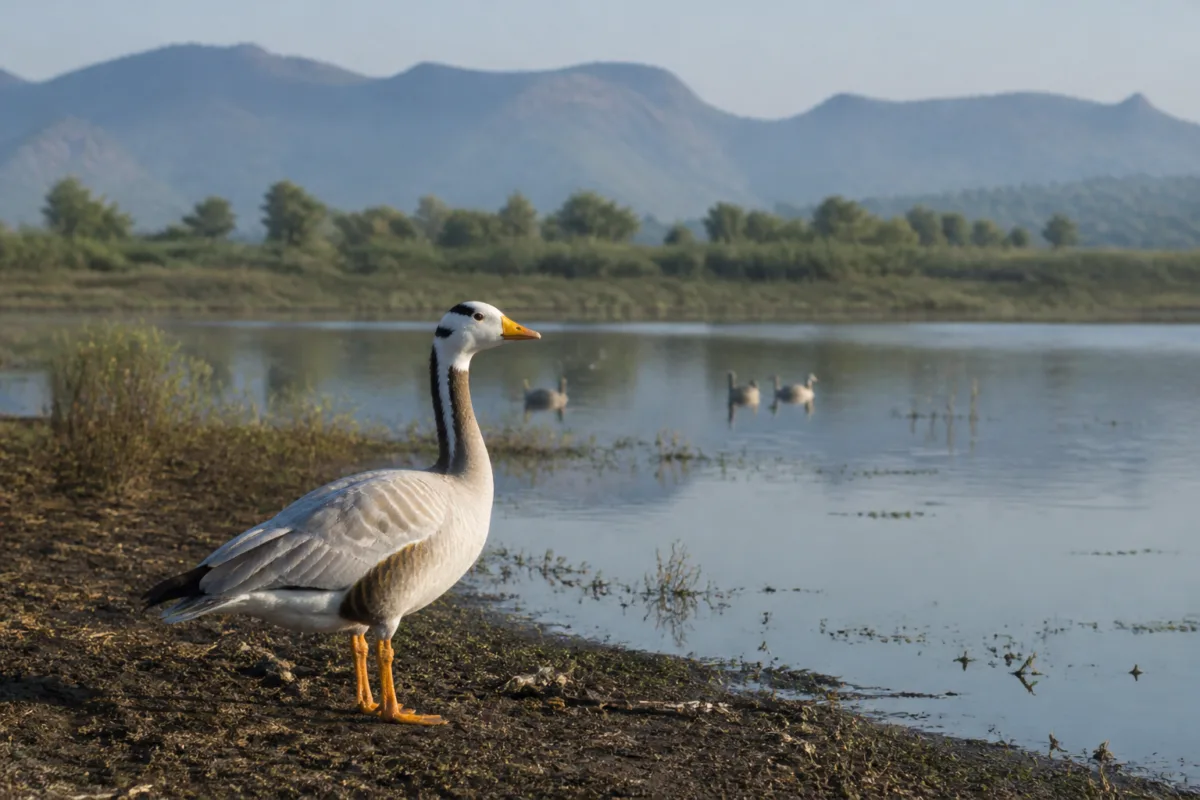
A bar-headed goose has been spotted at Nandur Madhmeshwar Wildlife Sanctuary in Nashik after a gap of eight to 10 years, with forest officials linking its return to nearly 18 months of habitat and water management work at the wetland. The sighting is significant because the species is a long-distance migrant known for flying over the Himalayas during its seasonal movement from breeding grounds in Tibet and China towards India. Officials said the goose’s return, along with the arrival of other uncommon migratory birds, indicates that conditions at the sanctuary have improved enough to support species that had not been recorded there for several years. Range forest officer Hiralal Chaudhari said bar-headed geese migrate along the Central Asian and East Asian Flyways as severe winter snowfall begins in their breeding regions. The birds move towards Northeast and South India, using suitable wetlands as stopover locations during journeys that span thousands of kilometres. The species is known for crossing the Himalayas, including the Mount Everest region, while enduring sub-zero temperatures and extremely low oxygen levels. Chaudhari described the bird as one of the world’s highest-flying species and said its presence at Nandur Madhmeshwar carries importance beyond the rarity of the sighting. Migratory birds are sensitive to changes in water levels, food availability and human disturbance. Their presence can therefore provide an indication of the condition of wetland habitat, although the forest department’s observations in this case are based on the recent sightings and restoration work reported at the sanctuary. Nandur Madhmeshwar, often referred to as the “Bharatpur of Maharashtra”, currently has more than 310 recorded bird species, including over 140 migratory species, according to forest officials. The sanctuary receives birds every winter from Central Asia, Siberia, China and other northern regions. Officials also reported the recent sighting of a white stork after a 14-year gap. Chaudhari said Deputy Conservator of Forests (Wildlife) Krushna Bhawar took a keen interest in the work undertaken at the site, which officials believe has helped bring back some species after gaps ranging from eight to 14 years. The latest sightings place renewed attention on the role of water management and habitat conditions in maintaining wetlands used by migratory birds. Chaudhari compared the sanctuary’s annual winter congregation to Nashik’s largest religious gathering, describing it as an “avian Kumbh Mela.” The forest department’s next phase of work will continue to centre on habitat and water management at the sanctuary, where the winter arrival of migratory birds is now under way.

