


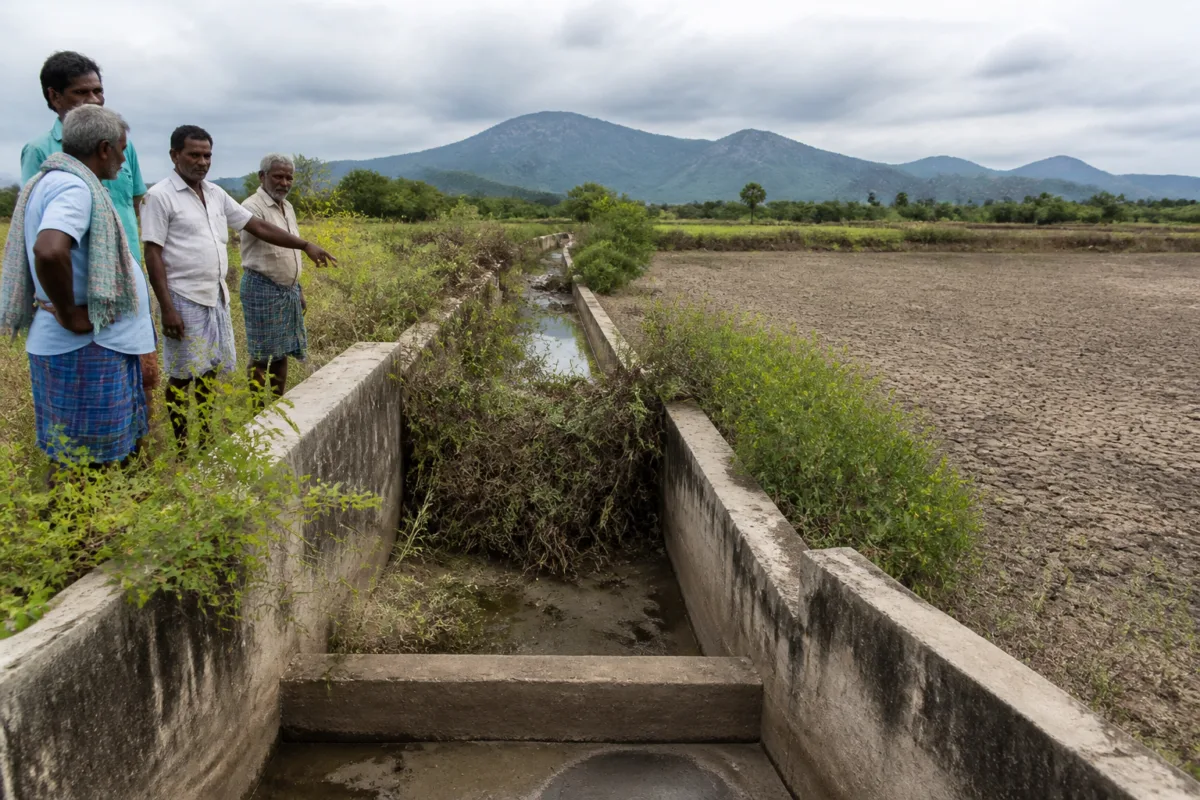
More than 30 village lakes near Kannamangalam in Tiruvannamalai district are reportedly remaining dry even as floodwater flows through the Naganadhi River, with canal encroachments, silt and vegetation blocking the network designed to divert water into them.
The affected lakes serve as irrigation and drinking-water sources for communities in and around Kannamangalam, Kolathur, Alagasenai and Vannangulam. The situation has raised concerns over water shortages in the area, according to a report by Dinamalar.
The Naganadhi begins as rainwater flowing through streams in the Jawadhu Hills and forest areas. It then travels for about 45 km through more than 30 villages before joining the Kamandala River at Arani, forming the Kamandala Naganadhi system.
A canal network was built in 1933 during the British period as part of a water-management plan. The design allowed floodwater in the Naganadhi to fill lakes in the surrounding villages before continuing towards the Kamandala River. Small check dams were also constructed in the Kolathur and Sringeri areas.
However, the canal carrying water from the Naganadhi is now reported to be obstructed by encroachments and overgrown vegetation. The channels have also not been desilted, causing water to be lost instead of reaching the connected lakes. Dinamalar reported that farmers have been seeking restoration of the system for a long period, but that no action has been taken so far.
The failure is particularly visible during periods of heavy rainfall. Although the Naganadhi has been in spate following recent rain, the Kolathur lake check dam, the Kannamangalam lake and more than 30 other lakes have not received the expected inflow. The contrast highlights the difference between water availability in a river channel and actual access to storage infrastructure at village level.
For local residents, the lakes are not only flood-management assets but also part of the area’s water and agricultural system. When the channels fail to transfer river water into the tanks, farmers lose a source of irrigation and communities face greater pressure on drinking-water supplies. The report does not provide capacity figures for the lakes or quantify the volume of water lost.
Residents have asked the Public Works Department to restore the Naganadhi water canal, remove obstructions and undertake desilting. The department’s response and a timeline for the proposed restoration were not included in the report.

