


The Murasu cyclone damaged standing crops across 15 Andhra Pradesh districts and triggered a large relief and evacuation operation, but the reported extent of agricultural loss requires clarification because the figures cited in the available report do not match.
The report, published by Deccan Chronicle and attributed to PTI, said an official press release estimated damage to more than 30,000 hectares of standing crops. It also quoted the same release as recording crop damage in 30,661 acres across 15 districts. These two figures represent materially different land areas, and the supplied material does not explain the discrepancy.
The districts identified as having suffered the heaviest crop damage were Krishna, Bapatla and Nandyala. Paddy, cotton and corn were reported to be the crops most affected. The cyclone was said to have had an abnormal impact across 132 mandals in the 15 districts, indicating that the disruption extended across multiple administrative areas rather than being confined to a single coastal location.
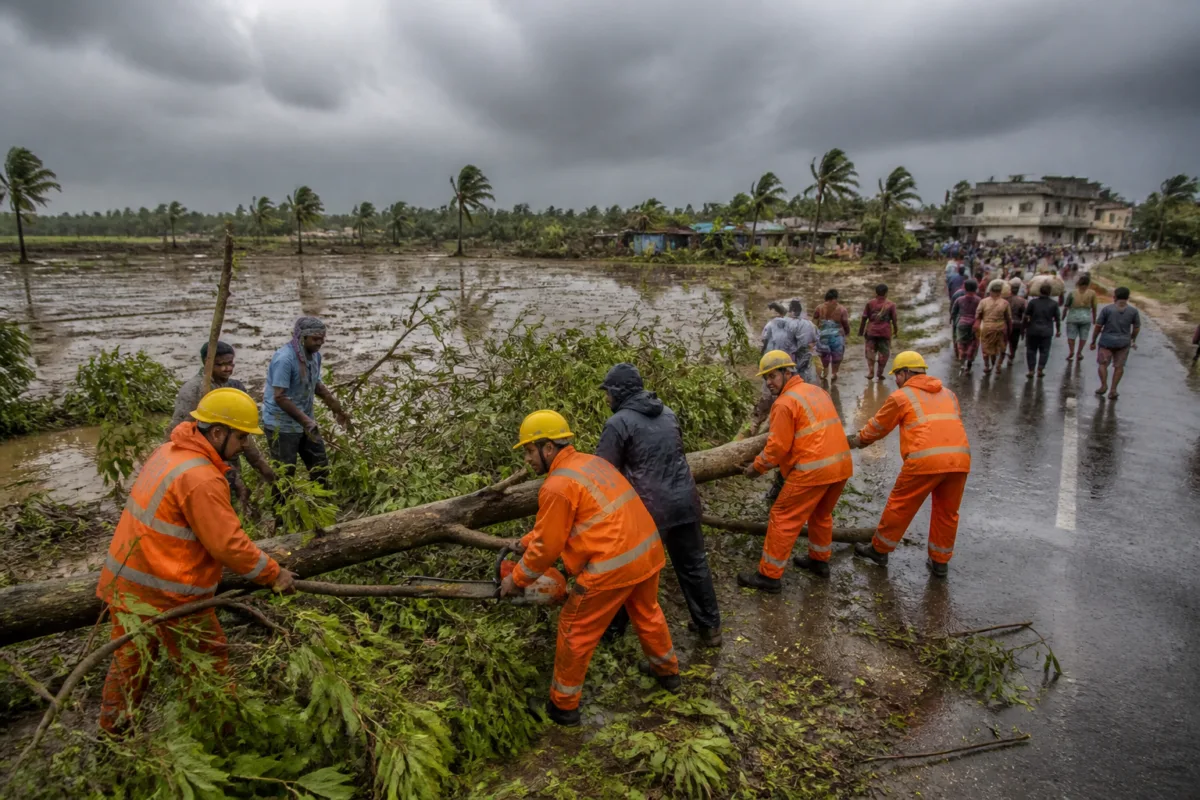
The state government’s reported response included the evacuation of 10,805 people to cyclone shelters and the establishment of 171 relief camps. Authorities distributed 14,810 food packets, according to the press release cited in the report. Eleven National Disaster Response Force teams and 13 State Disaster Response Force teams were deployed for relief operations.
The response also involved the deployment of 185 Fire Department teams to clear uprooted trees and deal with stranded water. The government arranged 613 generators, although the supplied report does not specify which facilities received them or how long they were expected to remain in operation. Those details would help establish the extent of power and access disruptions following the storm.
Health and evacuation measures were taken before the cyclone began affecting the state. The report said 3,066 pregnant women and 1,008 nursing mothers were shifted to hospitals as a precautionary measure. A total of 725 medical teams were dispatched to 13 districts, while 362 ambulances were kept on standby.
The numbers show the administrative breadth of the response: evacuations, shelters, food distribution, emergency power, road-clearance operations and medical preparedness were conducted simultaneously. They also point to the importance of district-level coordination when a severe weather event affects agricultural areas, settlements and public services across several mandals.
However, the central crop-loss figure remains unresolved in the supplied material. The report does not establish whether the reference to more than 30,000 hectares was an error, whether 30,661 acres was incorrectly reproduced, or whether the two figures relate to different assessments. The official press release and a corrected district-wise damage assessment would be needed to determine the verified scale of agricultural loss.
The immediate next steps described in the report are continued relief operations, including the work of disaster-response teams, Fire Department crews, medical teams and local authorities. The final crop-damage assessment and clarification of the measurement used will determine the confirmed scale of the cyclone’s impact.

