


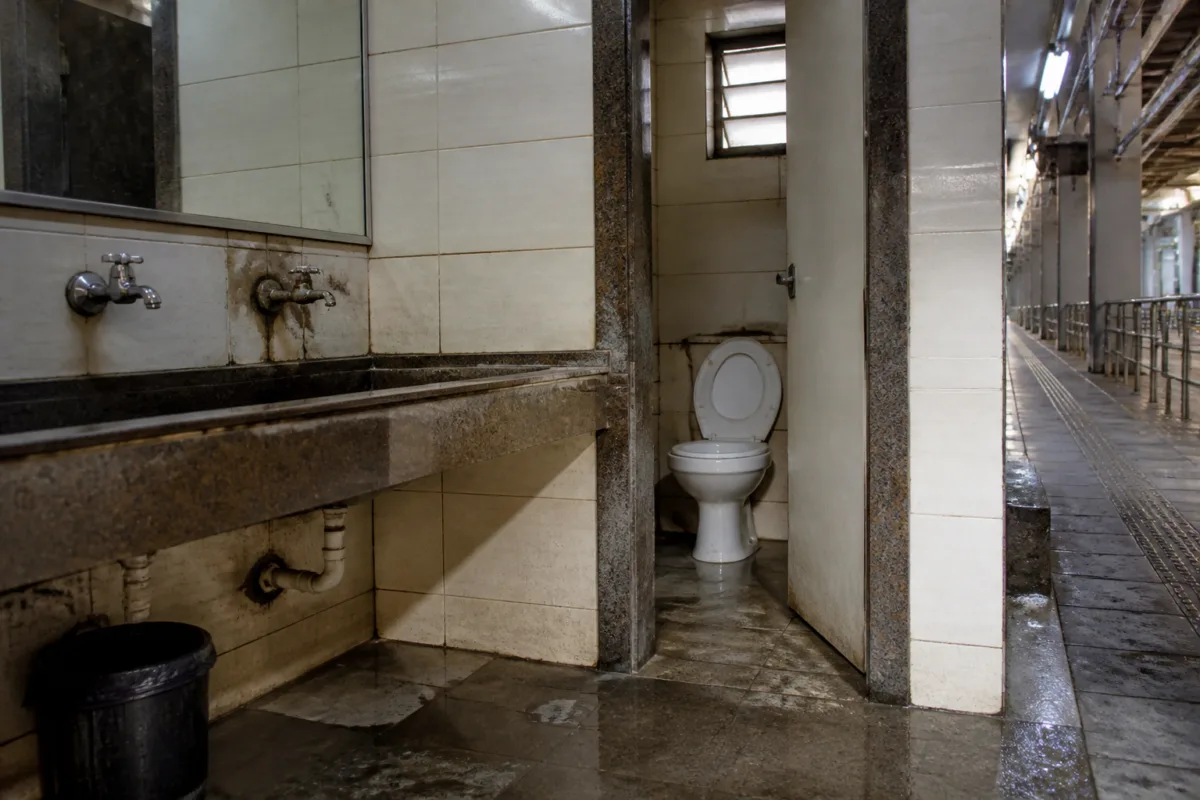
Mumbai’s public toilet network is leaving commuters to choose between unhygienic facilities, delaying the use of toilets or paying more for cleaner washrooms, according to a Mid-day reality check across railway stations, Metro stations, highways and other public locations.
The report, published on November 19 ahead of World Toilet Day, found contrasting conditions at nearby railway and Metro stations. At Ghatkopar railway station, a toilet costing Rs 5 was reported to have no functional flush tank, broken taps, an inconvenient bucket arrangement, a foul smell and no dustbin. The free facility at Ghatkopar Metro station was reported to have functional flush tanks and jet sprays, a dustbin and no foul smell.
Similar differences were recorded at Andheri. The railway-station toilet was described as unclean, foul-smelling and lacking a functioning flush tank, while the Metro facility had water flow, a dustbin and less odour. At Churchgate railway station, some toilets were reported to be broken or unclean. The Churchgate Metro toilet, located within the ticketed area, charged Rs 10 but was reported to be clean and equipped with dustbins.
The contrast highlights that access to a toilet does not necessarily mean access to a usable public service. Railway toilets in the locations surveyed generally charged Rs 5, while Metro facilities were either free or, in the case of the Churchgate facility, available within a ticketed area at a higher effective cost.
The report also found uneven conditions outside stations. Toilets at two Highway Suvidha locations at Ghatkopar and Vikhroli, towards Thane, were described as clean and usable without charge. Another Highway Suvidha facility at Airoli Naka near Mulund was also reported to be clean and free. However, smaller public toilets along the route from Ghatkopar to Mulund were described as unusable despite contractors being assigned to maintain them.
At Dadar West, both public toilets surveyed were reported to have a foul smell and inconvenient taps, while each charged Rs 5. Near the Mumbai Press Club, the report said 37 toilets were functional but had a foul smell. It also described wet floors, paan stains and inadequate conditions for people using the facilities for bathing or washing clothes.
For women, the problems extend beyond cleanliness. The report recorded broken doors, inadequate water supply, missing or overflowing sanitary-napkin bins and insufficient lighting. Citizen voices cited in the report said women sometimes reduce water intake or avoid public toilets during long journeys because of these conditions. Other users said they preferred restaurants or Metro stations when possible.
A gynaecologist quoted by Mid-day, Dr Tushar Palve of Cama and Albless Hospital, said unhygienic toilets and contaminated surfaces can expose users to germs and contribute to skin irritation and infections. He also said women are more susceptible to urinary tract infections because of their shorter urethra. The report attributed additional concerns, including dehydration and discomfort associated with repeatedly delaying urination, to the doctor.
Accessibility was another concern. A wheelchair user cited in the report said some entrances were narrow or damaged and that toilets designated for persons with disabilities were often locked, with users unsure who held the keys. This points to a service gap that cannot be measured only by counting toilets constructed or toilets officially listed as operational.
The Brihanmumbai Municipal Corporation has been pursuing an aspirational toilets project aimed at improving sanitation facilities. Yet the conditions documented by the report suggest that construction and maintenance remain separate challenges. A newly built or renovated facility can still become unusable if water supply, cleaning, lighting, waste disposal, accessibility equipment and contractor supervision are not maintained throughout the day.
The BMC told Mid-day that, when a particular case is brought to its attention, a show-cause notice would be issued and the operator could be blacklisted. That response places the emphasis on individual complaints and enforcement after failure. The experiences recorded across multiple locations instead raise a broader operational question: how frequently are public toilets inspected, who records their condition, and what service standards apply when facilities charge users?
For commuters, the practical consequence is a sanitation network that is available in name but unreliable in use. The report’s comparison between railway, Metro and highway toilets shows that cleanliness, water, lighting, waste disposal and accessibility depend heavily on the operator and the quality of monitoring at each site. Improving public sanitation therefore requires more than adding facilities; it requires consistent, visible and accountable maintenance of those already built.

