Mumbai Western Suburbs Gain From Coastal Connectivity
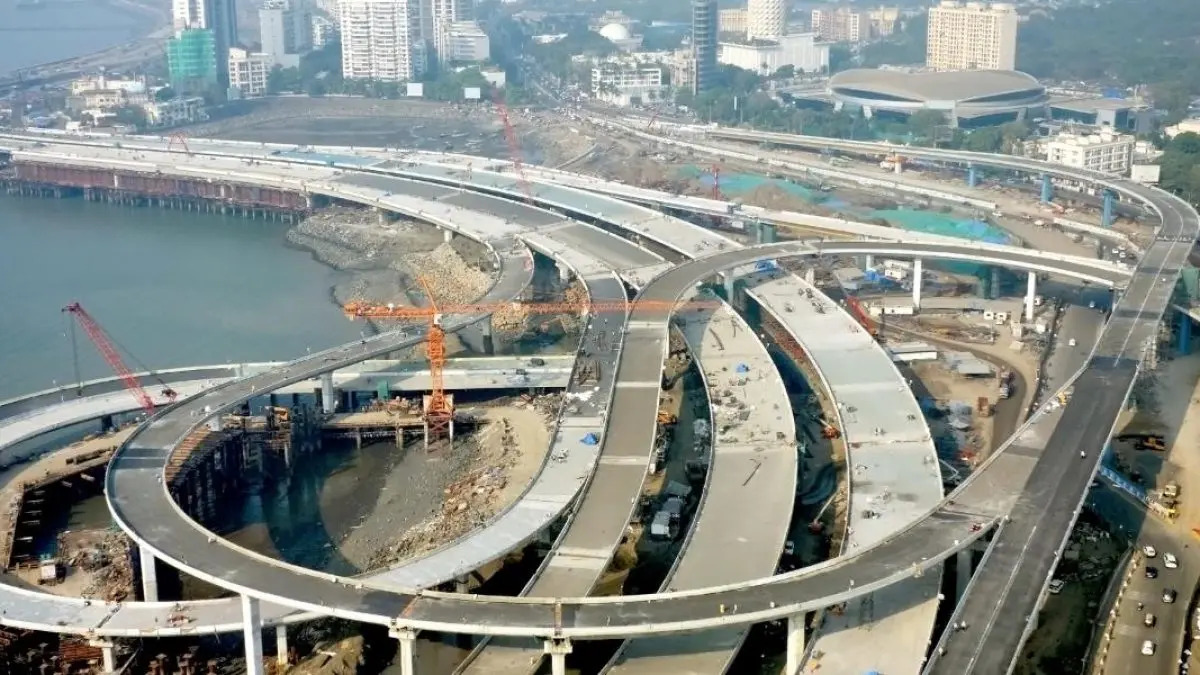
Mumbai’s expanding coastal transport network is beginning to alter the development equation for the western suburbs, where established residential and commercial districts could gain from faster connections with the city’s core. The potential impact extends beyond commuting: improved accessibility may influence housing demand, commercial catchments and land values, while testing whether major road investment can support more compact and connected urban growth. The operational Coastal Road has already improved movement between parts of South Mumbai and the Bandra-Worli Sea Link. Its northern extension towards the Versova-Dahisar corridor is expected to strengthen links further along the western edge of the city. For residents and businesses, the significance will depend less on the length of the new road than on the travel-time savings it creates across existing neighbourhoods.
That could change the relative attractiveness of established markets such as Andheri, Jogeshwari, Goregaon and Borivali. These districts already combine housing, employment, retail, education and healthcare with access to suburban rail and expanding Metro infrastructure. Better road connectivity could widen their effective catchment areas, allowing people to consider homes and workplaces that were previously less convenient for daily travel. The Mumbai Coastal Road may also influence commercial geography. Businesses typically value locations that can draw workers and customers from a broad area. Faster links between western suburbs and central employment districts could therefore support additional office, retail and mixed-use activity in areas where transport capacity and social infrastructure already exist. However, transport-led real estate growth is not automatic. Property markets respond to a combination of connectivity, land availability, neighbourhood quality, employment access and public amenities. Infrastructure can increase demand, but poorly managed growth can also intensify congestion, construction pressure and environmental stress.
For urban planners, this makes integration particularly important. The western suburbs already have several high-capacity transport systems, including suburban rail and Metro corridors. Connecting these networks with road infrastructure and safe pedestrian routes could produce greater benefits than treating each project as a standalone investment. The environmental balance will also matter. Large road projects can improve traffic flows but may encourage additional private-vehicle travel if public transport and last-mile links do not keep pace. A more resilient growth model would use improved accessibility to strengthen public transport, walking and mixed-use neighbourhoods rather than simply increasing road capacity. The Mumbai Coastal Road could therefore become a catalyst for the next stage of western suburban development, but its real estate impact will be measured over time. Areas that combine reliable transport, established amenities, housing diversity and efficient land use are likely to be better positioned than locations relying solely on a new road for future value.
For Mumbai, the broader opportunity is to reduce the importance of distance by improving connections between existing urban centres. If transport investments are coordinated with land-use planning and public infrastructure, the western corridor could grow without requiring the city to expand endlessly outwards.