


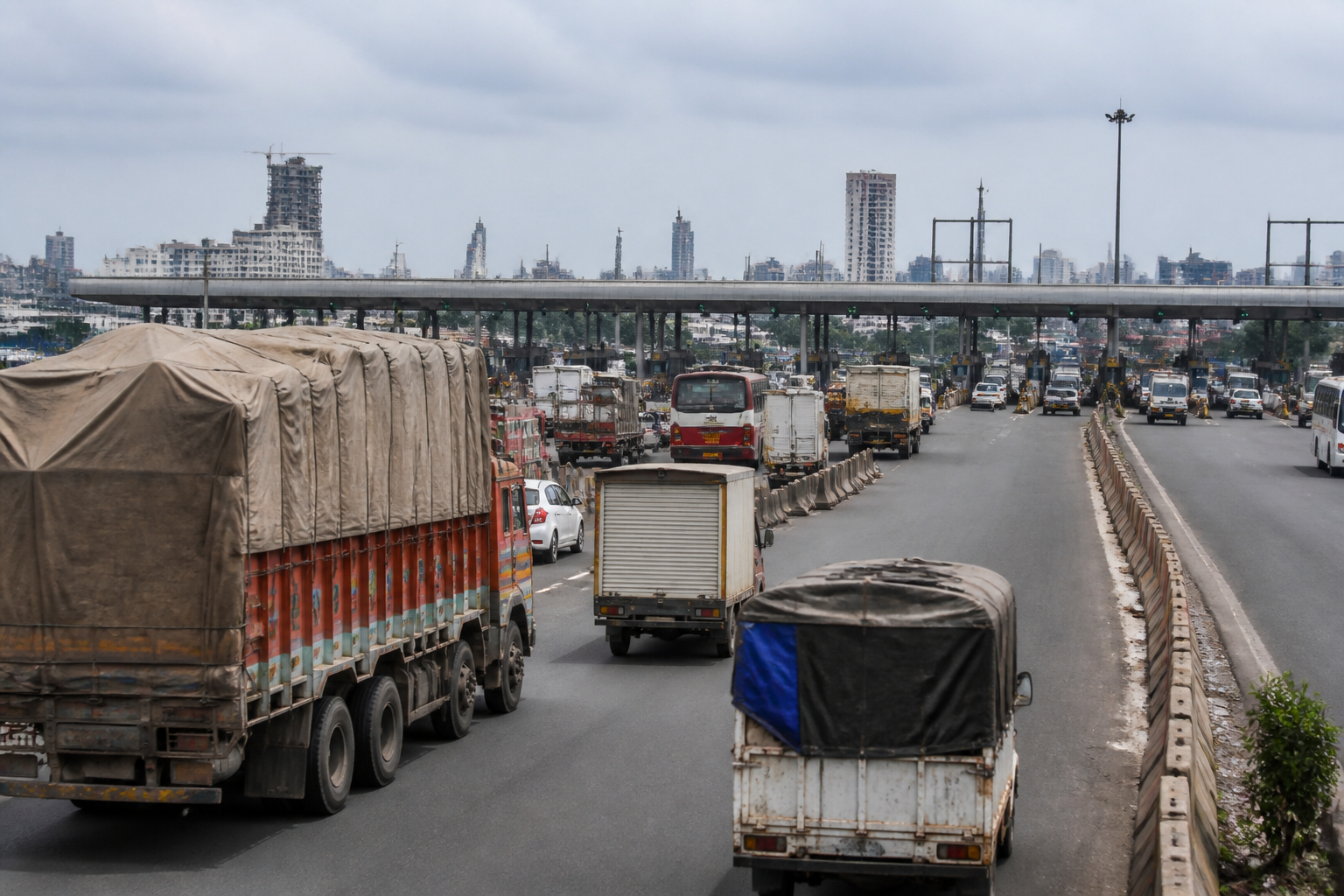
Mumbai’s toll hike for commercial vehicles took effect on October 1, increasing charges at five entry points and prompting transporters to warn that higher operating costs could eventually raise freight rates and consumer prices.
The revised toll rates apply to commercial vehicles entering and exiting the city through Airoli, Mulund LBS, Mulund Eastern Expressway, Dahisar and Vashi. The Maharashtra State Road Development Corporation (MSRDC) announced the increase, while private cars and sport utility vehicles remain exempt from toll payments at Mumbai’s entry points.
Mini buses and Light Commercial Vehicles will now pay Rs 90 per trip, up from Rs 75. The toll for buses and trucks has risen to Rs 180 from Rs 150, while heavy motor vehicles will be charged Rs 225 instead of Rs 190.
Public transport buses, auto-rickshaws and taxis are also exempt under the revised structure. The exemptions mean the immediate change is concentrated on goods vehicles and other commercial operators that depend on Mumbai’s road network for deliveries, distribution and inter-city movement.
MSRDC has offered discounts intended to reduce the effective cost for operators making frequent journeys. Commercial vehicle owners can purchase 50 or 100 toll coupons in advance. Buyers of 50 coupons will receive a 25% discount, while those purchasing 100 coupons will receive a 50% discount. Discounted journey smart cards will be issued at the toll plazas.
Transporters have opposed the increase, arguing that toll payments are already part of a broader rise in operating expenses. Bal Malkit Singh, adviser and former president of the All India Motor Transport Congress, said any increase in toll charges would directly raise transporters’ costs. He said operators would have to increase freight charges to recover the additional burden, with the cost ultimately being passed on to consumers.
Singh urged the Maharashtra government to extend the toll exemption available to small vehicles to heavy commercial vehicles as well. He also questioned the continued collection of toll after contractors had, in his view, recovered road construction costs.
The dispute places Mumbai’s entry-point toll system within the daily economics of urban supply chains. Commercial vehicles carry food, consumer goods, construction materials and other supplies into the metropolitan region, making toll charges one component of the cost of moving goods through the city. The supplied report does not establish the size of any eventual increase in freight or retail prices.
MSRDC’s revised rates and advance-coupon discounts are now operational at the five toll locations. Transporters’ demand for wider exemptions and the government’s response will determine whether the increase leads to further changes in the toll structure.
