


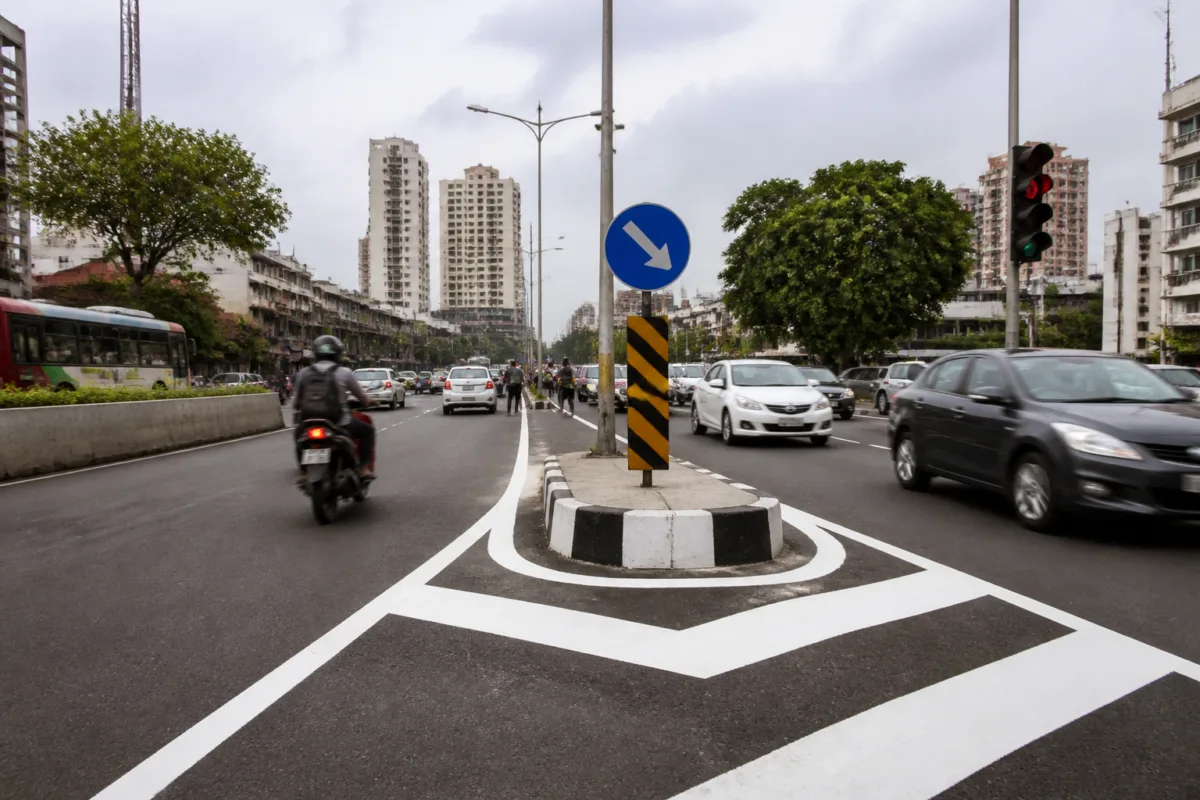
Mumbai road safety measures are set to expand across 48 accident-prone locations, with the Brihanmumbai Municipal Corporation proposing works costing about Rs 18 crore at high-risk intersections identified by the Mumbai Traffic Police. The proposal will be placed before the BMC Standing Committee on Wednesday for approval of the contract.
The planned interventions include thermoplastic road markings, median dividers, traffic instruction and direction boards, two-way pavement markers and traffic islands. The civic administration said the works are intended to identify hazards at the locations and introduce corrective measures to improve safety for road users.
The contract proposal has drawn scrutiny because the firm recommended for the work quoted a rate 36% below the BMC’s official estimate. Congress corporator Ashraf Azmi questioned whether the original estimate was too high or whether the lower bid could affect the quality of execution. The concern will be considered as the Standing Committee examines the proposal.
The 48 locations, described as black spots, were provided to the BMC by the office of the Joint Commissioner of Police (Traffic). Black spots are high-risk intersections or road locations where accidents occur repeatedly. The civic body said the increase in the number of vehicles has contributed to congestion on major roads, at junctions and flyovers, and near entry and exit points of the Coastal Road. It also linked the rise in traffic to an increase in accidents.
The identification and review of these locations form part of the road-safety process followed by the District Road Safety Committees. Separate meetings are held every six months for Mumbai city and the suburbs under the chairmanship of the respective district collectors, in accordance with Supreme Court directions on road safety. These meetings examine accident-prone locations and the corrective measures required from different agencies.
The BMC also plans to assess the effectiveness of the safety measures after they are implemented and prepare a summary of short-term and long-term interventions. The proposed works therefore combine immediate engineering changes, such as markings and dividers, with a further review of measures needed at the 48 locations. The next formal step is the Standing Committee’s consideration of the contract proposal.

