


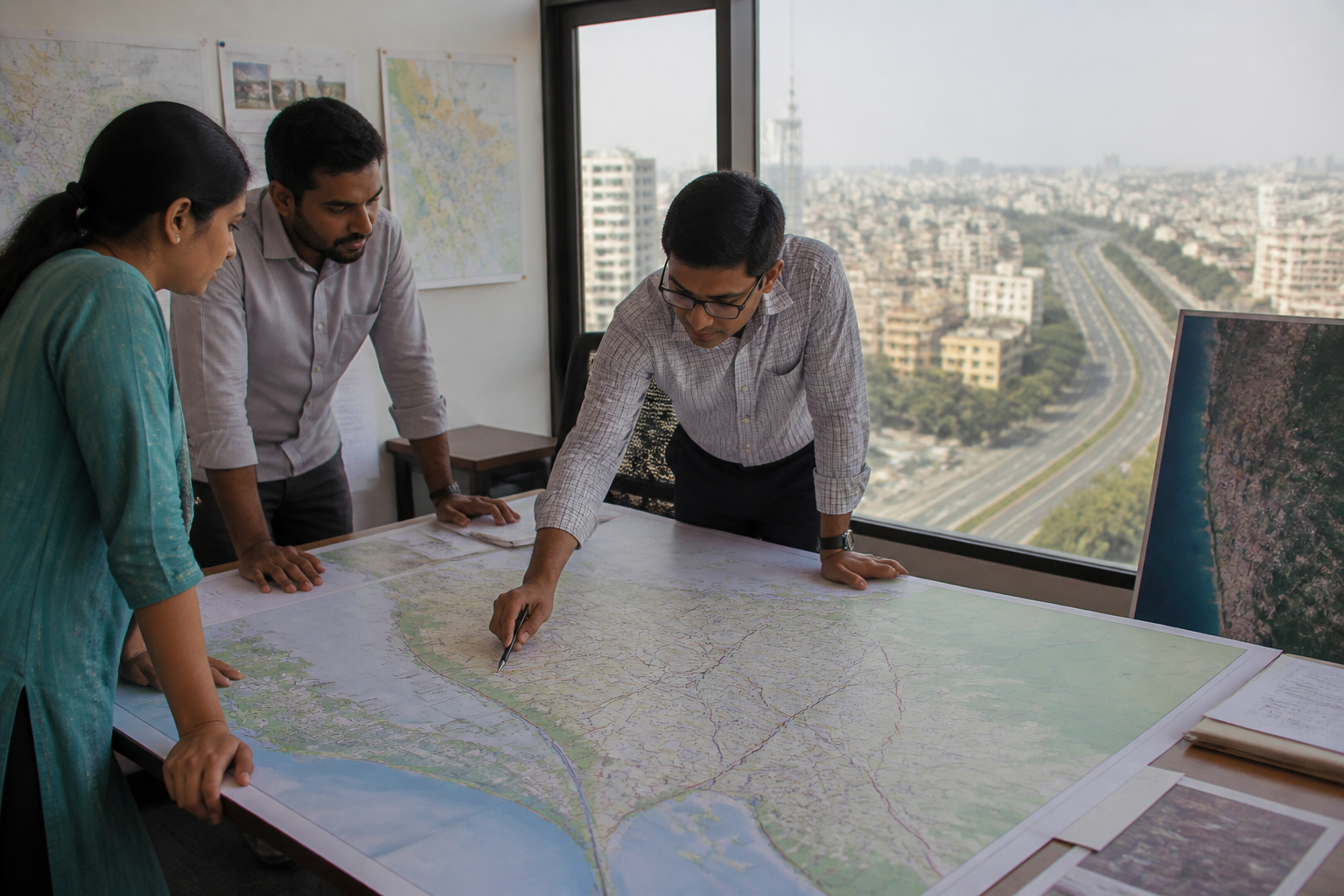
The Mumbai Metropolitan Region Development Authority has outlined a 10 Ring Roads Master Plan for the Mumbai Metropolitan Region, it said, linking existing, ongoing and proposed transport routes into one regional network.
The Mumbai ring roads master plan responds to the region’s long north-south mobility pattern, which has concentrated travel on a limited number of major corridors. Mumbai’s dense urban form and expanding metropolitan area require connections that can distribute traffic across more routes instead of directing every journey through the central city.
MMRDA said the plan brings together roads, tunnels, sea links and expressways already in use, under construction or proposed. These components are being viewed as parts of a connected road system rather than as separate infrastructure projects. The plan therefore provides a framework for considering how different corridors can connect across the wider Mumbai Metropolitan Region.
A connected ring road network can give motorists alternative routes around congested central areas and improve links between residential districts, employment centres and transport infrastructure. For residents and commuters, the operational effect will depend on how the individual roads connect, how traffic is managed and how the projects progress. The approach also gives planners a wider basis for assessing regional travel demand and road capacity.
MMRDA has presented the plan as a mobility framework focused on faster and more reliable travel across the metropolitan region. The authority’s stated objective is to connect multiple choices into one regional network, while the underlying roads, tunnels, sea links and expressways remain at different stages of use, construction or proposal.
