


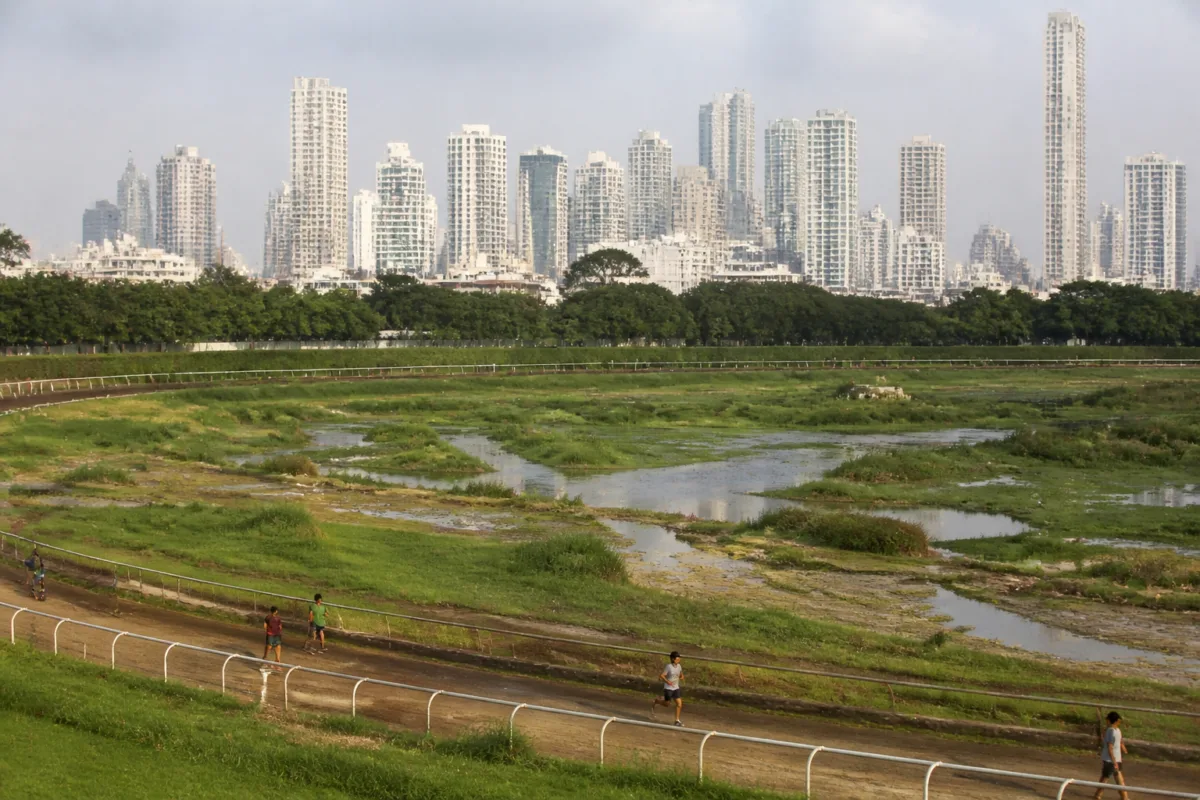
Mumbai’s reported decision to drop a proposed underground sports complex, convention centre and multilevel car park at Mahalaxmi Racecourse has prompted a broader debate over how the city should protect and manage its public open spaces.
The Mumbai Architects Collective (MAC), a group comprising architects, urbanists and transport experts, has welcomed the reported withdrawal. In a letter dated November 27 to Chief Minister Devendra Fadnavis and Municipal Commissioner Ashwini Bhide, the collective sought a formal written order confirming the decision.
MAC also urged the state government to introduce an interim resolution preventing underground parking and construction beneath playgrounds and open spaces designated in Mumbai’s Development Plan. It called for a permanent, citywide Open Space Policy covering public open spaces and natural areas, including wetlands, mangroves and hills.
The Brihanmumbai Municipal Corporation (BMC) had proposed a large-scale development at the racecourse involving a landscape garden, convention facility and parking infrastructure. The proposal had faced opposition from urban planners and architects for more than a year, according to the report.
MAC has proposed that the racecourse infield be developed as an urban wetland park instead. The collective said the infield holds rainwater during the monsoon and supports seasonal wetlands as well as resident and migratory birds. It argued that a wetland landscape could absorb floodwater, moderate urban heat and support biodiversity while retaining the area’s existing use by walkers, runners, children and families.
The proposal draws on examples cited by MAC, including Benjakitti Forest Park in Thailand and Qunli Stormwater Park in China. The collective has also sought an ecological survey and an integrated plan linking the racecourse with the Coastal Road gardens, with both areas remaining under direct public management.
MAC said the racecourse was the third recent instance in which citizens had intervened to protect a natural public space from construction, after Pushpa Narsee Park in Juhu and Patwardhan Park in Bandra West. It argued that residents should not have to mobilise separately each time a public open space faces a construction proposal.
The demands place the emphasis on formal protection rather than an informal announcement. A written order confirming the racecourse decision would clarify the status of the dropped project, while an interim resolution could establish a broader position on underground construction below designated open spaces. A permanent policy would need to address how the city identifies, protects, manages and connects its wetlands, mangroves, hills, parks and other public landscapes.
The report does not provide the text of a formal BMC or state government order confirming the project’s withdrawal, nor does it set out an approved design, funding arrangement or implementation timetable for a wetland park. The immediate issue, therefore, is whether the reported decision will be converted into a documented policy commitment and whether an ecological assessment will guide the future of the racecourse.

