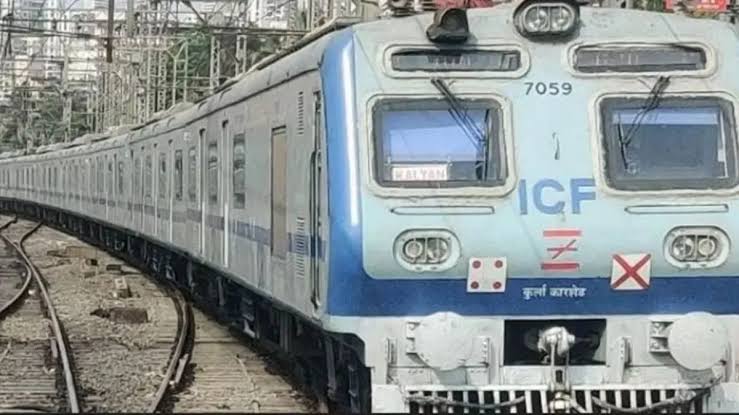
Mumbai’s proposed non-AC suburban train with automatic doors has hit a testing hurdle, delaying its path towards passenger service. The rake, developed for Central Railway’s suburban network, has been sent to Integral Coach Factory in Chennai for modifications after technical observations emerged during a mandatory safety trial. The setback highlights the engineering scrutiny required before new rolling stock can enter one of India’s busiest commuter systems. The trial was conducted through a Confirmatory Oscillograph Car Run, a specialised assessment used to examine how a train behaves while travelling at different speeds. It records factors such as vibration, stability, ride quality and wheel-rail interaction. The exercise is intended to identify problems that may not be apparent during stationary inspections or routine operational checks.
The rake underwent testing on the 63.27-km Khajuraho-Mahoba section under the Jhansi railway division. Following the observations, Central Railway officials decided that corrective work should be completed before another round of trials. A second rake of the same design is currently stationed at Kurla car shed and could also require modifications if similar issues are identified. The proposed train is significant because Mumbai’s suburban network carries an exceptionally large commuter load, making reliability and passenger safety central to any fleet upgrade. Automatic doors are designed to reduce the risk of passengers falling from moving trains and to create a more controlled boarding environment. However, the additional equipment also introduces components that must perform consistently under the demanding conditions of suburban operations. The current issue does not amount to a rejection of the train. After the required changes, the rake will have to undergo fresh testing and meet the prescribed certification requirements before it can carry passengers.
Safety checks will include braking performance, acceleration, suspension and bogie behaviour, electrical systems and door functioning, alongside assessments of running stability. For Mumbai, the episode also underlines the difference between procuring new trains and actually putting them into productive service. A delayed rake represents more than a manufacturing adjustment; it can affect fleet planning, maintenance schedules and the timing of capacity improvements across the suburban system. Urban transport specialists say such testing is an essential part of responsible infrastructure delivery. Rushing induction to meet deployment targets could create larger reliability and safety risks later. At the same time, repeated technical corrections can extend project timelines and increase lifecycle costs.
The next milestone will be the modified rake’s return to testing. Its eventual clearance will determine when Mumbai commuters can begin benefiting from the automatic-door configuration. For a network under constant pressure, the priority remains a fleet that is not only newer, but demonstrably safe, reliable and suited to everyday passenger demand.