


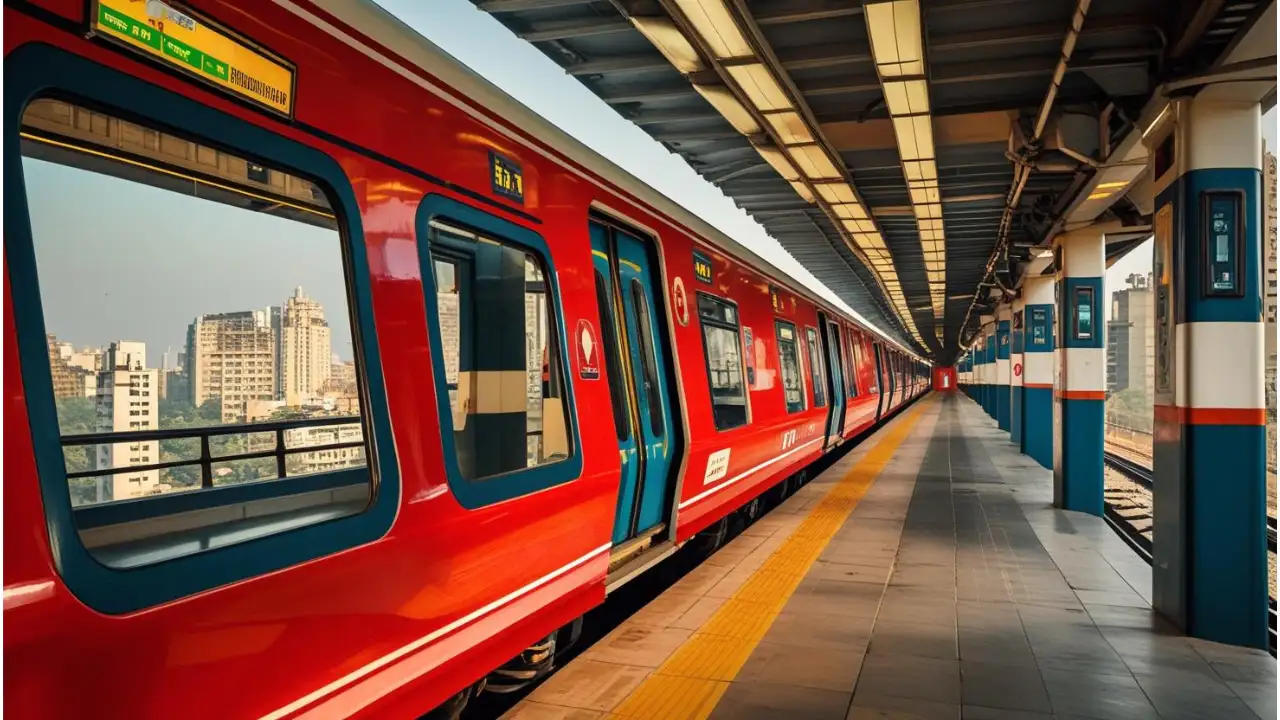
Mumbai Metropolitan Region is preparing for a significant expansion of its metro infrastructure with the complete rollout of the Red Line by the end of 2026. With Lines 7, 7A, and 9 under phased construction, this crucial transport spine is set to dramatically improve commute options across the western suburbs and link major residential, commercial, and transit hubs.
Currently, Line 7 between Dahisar East and Gundavali is operational and has already started easing congestion on the heavily used Western Express Highway. Stretching across 16.5 km, it provides metro interconnectivity to Line 1 (Blue Line) and acts as a feeder into other parts of the city. The under-construction Line 7A will soon add a critical link to the international airport with direct metro access at CSMIA Terminal 2. Running 3.2 km, it includes Sahar Road and Gundavali as major nodes and will integrate with Line 3 (Aqua), the underground corridor serving south Mumbai.
Line 9, expected to open to the public by December 2026, will span 11 km and serve densely populated and traffic-prone zones like Shimpoli, Kandarpada, Mira Road, Bhayandar, and Dahisar East. Once completed, it will drastically cut down travel time between outer suburbs and key city zones, offering a reliable alternative to overburdened local trains and arterial roads. Urban transport experts associated with the project say the Red Line’s multi-corridor strategy supports a long-term vision for a transit-oriented Mumbai. Importantly, the Red Line’s extensions—especially Line 13, currently in the proposal phase—envisage a seamless connection all the way to Virar. This is expected to provide a viable, sustainable option for daily commuters living in far-flung suburbs, thereby decentralising traffic pressure and supporting equitable urban access.
A senior metro planning official confirmed that the Red Line has been strategically aligned to encourage modal shifts away from private vehicles. “The primary intent is to integrate disconnected areas of western and north-western Mumbai into the city’s public transport grid with minimal environmental cost,” the official said. “With multimodal interchanges and last-mile links, it will also enable efficient airport connectivity and support low-carbon transport goals.” By late 2026, once the Red Line is fully operational, the line is poised to serve lakhs of commuters daily. It will not only enhance the quality of life through reduced commute times but also significantly support Mumbai’s push for a zero-net-carbon future by promoting mass rapid transit.
While the project is largely on track, authorities continue to engage with local stakeholders to address land acquisition, integration issues, and environmental safeguards. As the city awaits its next leap in mobility, the Red Line is being seen not just as a transport solution but as a catalyst for sustainable urban transformation.
Also Read : Mumbai To Revamp 11 Key Roads Across Dadar Mahim Dharavi
