


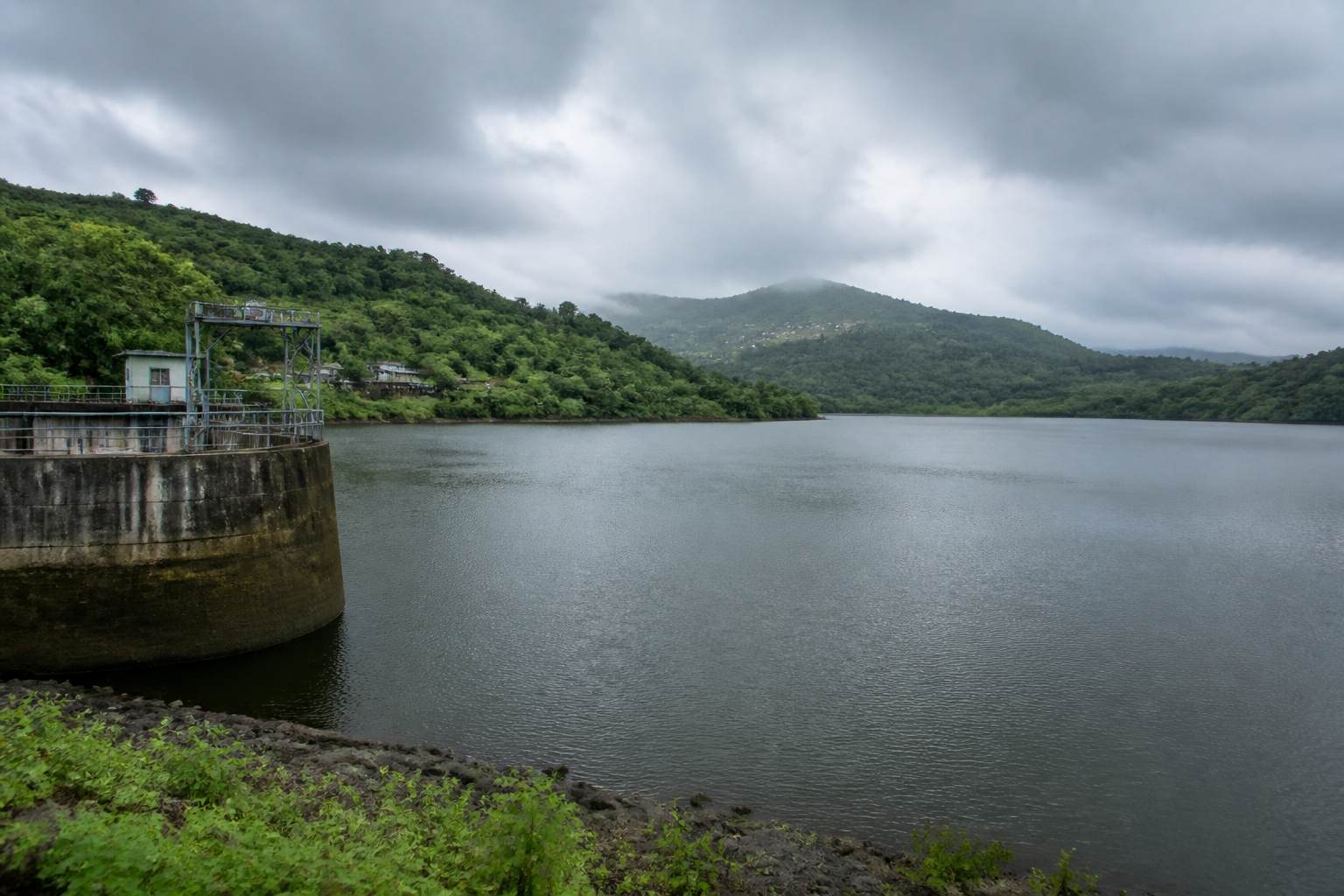
Mumbai’s seven lakes held 97.72 per cent of their combined useful storage as of 6 am on September 18, 2026, offering a strong water position for the city while remaining below the levels recorded on the same date in the previous two years, according to data from the Hydraulic Engineer’s Department’s Master Control Centre at Bhandup Complex.
The lakes had a combined live storage of 1,414,395 million litres (ML), against total useful storage capacity of 1,447,363 ML. On September 18, 2025, the combined stock was 1,433,120 ML, or 99.02 per cent of useful storage. The corresponding figure in 2024 was 1,427,690 ML, or 98.64 per cent.
The latest position reflects small changes across the reservoirs after rainfall during the preceding 24 hours. Upper Vaitarna rose by 0.02 metres and stood at 60.312 metres, against its full supply level of 60.351 metres. Its live storage was 214,510 ML, or 94.48 per cent of useful capacity. The lake received 11 mm of rain during the period, taking its cumulative seasonal rainfall to 3,845 mm.
Modak Sagar was the only reservoir among the reported lakes to record a more notable decline. Its level fell by 0.15 metres to 161.63 metres, against a full supply level of 163.15 metres and a lower danger level of 143.26 metres. Its live storage stood at 116,606 ML, or 90.44 per cent of useful capacity. The lake received 5 mm of rainfall, taking its seasonal total to 3,242 mm.
Tansa stood at 128.56 metres against a full supply level of 128.63 metres and held 143,828 ML, or 99.14 per cent of useful storage. It rose by 0.01 metres after receiving 11 mm of rain, while cumulative rainfall reached 2,952 mm. Middle Vaitarna recorded a 0.14-metre rise and stood at 284.57 metres, just below its full supply level of 285 metres. Its storage was 191,909 ML, or 99.16 per cent, after 7 mm of rainfall.
Bhatsa, the largest contributor among the listed reservoirs by live storage, stood at 141.88 metres against a full supply level of 142.07 metres. It held 711,824 ML, equal to 99.27 per cent of useful capacity, after rising by 0.08 metres. The lake received 5 mm of rain and recorded cumulative seasonal rainfall of 2,687 mm.
Vehar remained at 100 per cent of useful storage, despite a 0.01-metre fall. Its live storage was 27,698 ML, and it received 20 mm of rain during the period—the highest rainfall recorded among the seven lakes. Tulsi held 8,019 ML, or 99.66 per cent of useful capacity, after a 0.01-metre decline. It received 8 mm of rain and recorded cumulative rainfall of 3,710 mm.
The combined storage of Upper Vaitarna, Vaitarna, Tansa and Middle Vaitarna was 666,853 ML against useful content of 694,582 ML, placing the group at 96.01 per cent. The corresponding level was 99.06 per cent in 2025 and 98.75 per cent in 2024. Rainfall at the Bhandup Complex, which forms part of the city’s water infrastructure monitoring system, was recorded at 18 mm, taking its cumulative total to 2,911 mm.
